Ein 8-Sitzer sollte ein Strömungsproblem lösen und nicht nur Sitze hinzufügen
An 8 seater electric golf cart is the right answer only when the route repeatedly moves groups and the property wants to reduce how many separate trips are needed between fixed stops. That often happens on campuses, scenic parks, large resorts, private estates, and other properties where the vehicle follows a loop rather than acting like an on-demand errand cart. Buyers who begin with that operating question make better choices through Golfwagen vom Typ B, VY-C6+2 Achtsitzer-Golfwagen, VY-A8 8-Sitzer-Golfwagen, Und Fordern Sie ein Angebot an als Käufer, die von einer größeren Kapazität ausgehen, ist automatisch effizienter.
A longer passenger platform can simplify dispatch, but it also creates more staging requirements. The loading point needs enough room, the turning path must stay calm under pressure, and the charging routine has to support a vehicle whose missed trip affects more riders at once. That is why seat count should never be separated from route geometry. A public reference like Golfwagen-Hintergrund ist für die grundlegende Kategoriesprache nützlich, aber die eigentliche Entscheidung liegt in der Schleifenkarte und nicht in der Überschriftenspezifikation.

This guide focuses on shuttle loops, campus tours, sightseeing routes, and large-property transport where an eight-seat format can create real value. It also explains the situations where the same cart becomes awkward because the site would be better served by two smaller vehicles staged at different points. The internal pages at Elektrogolfwagen Produkte, Golfwagenlösung, Und Park- und Outdoor-Transportlösung sind gute Begleiter, wenn der Käufer die Hochleistungsoption mit dem Rest der Standortpalette vergleichen möchte.
Zeichnen Sie die Route für Langkörperbewegungen auf, bevor Sie die Zieldetails vergleichen
An 8 seater should be tested against the route’s narrowest and most visible points. The buyer should measure where the cart turns, where it waits, how deep the boarding bay is, and whether the route includes blind corners or steep starts with a full passenger load. A vehicle that feels efficient on a straight internal road can still become awkward if it must reverse near a lobby, swing through a tight campus corner, or stop where waiting passengers narrow the path.
Boarding behavior matters just as much as turning space. Eight seats only help when the group can load and unload without slowing the whole operation. Managers should note whether riders arrive together, whether bags or supplies are carried, and whether the cart spends more time waiting at stops than actually moving. If the route usually carries three to five people, a shorter platform may be more efficient even if the longer vehicle looks appealing in a brochure.
Sightseeing and campus loops also expose the cart to more passenger movement during the trip. Riders may lean for photos, stand too early, or shift their weight unevenly at slow stops unless the route and the driver routine are clear. That is why low-speed stability, smooth braking, and predictable acceleration matter more than headline speed. Safety context from CPSC-Golfwagen und LSV-Sicherheitsleitfaden, NHTSA-Fahrzeugführung bei niedriger Geschwindigkeit, Und 49 CFR 571.500 hilft dabei, diese Fragen zu formulieren, bevor die Routenrichtlinie festgelegt wird.
| Campus-Schleife | Stabiles Fahrverhalten bei niedriger Geschwindigkeit, vorhersehbare Ladepunkte, ausreichend Platz an Gebäudeeingängen. |
| Besichtigungsroute des Resorts | Komfort bei längeren Loops, ruhige Erzählstopps, gepflegtes Erscheinungsbild. |
| Shuttle zu großen Grundstücken | Wiederholbare Inszenierung, klare Laderückführung, weniger Fahrten zwischen festen Haltestellen. |
| Familientransport auf Privatgrundstücken | Genügend Kapazität für Gruppenbewegungen mit praktischer Parktiefe. |
The loading zone itself often decides whether a larger cart feels elegant or cumbersome. If the driver approaches from the wrong angle, if waiting riders crowd the step area, or if the cart blocks another route while loading, the operational gain disappears. A strong buying file therefore includes route photos, likely passenger counts by stop, and a clear note about how long the cart normally waits with riders on board.
Die Kapazität erhöht die Bedeutung der Lade- und Versanddisziplin
An 8 seater route can hide charging weaknesses until the busiest hour of the day. One missed recharge window can cancel several passenger movements at once, which is why battery planning should be tied to dispatch, not treated as a separate maintenance detail. The property needs a clear return bay, a realistic recharge window, and one simple rule for carts that are not ready for service.
Lithium systems are often attractive for this kind of work because they simplify daily turnaround and help the cart stay ready through repeated loops. Even so, the operational win only appears when charger access is straightforward and the staff know exactly when the cart returns. Public references such as Ladeübersicht der Battery University, Grundlagen des US-amerikanischen DOE-Ladens, Und OSHA-Anleitung zum Laden von Batterien sind nützlich, weil sie den Ladebereich zu einem Teil des Routensystems machen und nicht zu einer versteckten technischen Ecke.
Dispatch planning also decides whether a longer cart feels efficient or slow. Some sites benefit from one large vehicle because riders naturally gather at fixed stops. Others are better served by two smaller carts because demand is scattered or loading points are far apart. That is a route design question, not a styling question. The buyer should settle it before assuming that more seats automatically improve throughput.
A good dispatch plan also protects presentation. A longer cart that arrives late, blocks another vehicle, or waits in the wrong place quickly feels clumsy, even if the hardware is well built. Properties that treat the charging bay, staging point, and handover routine as one system usually get much better service from the same vehicle.
Passagierkomfort und Routengeschwindigkeit sollten gemeinsam überprüft werden
A large passenger cart should feel calm on board. Smooth starts, controlled braking, adequate roof coverage, and enough step confidence for a mixed group of riders matter because the vehicle is often used in guest-facing or visitor-facing settings. On sightseeing loops, the pace must also support conversation and viewing. A cart that technically carries eight riders but feels rushed or abrupt does not improve the route in practice.
The loading area deserves the same attention. Can eight people gather without blocking the path. Does the driver have room to approach slowly. Are there clear rules for who boards first and where the vehicle waits. A poorly designed loading point can make even a strong cart feel awkward, while a well-managed one can make a longer passenger platform feel smooth and professional every time it arrives.
Bei den Sicherheitskontrollen im gemeinsam genutzten Raum sollten die Sichtbarkeit an Kreuzungen, der Bremsweg auf Bergabstrecken mit voller Ladung und das Verhalten des Wagens bei ungleichmäßigem Einsteigen der Fahrer berücksichtigt werden. Die Anleitung unter Anleitung für ADA-Mobilitätsgeräte, CDC-Ressourcen zur Kraftfahrzeugsicherheit, Und Hintergrund eines Fahrzeugs mit niedriger Geschwindigkeit ist nützlich, weil es Manager daran erinnert, dass Zugänglichkeit, Bedienerverhalten und das Bewusstsein für gemeinsame Wege wichtig sind, selbst wenn das Fahrzeug nur auf Privatgrundstücken fährt.
Appearance still matters for large passenger carts because they are so visible, but it should support the route rather than dominate it. If the cart looks premium yet complicates staging or loading, the site has chosen the wrong metric. The best presentation comes from a vehicle that fits the route so well that it feels intentional in motion, not merely attractive when parked.
Stellen Sie Lieferantenfragen, die zu einer Route mit hoher Kapazität passen
A strong quote request should explain the loop length, likely group size, stop spacing, charger location, climate, and whether the cart is mostly sightseeing, shuttle, or mixed-use. That gives the supplier enough context to recommend whether VY-C6+2 Eight Seater Golf Cart is the best fit, whether VY-A8 8-Sitzer-Golfwagen Auch darüber sollte nachgedacht werden, welches Zubehör bei der Route wirklich hilft. Ohne diesen Kontext ist der Lieferant gezwungen, das tatsächliche Betriebsmuster zu erraten.
Auch Supportfragen sind wichtig. Fragen Sie, wie der Wagen bepackt ist, welche Anleitung zum Ladegerät enthalten ist, welche Verschleißteile am häufigsten ausgetauscht werden und wie zukünftige Flottenerweiterungen konsistent bleiben können. Referenzen wie z Übersicht über ANSI-Standards, UL-Standards und Engagement, Und NFPA-Ressourcen zur Sicherheit von Elektrofahrzeugen sind nützliche Hintergrundinformationen, da sie die Diskussion auf Dokumentation, sicheres Laden und wiederholbare Wartung lenken, statt auf eine Funktionsliste, die beeindruckend klingt, aber schwieriger zu unterstützen ist.
If the property expects growth, standardizing charger habits, boarding rules, and replacement parts from the first order will save time later. That is why it helps to attach a route sheet and an operations note when moving to Kontaktieren Sie Longshengtai oder Fordern Sie ein Angebot an. Ein Wagen mit hoher Kapazität ist einfacher zu besitzen, wenn die Routenlogik von Anfang an sichtbar ist.
Verwenden Sie eine Routen-Scorecard, um einen großen Wagen mit zwei kleineren zu vergleichen
Many buyers know they need more passenger capacity but are not sure whether that means one 8 seater or two compact carts. A simple scorecard helps. Compare the options by loading-point depth, turning comfort, charger access, supervision needs, and how often the route carries a truly full group. If the property mostly moves fixed groups between fixed stops, the 8 seater often wins. If riders appear from several places at uneven times, the route may still favor two smaller vehicles even when the total headcount looks similar on paper.
The scorecard should also include what happens when one vehicle is unavailable. A single larger cart can simplify the route, but it can also concentrate risk if the charger area, dispatch timing, or maintenance support is weak. A property that understands this tradeoff before ordering can budget for the right standby plan, spare-parts logic, and route backup instead of discovering the issue on the busiest day of the season.
This type of comparison keeps the procurement discussion honest. It prevents the team from assuming that capacity is always efficiency and pushes the decision back toward how the property actually works. That is exactly what a serious buyer should want before expanding a visible shuttle or tour operation.
Eine voll ausgelastete Pilotschleife wird die wahre Antwort schnell enthüllen
A full-load pilot is the fastest way to decide whether an 8 seater is truly right. Run the route with realistic passenger weight, the actual stop pattern, and the same loading points used during busy periods. Watch where the driver slows, where the cart waits too long, and whether the loading area still feels calm once riders gather. Those observations reveal more than any brochure comparison.
The pilot should also test the charger return window. If the cart comes back late, blocks another vehicle, or misses a departure because the bay is disorganized, the route has a systems problem. Fixing that before rollout is far cheaper than blaming the cart after operations begin. In many cases the pilot clarifies whether the high-capacity platform is the right fit or whether the property should split the route between smaller vehicles.
Once those notes are written down, the buyer can compare options with real evidence. The property can decide whether the eight-seat route is ready to scale, whether another model family should be reviewed, or whether the dispatch plan needs refinement first. That is exactly the type of clarity a high-visibility electric golf cart purchase should create.
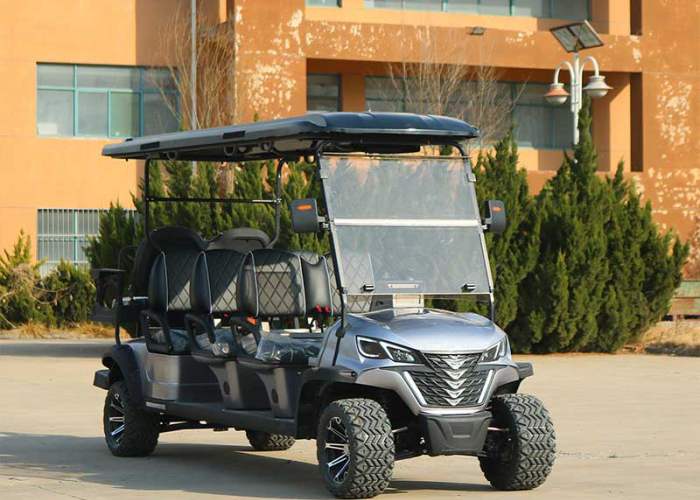
Videoreferenz
Das folgende Video zeigt einen Longshengtai 6+2-Personenwagen im Betrieb, der für die Planung einer Shuttle-Route im 8-Sitzer-Stil direkt relevant ist. Verwenden Sie es zur Unterstützung der oben aufgeführten Lade-, Wende- und Ladecheckliste.
Fragen, die Käufer oft stellen
Wann ist ein 8-Sitzer besser als zwei kleinere Wagen?
An 8 seater is better when groups move together between fixed stops and when the route has enough turning and staging room. Two smaller carts can be better when demand is scattered or when the loading points are too tight for a longer platform.
Was ist der größte Planungsfehler bei größeren Personenwagen?
Der größte Fehler besteht darin, anzunehmen, dass die Kapazität allein die Route lösen kann. Käufer müssen die Einstiegszeit, die Tiefe der Laderampe, den Wenderaum und die Ladefenster prüfen, bevor sie entscheiden, dass ein längerer Wagen den Service verbessert.
Was sollte vor der Angebotsanfrage vorbereitet werden?
Bereiten Sie eine Routenkarte, eine Schätzung der Gruppengröße, einen Ladeplan, das verkehrsreichste Servicefenster und alle wichtigen Wetter- und Sichtdetails vor. Dadurch erhält der Lieferant genügend Kontext, um eine sinnvolle Einrichtung zu empfehlen Fordern Sie ein Angebot an.
Endgültige Entscheidungsansicht
Der richtige 8-Sitzer-Elektro-Golfwagen fühlt sich im Service gut organisiert an. Gruppen steigen ohne Chaos ein, die Route bleibt vorhersehbar, die Laderoutine ist klar und das Fahrzeug bleibt auch dann komfortabel, wenn auf dem Grundstück viel los ist.
Wenn der Standort seinen Shuttle-Loop, die Ladepunkte und das Ladefenster klar erklären kann, ist er bereit, sich mit viel mehr Vertrauen und weit weniger Annahmen für einen Wagen mit hoher Kapazität zu entscheiden.