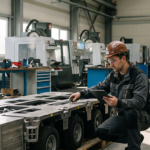
La produzione americana non è in declino: è in trasformazione. Alimentato da iniziative di reshoring, investimenti federali e dalla rapida adozione di tecnologie intelligenti, il settore sta ridefinendo il significato di produrre beni sul territorio nazionale. Secondo il Associazione Nazionale Produttori, i produttori hanno contribuito $ 2,96 trilioni to the U.S. economy at an annual rate in late 2025, accounting for 9.4% of total value-added output — a figure that underscores why policymakers, investors, and innovators continue to treat the factory floor as America’s most consequential economic arena.
Il settore manifatturiero rimane il motore più potente per la creazione di posti di lavoro nell’intera economia statunitense. Every dollar spent in the sector generates an estimated $2.69 in additional economic activity across supply chains, logistics, and services — a multiplier effect no other industry matches at scale. Custom manufacturing services, which tailor production precisely to client specifications rather than relying on generic output, are driving a significant portion of this growth. As demand for precision, speed, and domestic reliability intensifies, companies that invest in specialized production capabilities are capturing an outsized share of new contracts and long-term partnerships.
La tendenza che definirà la produzione americana nel 2025 è: resilienza — the deliberate effort to reduce fragility in supply chains through data-driven decision-making, diversified sourcing, and adaptive production models. The pandemic exposed catastrophic vulnerabilities in globally distributed manufacturing, and the response has been swift. Producers are deploying real-time analytics, predictive maintenance systems, and digital twins to anticipate disruption before it compounds into crisis. As RSM noted via the Associazione delle imprese e dell'industria del Connecticut, “Digital transformation and the changes associated with Industry 4.0… will be at the heart of all [resiliency] efforts.” This is not incremental improvement — it is a structural redesign of how American factories operate under pressure.
La transizione dalle tradizionali catene di montaggio agli standard dell’Industria 4.0 sta accelerando in ogni sottosettore, from aerospace and automotive to medical devices and consumer electronics. Facilities that once relied on manual quality checks and paper-based scheduling are now integrating Internet of Things (IoT) sensors, AI-driven quality control, and cloud-connected production management systems. What emerges from this convergence is a manufacturing landscape that is simultaneously more automated and more human — requiring workers with higher digital fluency and organizations with greater strategic agility.
Understanding this transformation fully requires a working command of the language driving it. The next section breaks down the core terminology shaping modern production — from Industry 4.0 frameworks to the economic concepts that explain why manufacturing spend ripples so powerfully through the wider economy.
Terminologia di base: comprendere la produzione moderna
Padroneggiare il linguaggio della produzione è il primo passo per comprendere perché ogni azienda manifatturiera industriale, dal produttore di piccoli lotti al fornitore multinazionale, opera nel modo in cui opera oggi.
Produzione personalizzata
Un modello di produzione in cui i beni sono progettati e costruiti per soddisfare le specifiche precise di un singolo cliente, piuttosto che prodotti su larga scala per un mercato generale.
Industria 4.0
La quarta rivoluzione industriale, definita dall’integrazione dell’Internet delle cose (IoT), dell’intelligenza artificiale, della robotica e dell’analisi dei dati in tempo reale negli ambienti fisici delle fabbriche.
Risultati a valore aggiunto
Il contributo economico netto del processo produttivo stesso – la differenza di valore tra gli input grezzi e i prodotti finiti, che rappresenta l’attività principale di generazione di ricchezza di qualsiasi impianto di produzione.
Effetto moltiplicatore
Il fenomeno economico attraverso il quale la spesa manifatturiera si espande verso l’esterno, stimolando una produzione aggiuntiva attraverso le reti di fornitori, la logistica, la vendita al dettaglio e i servizi ben oltre la fabbrica.
Questi quattro concetti non esistono isolatamente. In pratica, definiscono il modo in cui la produzione moderna crea simultaneamente vantaggio competitivo e ricchezza nazionale.
Produzione personalizzata has evolved far beyond bespoke craftsmanship. Today, it is powered by CNC machining, additive manufacturing, and digital design workflows that allow low-volume, high-precision production without the historic cost penalty. A client-specific aerospace bracket and a custom-configured industrial conveyor system are both products of the same principle: tailored output at scale. For a deeper look at how customization is reshaping equipment categories, questa analisi delle tendenze produttive emergenti copre i meccanismi operativi in dettaglio.
Industria 4.0 is the architectural shift underpinning all of it. Smart sensors on assembly lines feed real-time data to cloud platforms. Predictive maintenance algorithms reduce unplanned downtime. Digital twins simulate entire production runs before a single component is cut. According to the Programma di produzione statunitense, queste tecnologie non sono sperimentali: vengono implementate proprio ora attraverso la catena di approvvigionamento nazionale, presso centinaia di istituti di innovazione sostenuti dal governo federale.
Produzione a valore aggiunto è la metrica che separa la capacità produttiva dal throughput grezzo. Elimina il costo dei materiali e misura ciò che effettivamente è una struttura crea. Le regioni con un settore manifatturiero ad alto valore aggiunto attraggono investimenti, manodopera qualificata e infrastrutture: un vantaggio cumulativo.
IL effetto moltiplicatore potrebbe essere l’argomentazione più convincente per dare priorità alla produzione interna a livello politico. Secondo il Associazione Nazionale Produttori, per ogni dollaro speso nel settore manifatturiero, vi è un impatto economico totale di 2,69 dollari sull’economia più ampia. Nessun altro settore genera tale entità di attività downstream per dollaro investito.
With these foundations in place, it becomes clearer why the country’s largest producers command such strategic importance — and why the titans leading U.S. manufacturing set the standard for every company that follows them.
I Titani: le 10 migliori aziende manifatturiere negli Stati Uniti
I più grandi produttori statunitensi non si limitano a costruire prodotti: definiscono i parametri di riferimento tecnologici, gli standard della catena di fornitura e le traiettorie di innovazione che ogni altro produttore segue.
Understanding where these giants operate matters whether you’re an investor, a supplier, or simply searching for a reliable manufacturing company near me to partner with on a regional project. Their R&D decisions ripple outward, shaping what smaller firms can source, adopt, and compete with. According to Zeiss e IndustrySelect, GE Aerospace e Lockheed Martin guidano costantemente il settore negli investimenti in ricerca e sviluppo per l'aerospaziale e la difesa, un impegno che ha ridefinito gli standard di produzione nazionali.

Di seguito sono riportati i dieci produttori che dettano il ritmo della produzione industriale americana, ciascuno ancorato a un’innovazione determinante:
- GE Aerospaziale — Sviluppando motori a reazione LEAP e GE9X di prossima generazione utilizzando la produzione additiva, GE Aerospace sta attivamente rimodellando la tecnologia di propulsione sia per l’aviazione commerciale che per le piattaforme militari.
- Lockheed Martin — Lockheed Martin, il più grande appaltatore della difesa della nazione, promuove la preparazione aerospaziale attraverso sistemi ipersonici e programmi classificati per veicoli autonomi che richiedono catene di approvvigionamento nazionali all’avanguardia.
- Raytheon (RTX) — Leader nell’elettronica di precisione e nelle comunicazioni avanzate, Raytheon guida le innovazioni nei radar, nella guida missilistica e nell’hardware di sicurezza informatica fondamentale per le infrastrutture di difesa nazionale.
- Boeing — Oltre agli aerei commerciali, i sistemi di produzione Boeing integrano la tecnologia del gemello digitale e la lavorazione dei materiali compositi che stabiliscono parametri di riferimento nell’intera catena di fornitura aerospaziale.
- Motori generali — Puntando in modo aggressivo verso la produzione di veicoli elettrici, GM sta riorganizzando le strutture esistenti con linee di automazione e assemblaggio di batterie che segnalano un cambiamento più ampio nella produzione automobilistica americana.
- Ford Motor Company – Il megacampus BlueOval City di Ford rappresenta un investimento di reshoring fondamentale, che consolida la produzione di veicoli elettrici e batterie sotto un’unica impronta nazionale per ridurre la dipendenza dalle importazioni.
- Bruco — Caposaldo della produzione di attrezzature pesanti, Caterpillar è leader nell'integrazione telematica, integrando la diagnostica in tempo reale nei macchinari per l'edilizia e l'estrazione mineraria venduti a livello globale.
- Honeywell — Spaziando dai componenti aerospaziali ai software di automazione industriale, Honeywell unisce la produzione di hardware al controllo di processo digitale in modi che pochi concorrenti possono eguagliare.
- 3M — Operando nei segmenti sanitario, elettronico e industriale, la divisione materiali avanzati di 3M introduce continuamente adesivi speciali e sistemi di filtraggio che alimentano decine di industrie a valle.
- Northrop Grummann — Focalizzata sui sistemi spaziali e sull’aviazione stealth, Northrop Grumman spinge la produzione nazionale verso compositi avanzati e sviluppo di sistemi autonomi.
Ciò che unisce queste aziende è la loro enorme influenza sulle reti di fornitori nazionali. When a company like Lockheed Martin mandates a new materials specification or Raytheon upgrades its electronics tolerances, thousands of smaller manufacturers across the country must adapt to stay in the supply chain. That cascading effect makes understanding these titans essential — and it raises a compelling question about who actually makes up the backbone of American manufacturing. Hint: it isn’t the giants.
Il potere del piccolo: perché il 93% delle aziende definisce il settore
Il vero motore della produzione americana non si trova nelle sedi centrali delle aziende Fortune 500: funziona in migliaia di negozi più piccoli, strutture favolose e stabilimenti specializzati in tutto il paese. Secondo i dati del Ufficio di analisi economica e Associazione nazionale dei produttori, il 93,1% delle aziende manifatturiere negli Stati Uniti impiega meno di 100 dipendenti, con tre quarti di tutte le aziende che operano con meno di 20 dipendenti. Quando i ricercatori e i team di procurement lo chiedono chi produce un componente specifico o una parte personalizzata, la risposta è quasi sempre un'operazione piccola e specializzata, non un nome familiare.
Dominio attraverso la specializzazione. Small manufacturers rarely try to do everything. Instead, they carve out defensible niches — precision machined parts, specialty coatings, low-volume composites — where their deep expertise makes them irreplaceable to larger supply chains. This focus drives a quiet but persistent innovation cycle. Without large bureaucratic layers, a small firm can prototype, test, and iterate in weeks rather than quarters. In practice, this makes small manufacturers disproportionately important as sources of the incremental advances that eventually reshape entire product categories.
Insight: Small manufacturers are often the first to adopt process innovations because they have less legacy infrastructure to protect and more immediate financial pressure to find efficiencies. Their agility isn’t a workaround — it’s a competitive advantage.
Agilità quando le catene di fornitura cambiano. The disruptions of recent years exposed a structural truth: lean, localized producers recover faster than sprawling global networks. A small manufacturer operating regionally can pivot its material sourcing, retool a production line, or shift output volumes in response to demand changes far more quickly than a multinational plant tied to long-term procurement contracts. This responsiveness has made small firms critical partners for larger OEMs seeking resilience — a trend that shows no sign of reversing as nearshoring continues to accelerate through 2025 and beyond, as noted by Prospettive manifatturiere del NIST.
La produzione localizzata comprime i tempi di consegna. For custom orders — especially in sectors like specialty vehicles, industrial equipment, and facility-specific fleet solutions — geography matters enormously. A domestic small-batch producer can fulfill a custom specification in days or weeks, while an overseas supplier may require months of coordination, shipping, and inspection cycles. For buyers managing tight operational timelines, that difference is often decisive. Industries like hospitality, for example, are increasingly turning to opzioni di flotta assemblata a livello nazionale che combinano specifiche personalizzate con finestre di consegna affidabili, una capacità che dipende quasi interamente dai produttori più piccoli e agili dietro le quinte.
This landscape of distributed, specialized production sets the stage for understanding one of the most dynamic growth sectors in American manufacturing today: the electric vehicle space, where small-scale innovation and domestic assembly are converging to redefine what a purpose-built EV can be.
Eccellenza specializzata: l'ascesa della produzione di veicoli elettrici
La produzione di veicoli elettrici è diventata silenziosamente una delle nicchie tecnicamente più impegnative – e in più rapida crescita – all’interno del più ampio panorama produttivo americano. Mentre i titoli dei giornali si concentrano sui veicoli elettrici a grandezza naturale, una rivoluzione parallela si sta svolgendo nella mobilità specializzata: la trasformazione dell’umile carrello da golf in un veicolo elettrico multi-passeggero progettato con precisione.
The golf cart’s journey from simple fairway utility to sophisticated EV mirrors the wider arc of American manufacturing innovation. What once required little more than a motor, a chassis, and a seat now demands battery management systems, structural load engineering, and rigorous safety certification. As explored in our breakdown of perché l’elettricità sta superando le alternative alimentate a gas, il divario prestazionale tra le piattaforme elettriche tradizionali e quelle moderne è diventato troppo significativo per essere ignorato.
Design: forma ingegneristica attorno alla funzione
I veicoli elettrici a 4 passeggeri introducono esigenze strutturali che le piattaforme monoposto semplicemente non affrontano. Distributing the combined weight of passengers, battery packs, and a reinforced frame requires precise chassis geometry from the ground up. The VY-C4 exemplifies this — its chassis integrates battery housing directly into the load-bearing structure, reducing flex under full passenger load while keeping the center of gravity low for cornering stability. This isn’t a modification of an older design; it’s purpose-built engineering.
Ingegneria: precisione a livello di componente
Battery integration is where most 4-passenger EV builds succeed or fail. The VY-C4’s system requires tight tolerances between the cell array, thermal management layer, and chassis mounting points — misalignment at any stage compromises both safety and range. According to Specifiche di prodotto di Longshengtai Machinery, questo livello di produzione di precisione non è negoziabile quando la sicurezza dei passeggeri è il vincolo di progettazione principale. Ogni interfaccia del componente viene convalidata prima dell'inizio dell'assemblaggio.
Assemblaggio: perché la produzione nazionale definisce lo standard
L’assemblaggio interno non è solo una preferenza della catena di fornitura: è una strategia di controllo della qualità. When a manufacturing company builds specialized electric vehicles onshore, it maintains direct oversight of tolerances, materials sourcing, and inspection protocols that offshore production often can’t guarantee. For the VY-C4, each unit moves through a staged assembly process where chassis, drivetrain, and battery systems are independently verified before integration. That traceability — knowing exactly where every part came from and when it was inspected — is difficult to replicate across distributed international supply chains.
This convergence of precision design, component-level engineering, and accountable domestic assembly is exactly what positions specialized EV manufacturers to lead rather than follow. And as the next section will explore, that kind of production excellence rarely happens in isolation — it’s increasingly powered by collaborative innovation networks that connect manufacturers of all sizes to shared research and technological breakthroughs.
Innovazione e collaborazione: il vantaggio del Manufacturing USA
La competitività manifatturiera americana non è più costruita in modo isolato, ma attraverso reti in cui università, agenzie federali e aziende private condividono rischi, ricerca e risultati.
IL Produzione negli Stati Uniti network represents one of the most structurally significant shifts in how the U.S. approaches industrial innovation. Rather than leaving manufacturers to solve advanced challenges independently, the network links institutes across the country to tackle shared problems — from materials science to digital manufacturing — through coordinated collaboration. This public-private partnership model reduces duplicated effort and accelerates the pace at which breakthroughs move from concept to production floor.
Partenariati pubblico-privato are the backbone of this model. Federal funding provides stability and direction, while industry partners bring real-world application requirements and market accountability. The result is research that doesn’t stall in academic journals but instead reaches factories with practical, deployable solutions. For smaller custom manufacturers — the kind discussed in earlier sections of this guide — access to that shared research infrastructure is a genuine equalizer. A 15-person precision shop in Ohio can benefit from materials research funded at scale, without bearing the full cost of that R&D itself.
Cluster regionali di innovazione amplify this effect considerably. When manufacturers, suppliers, research institutions, and workforce training programs concentrate in the same geography, innovation cycles compress. Knowledge travels faster. Talent flows more freely. A process improvement developed at a university lab can reach a regional supplier within months rather than years. The La visione delle Accademie nazionali per il settore manifatturiero negli Stati Uniti fino al 2030 e al 2035 sottolinea specificamente l’approfondimento di queste relazioni tra cluster regionali come meccanismo per sostenere la competitività degli Stati Uniti a lungo termine.
Colmare il divario tra laboratorio e fabbrica remains one of the most persistent challenges in industrial innovation. Academic research often produces findings that are theoretically sound but operationally untested. Manufacturing USA institutes address this directly by embedding industry partners in the research process from the start — ensuring that new processes are validated under real production conditions. One practical example: advances in electric drivetrain manufacturing, relevant to everything from commercial EVs to purpose-built utility vehicles like the Carrello da golf VY-C4 per 4 passeggeri, hanno beneficiato esattamente di questo tipo di trasferimento di conoscenze intersettoriale, in cui le conoscenze su batterie e motori sviluppate in contesti di ricerca si traducono in progetti realizzabili e scalabili.
Approfondimento chiave: La collaborazione non diluisce il vantaggio competitivo: accelera le capacità di base che consentono a ogni azienda di competere a un livello superiore.
The geographic dimension of this ecosystem points naturally toward the next layer of the story: how specific regions have leveraged these collaborative frameworks to build outsized industrial strength — and why states like California continue to punch well above their weight.
Potenze regionali: California e hub della costa occidentale
L’identità manifatturiera della California non è definita solo dal volume, ma dalla straordinaria concentrazione di una produzione di alto valore e ad alta complessità che nessun’altra regione può replicare.
Despite operating costs that rank among the nation’s highest, California consistently holds its position as a top-15 manufacturing state. The reason is straightforward: cost disadvantages are offset by an unmatched ecosystem of engineering talent, venture capital, and research infrastructure. According to Effettivamente e BuiltInSF, California hosts a significant concentration of manufacturing jobs focused squarely on high-tech and aerospace innovation — sectors where proximity to top-tier universities and technology firms creates compounding advantages that cheaper real estate elsewhere simply cannot replicate.
L’effetto della Silicon Valley sulla produzione di hardware è reale e misurabile. What began as a software-dominant innovation corridor has steadily pulled physical production back into its orbit. Startups that once outsourced every component to overseas suppliers are increasingly prototyping and scaling domestically, driven by intellectual property concerns, faster iteration cycles, and growing investor preference for supply chain visibility. The result is a hybrid manufacturing model where software-defined processes meet precision hardware — a combination that defines industries from robotics to wearable medical devices.
La crescita dell’occupazione nella West Coast nel settore manifatturiero avanzato riflette direttamente questo cambiamento:
- Aerospaziale e difesa i ruoli nel sud della California continuano ad espandersi, ancorati a primati di lunga data e a una costellazione crescente di startup di tecnologia spaziale
- Produzione di dispositivi medici nel corridoio di San Diego si sono aggiunti migliaia di ruoli specializzati che richiedono sia credenziali ingegneristiche che fluidità normativa
- Mobilità elettrica la produzione – dai veicoli elettrici per passeggeri ai veicoli delle flotte commerciali – si sta espandendo rapidamente, con la California che funge sia da regolatore che da incubatore
- Produzione di veicoli speciali, comprendendo ogni categoria dai mezzi di trasporto industriali a quelli moderni Produttore di carrelli da golf segmento, ha trovato terreno fertile poiché i mandati di elettrificazione spingono a riprogettare i prodotti su tutta la linea
Bold callout: Advanced manufacturing jobs on the West Coast are increasingly requiring cross-disciplinary skills — combining software engineering, materials science, and systems integration — making them among the highest-compensating roles in the broader manufacturing sector.
The electric mobility category deserves particular emphasis. California’s zero-emission mandates have accelerated a hardware innovation race that extends well beyond passenger automobiles. Manufacturers producing light electric vehicles for resorts, campuses, and logistics applications are redesigning platforms from the ground up — and for buyers evaluating these products, understanding ciò che distingue la costruzione di veicoli elettrici di qualità dalle opzioni sulle materie prime è sempre più importante.
California’s West Coast hub demonstrates that regional manufacturing strength is built on specialization, not scale. Understanding which manufacturer — and which partner — is right for a specific application requires a closer look at the custom manufacturing landscape, which is exactly where the next section picks up.
Servizi di produzione personalizzata: trovare il partner giusto
Scegliere il giusto partner di produzione è una delle decisioni più importanti che un marchio possa prendere e sbagliare costa molto più del tempo e del denaro.
Whether you’re sourcing from among the top 10 manufacturing companies in the USA or evaluating a regional specialist, a structured approach to vetting partners protects your product quality, your supply chain resilience, and ultimately your customer trust.
Lista di controllo dei criteri di valutazione:
- Certificazioni e conformità: Conferma le certificazioni ISO 9001, AS9100 o specifiche del settore pertinenti alla tua categoria di prodotto
- Capacità produttiva e scalabilità: La struttura è in grado di gestire il volume attuale? E scalare con picchi di domanda?
- Preparazione tecnologica: L'officina incorpora automazione, monitoraggio della qualità in tempo reale o funzionalità di digital twin?
- Tempi di consegna e comunicazione: Sono previste tempistiche contrattualmente definite, con un punto di contatto dedicato?
- Stabilità finanziaria: Richiedi referenze e verifica la storia operativa: un partner che chiude a metà percorso è un rischio catastrofico
- Profondità della catena di fornitura nazionale: Dove farlo loro hanno origine le materie prime? Gli input vicini rafforzano la tua resilienza
Una distinzione pratica che vale la pena chiarire all'inizio di ogni conversazione di partenariato è la differenza tra etichetta privata E ingegneria personalizzata. Private label means an existing product gets your branding — faster to market, lower minimum order quantities, but limited differentiation. Custom engineering means co-developing a product to your exact specifications, which demands a manufacturer with genuine R&D capability and engineering staff. Confusing the two leads to mismatched expectations and costly redesign cycles.
Controllo qualità e preparazione all'Industria 4.0 meritano domande dirette e specifiche, non rassicurazioni generali. Chiedi ai potenziali partner: Qual è la percentuale di difetti rilevati durante il processo rispetto all'ispezione finale? Utilizzate il controllo statistico dei processi? La tua attrezzatura è connessa all'IoT per la manutenzione predittiva? Secondo il Associazione Nazionale Produttori, ogni lavoro di produzione supporta cinque posti di lavoro aggiuntivi lungo tutta la catena di fornitura, il che significa che un fallimento della qualità presso il produttore si ripercuote all'esterno con conseguenze moltiplicate.

La trasparenza nella questione “chi produce” non è negoziabile per la fiducia nel marchio. Consumers and B2B buyers increasingly demand supply chain visibility, and brands that obscure their production origins face reputational risk when that information surfaces through third parties. Working with a manufacturer that welcomes audits, shares certifications openly, and communicates proactively about process changes signals the kind of operational integrity that strengthens long-term partnerships. For businesses exploring soluzioni di produzione personalizzate nelle categorie di apparecchiature specializzate, questo standard di trasparenza si applica indipendentemente dal settore o dalla scala.
I meccanismi per trovare il partner giusto sono importanti, ma l’impatto economico di tale relazione si estende ben oltre la tua stessa attività, una dimensione che la sezione successiva esplora in profondità.
L’effetto moltiplicatore: perché la produzione nazionale è importante
Ogni dollaro speso nel settore manifatturiero statunitense non sostiene solo un posto di lavoro, ma si diffonde attraverso le comunità, le catene di approvvigionamento e le economie locali in modi che nessuna importazione può replicare.
Secondo il Associazione Nazionale Produttori, manufacturing carries one of the largest multiplier effects of any sector in the U.S. economy. In practice, that means the economic activity generated extends far beyond the factory floor — into logistics, raw materials, professional services, and local retail spending.
Il moltiplicatore di $ 2,69: cosa significa realmente
Per ogni dollaro speso nel settore manifatturiero statunitense, si stima $ 2,69 nella produzione economica totale is generated across the broader economy. That figure makes manufacturing uniquely powerful compared to most other sectors. When a domestic producer fills an order, that activity sustains machine operators, materials suppliers, truck drivers, and the small businesses those workers patronize. Contrast that with an offshore purchase, where the vast majority of that multiplied value flows to foreign economies instead.
Rafforzare le comunità attraverso l’occupazione industriale
Manufacturing jobs aren’t just jobs — they’re anchors. The sector consistently offers wages above the national median and provides pathways to skilled trades that don’t require four-year degrees. Industrial employment stabilizes local tax bases, funds public schools, and creates the kind of stable household income that sustains entire neighborhoods. As L’analisi di ClearPath dell’industria americana osserva che le comunità costruite attorno alla produzione interna dimostrano una resilienza misurabile durante le recessioni economiche rispetto a quelle che dipendono esclusivamente dall’occupazione nel settore dei servizi.
Filiere localizzate e impatto ambientale
A less-discussed benefit of domestic manufacturing is its environmental upside. Shorter supply chains translate directly into fewer shipping miles, lower fuel consumption, and a significantly reduced carbon footprint per unit produced. When components are sourced regionally — as is increasingly the case for U.S.-based electric vehicle and clean energy manufacturers — the logistics savings compound across every production run. Companies focused on produzione di veicoli a energia pulita stanno già dimostrando come gli obiettivi di produzione localizzata e di sostenibilità possano rafforzarsi a vicenda anziché competere.
Il caso strategico per mantenere la produzione in casa
Beyond economics, there is a national resilience argument that supply chain disruptions over the past several years have made impossible to ignore. Domestic production capabilities serve as a strategic buffer against geopolitical risk, trade instability, and sudden logistics shocks. The Quadro della Casa Bianca sul dominio industriale ha ripetutamente sottolineato che il mantenimento di una capacità produttiva avanzata non è semplicemente una politica economica, ma è una priorità per la sicurezza nazionale.
These foundational economic realities don’t exist in isolation. As the industry evolves, the same forces driving domestic investment today are already shaping what American manufacturing will look like through the end of the decade and beyond.
Prospettive future: tendenze della produzione per il 2026 e oltre
The next decade of U.S. manufacturing will be defined not by a single breakthrough, but by the convergence of sustainability, artificial intelligence, and radical personalization — reshaping every production line in America.
La spinta verso produzione sostenibile ed economie circolari is accelerating beyond voluntary corporate pledges into operational necessity. Brands face growing pressure from regulators, investors, and end customers to close the loop on materials — reclaiming, reprocessing, and redeploying inputs rather than treating waste as an acceptable byproduct. In practice, this means manufacturers are redesigning product architectures from the ground up, engineering components for disassembly and recovery. Facilities that embed circularity early — through material selection, modular design, and reverse logistics — gain a measurable cost advantage over those that retrofit sustainability as an afterthought.
Manutenzione predittiva basata sull'intelligenza artificiale is rapidly becoming the new baseline for custom production lines. Rather than scheduling downtime on fixed intervals, manufacturers are deploying sensor networks and machine-learning models that flag failure signatures before a breakdown occurs. As RSM analysts have noted through CBIA research, “La transizione verso un modello decisionale basato sui dati non è più un’opzione per i produttori che desiderano mantenere un vantaggio competitivo”. What this looks like on the floor: vibration anomalies trigger automated work orders, thermal imaging flags bearing wear weeks in advance, and throughput data continuously updates maintenance windows. The result is less unplanned downtime, lower repair costs, and production schedules that hold.
Il terzo cambiamento importante è iperpersonalizzazione dei beni industriali — a trend that flips the traditional mass-production logic on its head. Customers increasingly expect configured-to-spec solutions rather than catalog selections, and advances in CNC machining, flexible robotics, and digital twins now make low-volume customization economically viable at scale. This is precisely where small, agile U.S. manufacturers hold a structural advantage over large overseas operations locked into rigid high-volume tooling. Responsive domestic partners can iterate faster, communicate in real time, and absorb specification changes without the six-week lead time penalty that characterizes offshore production.
Guardando specificamente Domanda di veicoli elettrici nel prossimo decennio, forward-thinking manufacturers are already investing in the precision components, lightweight alloys, and power-system subassemblies that electric vehicles require. Longshengtai, for example, is actively developing its platform to meet the rising demand for electric utility vehicles — including modelli elettrici compatti a due passeggeri built for the performance and efficiency expectations of 2026 and beyond. This long-horizon preparation — aligning production capabilities with where the market is heading, not where it currently stands — is exactly the posture that separates durable manufacturers from those caught flat-footed by demand shifts.
Tendenze chiave che influenzeranno la produzione fino al 2030
- Design circolare: Materiali progettati per il recupero, non per lo smaltimento
- IA predittiva: Manutenzione guidata da sensori che sostituisce le pianificazioni basate sul calendario
- Iperpersonalizzazione: Specifiche personalizzate con un'efficienza prossima alla produzione di massa
- Predisposizione per veicoli elettrici: I produttori nazionali sviluppano capacità in anticipo rispetto alle curve di domanda
- Operazioni basate sui dati: Intelligenza di produzione in tempo reale come base competitiva
When you look at these trends together — not as isolated developments but as a reinforcing system — the strategic picture becomes clear. The manufacturers who will lead the next decade are those making decisions today that align people, technology, and process around what demand will require tomorrow. The key takeaways for decision makers follow from exactly that insight.
Il risultato finale: punti chiave per i decisori
Il manifatturiero statunitense non è un’industria legacy in declino: è un motore da 2,96 trilioni di dollari di innovazione, resilienza e potere moltiplicatore economico che premia le aziende che vi si impegnano strategicamente.
As explored throughout this guide, the sector’s strength runs deeper than headline output numbers. From the multiplier effect that turns every manufacturing dollar into broader community wealth, to the Industry 4.0 technologies reshaping production floors for 2026 and beyond, the evidence consistently points in one direction: domestic manufacturing is a competitive advantage, not a sentimental choice.
Per i decisori che valutano le proprie strategie di approvvigionamento e produzione, questi sono i principi fondamentali che riducono la complessità:
- Il settore manifatturiero costituisce il punto di ancoraggio dell’economia in generale. Con una produzione annua di 2,96 trilioni di dollari, il settore manifatturiero statunitense guida l’innovazione in quasi tutti i settori connessi. Scegliere la produzione interna significa attingere a quell’ecosistema piuttosto che aggirarlo.
- Le piccole e medie imprese sono leader nella capacità personalizzata. Firms with fewer than 500 employees represent approximately 93% of all U.S. manufacturers, according to Produzione negli Stati Uniti. These agile operations — not large assembly plants — are where specialized, high-tech production is evolving fastest. The U.S. manufacturing sector is increasingly defined by precision and customization, not just mass-market volume.
- Industry 4.0 is the new baseline, not a bonus. Data-driven production, predictive maintenance, and smart supply chain integration are no longer differentiators — they are table stakes for resilient manufacturing partnerships. Businesses that align with manufacturers already operating at this level reduce risk and gain flexibility.
- The $2.69 multiplier effect makes domestic sourcing a financial decision, not just a values one. As covered in the previous section, every dollar invested in U.S. manufacturing generates $2.69 in broader economic activity. Partnering with domestic producers like Longshengtai Machinery means that procurement decisions compound — supporting jobs, local suppliers, and community infrastructure simultaneously.
- Transparency and accountability travel shorter distances. Domestic partnerships simplify compliance, quality control, and communication — practical advantages that offshore arrangements frequently cannot match at the same cost-to-risk ratio.
One practical approach that consistently surfaces in procurement strategy: evaluate manufacturers not only on unit cost, but on their technology investment, production transparency, and supply chain depth. Those factors determine long-term partnership value far more reliably than price alone. You can review how Longshengtai Machinery approaches data handling and operational transparency as one signal of how a domestic partner structures accountability.
The full picture of U.S. manufacturing is detailed — and if you still have specific questions about top companies, product categories, or how to identify the right custom manufacturer for your business, the next section addresses the most common points of confusion directly.
Domande frequenti sulla produzione statunitense
U.S. manufacturing remains one of the most dynamic and consequential sectors of the American economy — and the questions surrounding it reflect just how much is at stake for businesses, workers, and policymakers alike.
Watch this overview for a visual breakdown of where American production is headed:
What are the top 5 manufacturing companies by revenue?
The largest U.S. manufacturers by annual revenue span multiple industries, reflecting the sector’s diversity. In practice, the consistent leaders include:
- Ford Motor Company — transportation equipment and electric vehicles
- Motori generali — automotive manufacturing and mobility technology
- ExxonMobil — petroleum refining and chemical manufacturing
- Boeing — aerospace and defense systems
- Johnson & Johnson — pharmaceutical and medical device manufacturing
These companies collectively generate hundreds of billions in annual revenue and employ workforces numbering in the tens of thousands, anchoring entire regional economies.
Quali attività sono considerate manifatturiere?
Any business that transforms raw materials or components into finished goods through mechanical, chemical, or physical processes qualifies as a manufacturer. This includes operations as large as automotive assembly plants and as specialized as a small-batch food processing facility. The North American Industry Classification System (NAICS) organizes manufacturing into 21 subsectors, ranging from wood products and textiles to semiconductor fabrication and aerospace parts.
What are the top manufacturing products currently made in the USA?
Secondo il Bureau of Economic Analysis, the top products manufactured domestically include transportation equipment, chemicals, and computer/electronic products. Other major categories are:
- Prodotti alimentari e bevande — the single largest manufacturing employer
- Fabricated metal products — essential to construction and defense supply chains
- Machinery — powering agriculture, energy, and industrial operations
These categories collectively account for the majority of the sector’s $2.96 trillion contribution to GDP and demonstrate the breadth of what “Made in USA” actually covers.
How do I find a reliable custom manufacturer for my business?
Finding a trustworthy custom manufacturing partner requires a structured approach. One practical method is to:
- Define your specifications — tolerances, materials, volume, and lead times
- Vet domestic directories — platforms like ThomasNet list verified U.S. manufacturers by category
- Request sample runs before committing to full production orders
- Audit quality certifications — ISO 9001 compliance is a strong baseline indicator
- Negotiate transparent pricing on tooling, setup, and per-unit costs
A common pattern is to prioritize manufacturers with documented experience in your specific product category rather than general-purpose shops.
The future of American production belongs to those who act on information, not just consume it. Whether you’re sourcing a custom component, evaluating investment opportunities, or shaping policy, the data and frameworks in this guide give you a foundation to move forward with confidence.