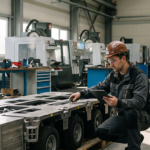
Die amerikanische Produktion befindet sich nicht im Niedergang – sie befindet sich im Wandel. Angetrieben durch Resourcing-Initiativen, Bundesinvestitionen und die schnelle Einführung intelligenter Technologien definiert der Sektor neu, was es bedeutet, Waren auf heimischem Boden zu produzieren. Laut der Nationaler Herstellerverband, Hersteller trugen über bei 2,96 Billionen US-Dollar to the U.S. economy at an annual rate in late 2025, accounting for 9.4% of total value-added output — a figure that underscores why policymakers, investors, and innovators continue to treat the factory floor as America’s most consequential economic arena.
Das verarbeitende Gewerbe ist nach wie vor der stärkste Motor zur Schaffung von Arbeitsplätzen in der gesamten US-Wirtschaft. Every dollar spent in the sector generates an estimated $2.69 in additional economic activity across supply chains, logistics, and services — a multiplier effect no other industry matches at scale. Custom manufacturing services, which tailor production precisely to client specifications rather than relying on generic output, are driving a significant portion of this growth. As demand for precision, speed, and domestic reliability intensifies, companies that invest in specialized production capabilities are capturing an outsized share of new contracts and long-term partnerships.
Der entscheidende Trend, der die amerikanische Fertigung im Jahr 2025 prägt, ist Elastizität — the deliberate effort to reduce fragility in supply chains through data-driven decision-making, diversified sourcing, and adaptive production models. The pandemic exposed catastrophic vulnerabilities in globally distributed manufacturing, and the response has been swift. Producers are deploying real-time analytics, predictive maintenance systems, and digital twins to anticipate disruption before it compounds into crisis. As RSM noted via the Connecticut Business & Industry Association, “Digital transformation and the changes associated with Industry 4.0… will be at the heart of all [resiliency] efforts.” This is not incremental improvement — it is a structural redesign of how American factories operate under pressure.
Der Übergang von traditionellen Montagelinien zu Industrie-4.0-Standards beschleunigt sich in allen Teilsektoren, from aerospace and automotive to medical devices and consumer electronics. Facilities that once relied on manual quality checks and paper-based scheduling are now integrating Internet of Things (IoT) sensors, AI-driven quality control, and cloud-connected production management systems. What emerges from this convergence is a manufacturing landscape that is simultaneously more automated and more human — requiring workers with higher digital fluency and organizations with greater strategic agility.
Understanding this transformation fully requires a working command of the language driving it. The next section breaks down the core terminology shaping modern production — from Industry 4.0 frameworks to the economic concepts that explain why manufacturing spend ripples so powerfully through the wider economy.
Kernterminologie: Moderne Produktion verstehen
Die Beherrschung der Fertigungssprache ist der erste Schritt, um zu verstehen, warum jedes industrielle Fertigungsunternehmen – vom Kleinserienhersteller bis zum multinationalen Zulieferer – so arbeitet, wie es heute arbeitet.
Kundenspezifische Fertigung
Ein Produktionsmodell, bei dem Waren so entworfen und gebaut werden, dass sie den genauen Spezifikationen eines einzelnen Kunden entsprechen, anstatt in großem Maßstab für einen allgemeinen Markt hergestellt zu werden.
Industrie 4.0
Die vierte industrielle Revolution, definiert durch die Integration des Internets der Dinge (IoT), künstlicher Intelligenz, Robotik und Echtzeit-Datenanalyse in physische Fabrikumgebungen.
Mehrwert-Output
Der wirtschaftliche Nettobeitrag des Herstellungsprozesses selbst – die Wertdifferenz zwischen Rohstoffen und Fertigwaren, die die zentrale, wohlstandsschaffende Aktivität jeder Produktionsanlage darstellt.
Multiplikatoreffekt
Das wirtschaftliche Phänomen, durch das sich die Produktionsausgaben nach außen ausbreiten und die zusätzliche Produktion in Lieferantennetzwerken, in der Logistik, im Einzelhandel und bei Dienstleistungen weit über die Fabrik hinaus anregen.
Diese vier Konzepte existieren nicht isoliert. In der Praxis definieren sie, wie moderne Produktion gleichzeitig Wettbewerbsvorteile und nationalen Wohlstand schafft.
Kundenspezifische Fertigung has evolved far beyond bespoke craftsmanship. Today, it is powered by CNC machining, additive manufacturing, and digital design workflows that allow low-volume, high-precision production without the historic cost penalty. A client-specific aerospace bracket and a custom-configured industrial conveyor system are both products of the same principle: tailored output at scale. For a deeper look at how customization is reshaping equipment categories, Diese Analyse der aufkommenden Produktionstrends behandelt die Betriebsmechanik im Detail.
Industrie 4.0 is the architectural shift underpinning all of it. Smart sensors on assembly lines feed real-time data to cloud platforms. Predictive maintenance algorithms reduce unplanned downtime. Digital twins simulate entire production runs before a single component is cut. According to the Programm „Manufacturing USA“.Diese Technologien sind jedoch nicht experimentell – sie werden derzeit in der gesamten heimischen Lieferkette in Hunderten von staatlich geförderten Innovationsinstituten eingesetzt.
Mehrwert-Output ist die Kennzahl, die die Produktionskapazität vom Rohdurchsatz trennt. Es reduziert die Materialkosten und misst, was eine Einrichtung tatsächlich ist schafft. Regionen mit hoher Wertschöpfung im verarbeitenden Gewerbe ziehen Investitionen, qualifizierte Arbeitskräfte und Infrastruktur an – ein zusätzlicher Vorteil.
Der Multiplikatoreffekt ist möglicherweise das überzeugendste Argument dafür, der inländischen Produktion auf politischer Ebene Vorrang einzuräumen. Laut der Nationaler Herstellerverband, für jeden 1,00 US-Dollar, der in der Fertigung ausgegeben wird, hat die Gesamtwirtschaft einen wirtschaftlichen Einfluss von 2,69 US-Dollar auf die Gesamtwirtschaft. Kein anderer Sektor generiert pro investiertem Dollar eine so große Downstream-Aktivität.
With these foundations in place, it becomes clearer why the country’s largest producers command such strategic importance — and why the titans leading U.S. manufacturing set the standard for every company that follows them.
The Titans: Top 10 Fertigungsunternehmen in den USA
Die größten US-Hersteller bauen nicht nur Produkte – sie definieren die technologischen Maßstäbe, Lieferkettenstandards und Innovationspfade, denen jeder andere Hersteller folgt.
Understanding where these giants operate matters whether you’re an investor, a supplier, or simply searching for a reliable manufacturing company near me to partner with on a regional project. Their R&D decisions ripple outward, shaping what smaller firms can source, adopt, and compete with. According to Zeiss und IndustrySelect, GE Aerospace und Lockheed Martin führen den Sektor bei F&E-Investitionen für Luft- und Raumfahrt sowie Verteidigung kontinuierlich an – ein Engagement, das inländische Produktionsstandards neu definiert hat.

Im Folgenden sind zehn Hersteller aufgeführt, die den Takt für die amerikanische Industrieproduktion vorgeben und denen jeweils eine entscheidende Innovation zugrunde liegt:
- GE Aerospace — Durch die Entwicklung von LEAP- und GE9X-Triebwerken der nächsten Generation mittels additiver Fertigung gestaltet GE Aerospace die Antriebstechnologie sowohl für die kommerzielle Luftfahrt als auch für militärische Plattformen aktiv neu.
- Lockheed Martin – Lockheed Martin, der größte Rüstungskonzern des Landes, fördert die Bereitschaft der Luft- und Raumfahrt durch Hyperschallsysteme und klassifizierte Programme für autonome Fahrzeuge, die hochmoderne inländische Lieferketten erfordern.
- Raytheon (RTX) — Raytheon ist ein führender Anbieter von Präzisionselektronik und fortschrittlicher Kommunikation und treibt Innovationen in den Bereichen Radar, Raketenlenkung und Cybersicherheitshardware voran, die für die nationale Verteidigungsinfrastruktur von entscheidender Bedeutung sind.
- Boeing — Über die Verkehrsflugzeuge hinaus integrieren die Fertigungssysteme von Boeing die digitale Zwillingstechnologie und die Verarbeitung von Verbundwerkstoffen, die in der gesamten Luft- und Raumfahrt-Lieferkette Maßstäbe setzen.
- General Motors – GM setzt aggressiv auf die Produktion von Elektrofahrzeugen und rüstet bestehende Anlagen mit Automatisierungs- und Batteriemontagelinien um, was einen umfassenderen Wandel in der amerikanischen Automobilproduktion signalisiert.
- Ford Motor Company – Der BlueOval City-Megacampus von Ford stellt eine bahnbrechende Neuansiedlungsinvestition dar, die die Produktion von Elektrofahrzeugen und Batterien unter einem inländischen Standort konsolidiert, um die Importabhängigkeit zu verringern.
- Raupe — Als Eckpfeiler der Schwermaschinenherstellung ist Caterpillar führend in der Telematikintegration und integriert Echtzeitdiagnose in weltweit verkaufte Bau- und Bergbaumaschinen.
- Honeywell — Von Luft- und Raumfahrtkomponenten bis hin zu industrieller Automatisierungssoftware verbindet Honeywell die Hardware-Fertigung mit der digitalen Prozesssteuerung auf eine Weise, die nur wenige Wettbewerber erreichen können.
- 3M — Die Abteilung für fortschrittliche Materialien von 3M ist in den Segmenten Gesundheitswesen, Elektronik und Industrie tätig und führt kontinuierlich Spezialklebstoffe und Filtersysteme ein, die Dutzende nachgelagerter Industrien versorgen.
- Northrop Grumman — Northrop Grumman konzentriert sich auf Raumfahrtsysteme und Stealth-Luftfahrt und treibt die inländische Fertigung in Richtung fortschrittlicher Verbundwerkstoffe und autonomer Systementwicklung voran.
Was diese Firmen eint, ist ihr übergroßer Einfluss auf inländische Lieferantennetzwerke. When a company like Lockheed Martin mandates a new materials specification or Raytheon upgrades its electronics tolerances, thousands of smaller manufacturers across the country must adapt to stay in the supply chain. That cascading effect makes understanding these titans essential — and it raises a compelling question about who actually makes up the backbone of American manufacturing. Hint: it isn’t the giants.
Die Macht des Kleinen: Warum 93 % der Unternehmen die Branche definieren
Der eigentliche Motor der amerikanischen Fertigung befindet sich nicht in der Zentrale der Fortune-500-Unternehmen – er läuft in Tausenden kleinerer Geschäfte, Fabrikanlagen und Spezialfabriken im ganzen Land. Nach Angaben des Bureau of Economic Analysis und der National Association of Manufacturers93,1 % der produzierenden Unternehmen in den USA beschäftigen weniger als 100 Mitarbeiter, wobei drei Viertel aller Unternehmen mit weniger als 20 Mitarbeitern arbeiten. Wenn Forscher und Beschaffungsteams fragen Wer produziert Wenn es sich um eine bestimmte Komponente oder ein kundenspezifisches Teil handelt, ist die Antwort fast immer ein kleiner, spezialisierter Betrieb – kein bekannter Name.
Dominanz durch Spezialisierung. Small manufacturers rarely try to do everything. Instead, they carve out defensible niches — precision machined parts, specialty coatings, low-volume composites — where their deep expertise makes them irreplaceable to larger supply chains. This focus drives a quiet but persistent innovation cycle. Without large bureaucratic layers, a small firm can prototype, test, and iterate in weeks rather than quarters. In practice, this makes small manufacturers disproportionately important as sources of the incremental advances that eventually reshape entire product categories.
Insight: Small manufacturers are often the first to adopt process innovations because they have less legacy infrastructure to protect and more immediate financial pressure to find efficiencies. Their agility isn’t a workaround — it’s a competitive advantage.
Agilität, wenn sich Lieferketten verändern. The disruptions of recent years exposed a structural truth: lean, localized producers recover faster than sprawling global networks. A small manufacturer operating regionally can pivot its material sourcing, retool a production line, or shift output volumes in response to demand changes far more quickly than a multinational plant tied to long-term procurement contracts. This responsiveness has made small firms critical partners for larger OEMs seeking resilience — a trend that shows no sign of reversing as nearshoring continues to accelerate through 2025 and beyond, as noted by NISTs Fertigungsaussichten.
Die lokale Produktion verkürzt die Durchlaufzeiten. For custom orders — especially in sectors like specialty vehicles, industrial equipment, and facility-specific fleet solutions — geography matters enormously. A domestic small-batch producer can fulfill a custom specification in days or weeks, while an overseas supplier may require months of coordination, shipping, and inspection cycles. For buyers managing tight operational timelines, that difference is often decisive. Industries like hospitality, for example, are increasingly turning to im Inland zusammengestellte Flottenoptionen die kundenspezifische Spezifikationen mit zuverlässigen Lieferfenstern kombinieren – eine Fähigkeit, die fast ausschließlich von den kleineren, agilen Herstellern hinter den Kulissen abhängt.
This landscape of distributed, specialized production sets the stage for understanding one of the most dynamic growth sectors in American manufacturing today: the electric vehicle space, where small-scale innovation and domestic assembly are converging to redefine what a purpose-built EV can be.
Spezialisierte Exzellenz: Der Aufstieg der Herstellung von Elektrofahrzeugen
Die Herstellung von Elektrofahrzeugen hat sich in aller Stille zu einer der technisch anspruchsvollsten – und am schnellsten wachsenden – Nischen innerhalb der breiteren amerikanischen Produktionslandschaft entwickelt. Während sich die Schlagzeilen auf Elektroautos in Originalgröße konzentrieren, vollzieht sich parallel dazu eine Revolution in der Spezialmobilität: die Umwandlung des einfachen Golfwagens in ein präzisionsgefertigtes Elektrofahrzeug für mehrere Passagiere.
The golf cart’s journey from simple fairway utility to sophisticated EV mirrors the wider arc of American manufacturing innovation. What once required little more than a motor, a chassis, and a seat now demands battery management systems, structural load engineering, and rigorous safety certification. As explored in our breakdown of Warum der Strom den gasbetriebenen Alternativen den Rang abläuft, ist der Leistungsunterschied zwischen älteren und modernen Elektroplattformen zu groß geworden, um ihn zu ignorieren.
Design: Technische Form rund um die Funktion
Elektrofahrzeuge mit vier Sitzplätzen stellen strukturelle Anforderungen, denen Einzelfahrer-Plattformen einfach nicht gerecht werden. Distributing the combined weight of passengers, battery packs, and a reinforced frame requires precise chassis geometry from the ground up. The VY-C4 exemplifies this — its chassis integrates battery housing directly into the load-bearing structure, reducing flex under full passenger load while keeping the center of gravity low for cornering stability. This isn’t a modification of an older design; it’s purpose-built engineering.
Engineering: Präzision auf Komponentenebene
Battery integration is where most 4-passenger EV builds succeed or fail. The VY-C4’s system requires tight tolerances between the cell array, thermal management layer, and chassis mounting points — misalignment at any stage compromises both safety and range. According to Produktspezifikationen von Longshengtai Machinery, ist dieses Maß an Präzisionsfertigung nicht verhandelbar, wenn die Sicherheit der Passagiere das wichtigste Designkriterium ist. Jede Komponentenschnittstelle wird vor Beginn der Montage validiert.
Montage: Warum die heimische Produktion Maßstäbe setzt
Die Montage im Inland ist nicht nur eine Präferenz in der Lieferkette, sondern eine Strategie zur Qualitätskontrolle. When a manufacturing company builds specialized electric vehicles onshore, it maintains direct oversight of tolerances, materials sourcing, and inspection protocols that offshore production often can’t guarantee. For the VY-C4, each unit moves through a staged assembly process where chassis, drivetrain, and battery systems are independently verified before integration. That traceability — knowing exactly where every part came from and when it was inspected — is difficult to replicate across distributed international supply chains.
This convergence of precision design, component-level engineering, and accountable domestic assembly is exactly what positions specialized EV manufacturers to lead rather than follow. And as the next section will explore, that kind of production excellence rarely happens in isolation — it’s increasingly powered by collaborative innovation networks that connect manufacturers of all sizes to shared research and technological breakthroughs.
Innovation und Zusammenarbeit: Der Vorteil der Fertigung in den USA
Die Wettbewerbsfähigkeit des amerikanischen verarbeitenden Gewerbes entsteht nicht mehr isoliert, sondern durch Netzwerke, in denen Universitäten, Bundesbehörden und Privatunternehmen Risiken, Forschung und Ergebnisse teilen.
Der Herstellung in den USA network represents one of the most structurally significant shifts in how the U.S. approaches industrial innovation. Rather than leaving manufacturers to solve advanced challenges independently, the network links institutes across the country to tackle shared problems — from materials science to digital manufacturing — through coordinated collaboration. This public-private partnership model reduces duplicated effort and accelerates the pace at which breakthroughs move from concept to production floor.
Öffentlich-private Partnerschaften are the backbone of this model. Federal funding provides stability and direction, while industry partners bring real-world application requirements and market accountability. The result is research that doesn’t stall in academic journals but instead reaches factories with practical, deployable solutions. For smaller custom manufacturers — the kind discussed in earlier sections of this guide — access to that shared research infrastructure is a genuine equalizer. A 15-person precision shop in Ohio can benefit from materials research funded at scale, without bearing the full cost of that R&D itself.
Regionale Innovationscluster amplify this effect considerably. When manufacturers, suppliers, research institutions, and workforce training programs concentrate in the same geography, innovation cycles compress. Knowledge travels faster. Talent flows more freely. A process improvement developed at a university lab can reach a regional supplier within months rather than years. The Die Vision der National Academies für die Fertigung in den USA bis 2030 und 2035 betont insbesondere die Vertiefung dieser regionalen Clusterbeziehungen als Mechanismus zur langfristigen Aufrechterhaltung der Wettbewerbsfähigkeit der USA.
Überbrückung der Lücke zwischen Labor und Fabrik remains one of the most persistent challenges in industrial innovation. Academic research often produces findings that are theoretically sound but operationally untested. Manufacturing USA institutes address this directly by embedding industry partners in the research process from the start — ensuring that new processes are validated under real production conditions. One practical example: advances in electric drivetrain manufacturing, relevant to everything from commercial EVs to purpose-built utility vehicles like the VY-C4 4-Personen-Golfwagen, haben von genau dieser Art des branchenübergreifenden Wissenstransfers profitiert, bei dem in Forschungsumgebungen entwickelte Erkenntnisse zu Batterien und Motoren in herstellbare, skalierbare Designs umgesetzt werden.
Wichtige Erkenntnis: Durch die Zusammenarbeit wird der Wettbewerbsvorteil nicht gemindert – sie beschleunigt die grundlegenden Fähigkeiten, die es jedem Unternehmen ermöglichen, auf einem höheren Niveau zu konkurrieren.
The geographic dimension of this ecosystem points naturally toward the next layer of the story: how specific regions have leveraged these collaborative frameworks to build outsized industrial strength — and why states like California continue to punch well above their weight.
Regionale Kraftpakete: Kalifornien und der West Coast Hub
Die Fertigungsidentität Kaliforniens wird nicht allein durch das Volumen definiert, sondern durch die außergewöhnliche Konzentration hochwertiger und hochkomplexer Produktion, die keine andere Region reproduzieren kann.
Despite operating costs that rank among the nation’s highest, California consistently holds its position as a top-15 manufacturing state. The reason is straightforward: cost disadvantages are offset by an unmatched ecosystem of engineering talent, venture capital, and research infrastructure. According to Indeed und BuiltInSF, California hosts a significant concentration of manufacturing jobs focused squarely on high-tech and aerospace innovation — sectors where proximity to top-tier universities and technology firms creates compounding advantages that cheaper real estate elsewhere simply cannot replicate.
Der Silicon-Valley-Effekt auf die Hardware-Herstellung ist real und messbar. What began as a software-dominant innovation corridor has steadily pulled physical production back into its orbit. Startups that once outsourced every component to overseas suppliers are increasingly prototyping and scaling domestically, driven by intellectual property concerns, faster iteration cycles, and growing investor preference for supply chain visibility. The result is a hybrid manufacturing model where software-defined processes meet precision hardware — a combination that defines industries from robotics to wearable medical devices.
Das Beschäftigungswachstum an der Westküste in der modernen Fertigung spiegelt diesen Wandel direkt wider:
- Luft- und Raumfahrt und Verteidigung Die Stellen in Südkalifornien nehmen weiter zu, gestützt auf langjährige Erfolge und eine wachsende Konstellation von Start-ups im Bereich Raumfahrttechnologie
- Herstellung medizinischer Geräte Im San Diego-Korridor sind Tausende von Spezialrollen hinzugekommen, die sowohl technische Qualifikationen als auch regulatorische Kenntnisse erfordern
- Elektromobilität Die Produktion – von Pkw-Elektrofahrzeugen bis hin zu kommerziellen Flottenfahrzeugen – wächst rasant, wobei Kalifornien sowohl als Regulierungsbehörde als auch als Inkubator fungiert
- Herstellung von Spezialfahrzeugen, einschließlich aller Kategorien von industriellen Transportgeräten bis hin zu modernen Hersteller von Golfwagen Segment hat einen fruchtbaren Boden gefunden, da die Elektrifizierungsvorschriften die Neugestaltung von Produkten auf breiter Front vorantreiben
Bold callout: Advanced manufacturing jobs on the West Coast are increasingly requiring cross-disciplinary skills — combining software engineering, materials science, and systems integration — making them among the highest-compensating roles in the broader manufacturing sector.
The electric mobility category deserves particular emphasis. California’s zero-emission mandates have accelerated a hardware innovation race that extends well beyond passenger automobiles. Manufacturers producing light electric vehicles for resorts, campuses, and logistics applications are redesigning platforms from the ground up — and for buyers evaluating these products, understanding Was den Bau hochwertiger Elektrofahrzeuge auszeichnet aus Rohstoffoptionen wird immer wichtiger.
California’s West Coast hub demonstrates that regional manufacturing strength is built on specialization, not scale. Understanding which manufacturer — and which partner — is right for a specific application requires a closer look at the custom manufacturing landscape, which is exactly where the next section picks up.
Kundenspezifische Fertigungsdienstleistungen: Den richtigen Partner finden
Die Wahl des richtigen Fertigungspartners ist eine der folgenreichsten Entscheidungen, die eine Marke treffen kann – und eine falsche Entscheidung kostet weit mehr als Zeit und Geld.
Whether you’re sourcing from among the top 10 manufacturing companies in the USA or evaluating a regional specialist, a structured approach to vetting partners protects your product quality, your supply chain resilience, and ultimately your customer trust.
Checkliste für Bewertungskriterien:
- Zertifizierungen und Konformität: Bestätigen Sie ISO 9001, AS9100 oder branchenspezifische Zertifizierungen, die für Ihre Produktkategorie relevant sind
- Produktionskapazität und Skalierbarkeit: Kann die Einrichtung Ihr aktuelles Volumen bewältigen? Und mit Nachfragespitzen skalieren?
- Technologiebereitschaft: Verfügt die Werkstatt über Automatisierung, Echtzeit-Qualitätsüberwachung oder Funktionen für digitale Zwillinge?
- Lieferzeiten und Kommunikation: Sind die Zeitpläne vertraglich festgelegt und es gibt einen festen Ansprechpartner?
- Finanzielle Stabilität: Fordern Sie Referenzen an und überprüfen Sie die Betriebshistorie – ein Partner, der mittendrin schließt, birgt ein katastrophales Risiko
- Tiefe der inländischen Lieferkette: Wohin ihre Rohstoffe stammen? Nearshore-Einträge stärken Ihre Widerstandsfähigkeit
Ein praktischer Unterschied, der zu Beginn jedes Partnerschaftsgesprächs geklärt werden sollte, ist der Unterschied zwischen Eigenmarke Und kundenspezifische Konstruktion. Private label means an existing product gets your branding — faster to market, lower minimum order quantities, but limited differentiation. Custom engineering means co-developing a product to your exact specifications, which demands a manufacturer with genuine R&D capability and engineering staff. Confusing the two leads to mismatched expectations and costly redesign cycles.
Qualitätskontrolle und Industrie 4.0-Bereitschaft verdienen direkte, spezifische Fragen – keine allgemeinen Zusicherungen. Fragen Sie potenzielle Partner: Wie viel Prozent der Mängel werden während des Prozesses im Vergleich zur Endkontrolle festgestellt? Nutzen Sie eine statistische Prozesskontrolle? Ist Ihre Ausrüstung für eine vorausschauende Wartung mit dem IoT verbunden? Laut der Nationaler HerstellerverbandJeder Fertigungsauftrag unterstützt fünf zusätzliche Arbeitsplätze in der gesamten Lieferkette, was bedeutet, dass ein Qualitätsmangel bei Ihrem Hersteller vervielfachte Folgen nach außen hat.

Transparenz in der Frage „Wer produziert“ ist für das Markenvertrauen nicht verhandelbar. Consumers and B2B buyers increasingly demand supply chain visibility, and brands that obscure their production origins face reputational risk when that information surfaces through third parties. Working with a manufacturer that welcomes audits, shares certifications openly, and communicates proactively about process changes signals the kind of operational integrity that strengthens long-term partnerships. For businesses exploring maßgeschneiderte Produktionslösungen In speziellen Gerätekategorien gilt dieser Transparenzstandard unabhängig von Branche oder Größenordnung.
Die Mechanismen, den richtigen Partner zu finden, sind wichtig – aber die wirtschaftlichen Auswirkungen dieser Beziehung gehen weit über Ihren eigenen Betrieb hinaus, eine Dimension, die im nächsten Abschnitt ausführlich untersucht wird.
Der Multiplikatoreffekt: Warum die inländische Produktion wichtig ist
Jeder Dollar, der für die US-Produktion ausgegeben wird, unterstützt nicht nur einen Arbeitsplatz – er breitet sich auf eine Weise nach außen durch Gemeinden, Lieferketten und die lokale Wirtschaft aus, die kein Import reproduzieren kann.
Laut der Nationaler Herstellerverband, manufacturing carries one of the largest multiplier effects of any sector in the U.S. economy. In practice, that means the economic activity generated extends far beyond the factory floor — into logistics, raw materials, professional services, and local retail spending.
Der 2,69-Dollar-Multiplikator: Was er tatsächlich bedeutet
Schätzungsweise für jeden 1,00 US-Dollar, der in der US-amerikanischen Fertigung ausgegeben wird 2,69 $ Gesamtwirtschaftsleistung is generated across the broader economy. That figure makes manufacturing uniquely powerful compared to most other sectors. When a domestic producer fills an order, that activity sustains machine operators, materials suppliers, truck drivers, and the small businesses those workers patronize. Contrast that with an offshore purchase, where the vast majority of that multiplied value flows to foreign economies instead.
Stärkung der Gemeinschaften durch industrielle Beschäftigung
Manufacturing jobs aren’t just jobs — they’re anchors. The sector consistently offers wages above the national median and provides pathways to skilled trades that don’t require four-year degrees. Industrial employment stabilizes local tax bases, funds public schools, and creates the kind of stable household income that sustains entire neighborhoods. As ClearPaths Analyse der amerikanischen Industrie stellt fest, dass Gemeinden, die auf inländischer Produktion basieren, im Vergleich zu Gemeinden, die ausschließlich auf Beschäftigung im Dienstleistungssektor angewiesen sind, bei wirtschaftlichen Abschwüngen eine messbare Widerstandsfähigkeit aufweisen.
Lokalisierte Lieferketten und Umweltauswirkungen
A less-discussed benefit of domestic manufacturing is its environmental upside. Shorter supply chains translate directly into fewer shipping miles, lower fuel consumption, and a significantly reduced carbon footprint per unit produced. When components are sourced regionally — as is increasingly the case for U.S.-based electric vehicle and clean energy manufacturers — the logistics savings compound across every production run. Companies focused on Produktion von Fahrzeugen mit sauberer Energie zeigen bereits, wie lokalisierte Fertigungs- und Nachhaltigkeitsziele sich gegenseitig verstärken können, anstatt miteinander zu konkurrieren.
Das strategische Argument für die Beibehaltung der Produktion im eigenen Land
Beyond economics, there is a national resilience argument that supply chain disruptions over the past several years have made impossible to ignore. Domestic production capabilities serve as a strategic buffer against geopolitical risk, trade instability, and sudden logistics shocks. The Rahmenwerk des Weißen Hauses zur industriellen Dominanz hat wiederholt betont, dass die Aufrechterhaltung fortschrittlicher Produktionskapazitäten nicht nur eine Wirtschaftspolitik ist, sondern eine nationale Sicherheitspriorität.
These foundational economic realities don’t exist in isolation. As the industry evolves, the same forces driving domestic investment today are already shaping what American manufacturing will look like through the end of the decade and beyond.
Zukunftsausblick: Fertigungstrends für 2026 und darüber hinaus
The next decade of U.S. manufacturing will be defined not by a single breakthrough, but by the convergence of sustainability, artificial intelligence, and radical personalization — reshaping every production line in America.
Der Drang nach nachhaltige Produktion und Kreislaufwirtschaft is accelerating beyond voluntary corporate pledges into operational necessity. Brands face growing pressure from regulators, investors, and end customers to close the loop on materials — reclaiming, reprocessing, and redeploying inputs rather than treating waste as an acceptable byproduct. In practice, this means manufacturers are redesigning product architectures from the ground up, engineering components for disassembly and recovery. Facilities that embed circularity early — through material selection, modular design, and reverse logistics — gain a measurable cost advantage over those that retrofit sustainability as an afterthought.
KI-gesteuerte vorausschauende Wartung is rapidly becoming the new baseline for custom production lines. Rather than scheduling downtime on fixed intervals, manufacturers are deploying sensor networks and machine-learning models that flag failure signatures before a breakdown occurs. As RSM analysts have noted through CBIA research, „Der Übergang zu einem datengesteuerten Entscheidungsmodell ist für Hersteller, die sich einen Wettbewerbsvorteil sichern wollen, nicht mehr optional.“ What this looks like on the floor: vibration anomalies trigger automated work orders, thermal imaging flags bearing wear weeks in advance, and throughput data continuously updates maintenance windows. The result is less unplanned downtime, lower repair costs, and production schedules that hold.
Die dritte große Veränderung ist Hyperpersonalisierung bei Industriegütern — a trend that flips the traditional mass-production logic on its head. Customers increasingly expect configured-to-spec solutions rather than catalog selections, and advances in CNC machining, flexible robotics, and digital twins now make low-volume customization economically viable at scale. This is precisely where small, agile U.S. manufacturers hold a structural advantage over large overseas operations locked into rigid high-volume tooling. Responsive domestic partners can iterate faster, communicate in real time, and absorb specification changes without the six-week lead time penalty that characterizes offshore production.
Konkret betrachten Nachfrage nach Elektrofahrzeugen im nächsten Jahrzehnt, forward-thinking manufacturers are already investing in the precision components, lightweight alloys, and power-system subassemblies that electric vehicles require. Longshengtai, for example, is actively developing its platform to meet the rising demand for electric utility vehicles — including kompakte Elektromodelle für zwei Passagiere built for the performance and efficiency expectations of 2026 and beyond. This long-horizon preparation — aligning production capabilities with where the market is heading, not where it currently stands — is exactly the posture that separates durable manufacturers from those caught flat-footed by demand shifts.
Wichtige Trends, die die Fertigung bis 2030 prägen
- Kreisförmiges Design: Materialien, die für die Verwertung und nicht für die Entsorgung entwickelt wurden
- Prädiktive KI: Sensorgesteuerte Wartung ersetzt kalenderbasierte Zeitpläne
- Hyperpersonalisierung: Kundenspezifische Spezifikationen mit nahezu Massenproduktionseffizienz
- EV-Bereitschaft: Inländische Hersteller bauen Kapazitäten auf, bevor die Nachfragekurve steigt
- Datengesteuerte Operationen: Echtzeit-Produktionsintelligenz als Wettbewerbsbasis
When you look at these trends together — not as isolated developments but as a reinforcing system — the strategic picture becomes clear. The manufacturers who will lead the next decade are those making decisions today that align people, technology, and process around what demand will require tomorrow. The key takeaways for decision makers follow from exactly that insight.
Das Fazit: Wichtige Erkenntnisse für Entscheidungsträger
Das verarbeitende Gewerbe in den USA ist keine veraltete Industrie im Niedergang – es ist ein 2,96 Billionen US-Dollar schwerer Motor für Innovation, Widerstandsfähigkeit und wirtschaftliche Multiplikatorkraft, der Unternehmen belohnt, die sich strategisch engagieren.
As explored throughout this guide, the sector’s strength runs deeper than headline output numbers. From the multiplier effect that turns every manufacturing dollar into broader community wealth, to the Industry 4.0 technologies reshaping production floors for 2026 and beyond, the evidence consistently points in one direction: domestic manufacturing is a competitive advantage, not a sentimental choice.
Für Entscheidungsträger, die ihre Beschaffungs- und Produktionsstrategien abwägen, sind dies die Grundprinzipien, die die Komplexität durchbrechen:
- Das verarbeitende Gewerbe verankert die Gesamtwirtschaft. Mit einer Jahresproduktion von 2,96 Billionen US-Dollar treibt das US-amerikanische verarbeitende Gewerbe Innovationen in nahezu allen vernetzten Sektoren voran. Sich für die heimische Produktion zu entscheiden, bedeutet, dieses Ökosystem zu nutzen, anstatt es zu umgehen.
- Kleine und mittelständische Unternehmen sind führend in der kundenspezifischen Leistungsfähigkeit. Firms with fewer than 500 employees represent approximately 93% of all U.S. manufacturers, according to Herstellung in den USA. These agile operations — not large assembly plants — are where specialized, high-tech production is evolving fastest. The U.S. manufacturing sector is increasingly defined by precision and customization, not just mass-market volume.
- Industry 4.0 is the new baseline, not a bonus. Data-driven production, predictive maintenance, and smart supply chain integration are no longer differentiators — they are table stakes for resilient manufacturing partnerships. Businesses that align with manufacturers already operating at this level reduce risk and gain flexibility.
- The $2.69 multiplier effect makes domestic sourcing a financial decision, not just a values one. As covered in the previous section, every dollar invested in U.S. manufacturing generates $2.69 in broader economic activity. Partnering with domestic producers like Longshengtai Machinery means that procurement decisions compound — supporting jobs, local suppliers, and community infrastructure simultaneously.
- Transparency and accountability travel shorter distances. Domestic partnerships simplify compliance, quality control, and communication — practical advantages that offshore arrangements frequently cannot match at the same cost-to-risk ratio.
One practical approach that consistently surfaces in procurement strategy: evaluate manufacturers not only on unit cost, but on their technology investment, production transparency, and supply chain depth. Those factors determine long-term partnership value far more reliably than price alone. You can review how Longshengtai Machinery approaches data handling and operational transparency as one signal of how a domestic partner structures accountability.
The full picture of U.S. manufacturing is detailed — and if you still have specific questions about top companies, product categories, or how to identify the right custom manufacturer for your business, the next section addresses the most common points of confusion directly.
Häufig gestellte Fragen zur US-amerikanischen Fertigung
U.S. manufacturing remains one of the most dynamic and consequential sectors of the American economy — and the questions surrounding it reflect just how much is at stake for businesses, workers, and policymakers alike.
Watch this overview for a visual breakdown of where American production is headed:
What are the top 5 manufacturing companies by revenue?
The largest U.S. manufacturers by annual revenue span multiple industries, reflecting the sector’s diversity. In practice, the consistent leaders include:
- Ford Motor Company — transportation equipment and electric vehicles
- General Motors — automotive manufacturing and mobility technology
- ExxonMobil — petroleum refining and chemical manufacturing
- Boeing — aerospace and defense systems
- Johnson & Johnson — pharmaceutical and medical device manufacturing
These companies collectively generate hundreds of billions in annual revenue and employ workforces numbering in the tens of thousands, anchoring entire regional economies.
Welche Unternehmen gelten als produzierendes Gewerbe?
Any business that transforms raw materials or components into finished goods through mechanical, chemical, or physical processes qualifies as a manufacturer. This includes operations as large as automotive assembly plants and as specialized as a small-batch food processing facility. The North American Industry Classification System (NAICS) organizes manufacturing into 21 subsectors, ranging from wood products and textiles to semiconductor fabrication and aerospace parts.
What are the top manufacturing products currently made in the USA?
Laut der Bureau of Economic Analysis, the top products manufactured domestically include transportation equipment, chemicals, and computer/electronic products. Other major categories are:
- Lebensmittel- und Getränkeprodukte — the single largest manufacturing employer
- Fabricated metal products — essential to construction and defense supply chains
- Machinery — powering agriculture, energy, and industrial operations
These categories collectively account for the majority of the sector’s $2.96 trillion contribution to GDP and demonstrate the breadth of what “Made in USA” actually covers.
How do I find a reliable custom manufacturer for my business?
Finding a trustworthy custom manufacturing partner requires a structured approach. One practical method is to:
- Define your specifications — tolerances, materials, volume, and lead times
- Vet domestic directories — platforms like ThomasNet list verified U.S. manufacturers by category
- Request sample runs before committing to full production orders
- Audit quality certifications — ISO 9001 compliance is a strong baseline indicator
- Negotiate transparent pricing on tooling, setup, and per-unit costs
A common pattern is to prioritize manufacturers with documented experience in your specific product category rather than general-purpose shops.
The future of American production belongs to those who act on information, not just consume it. Whether you’re sourcing a custom component, evaluating investment opportunities, or shaping policy, the data and frameworks in this guide give you a foundation to move forward with confidence.