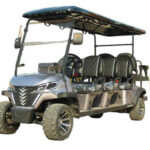
Un chariot de type D doit être évalué en fonction de la présence de l'itinéraire et de la discipline d'exploitation.
A D type electric golf cart is usually considered when the buyer wants more than basic point-to-point mobility. The route still needs practical reliability, but the cart is also expected to look polished in front of guests, members, residents, or investors. That combination makes the decision different from a purely utility-driven purchase. Buyers are judging how the cart moves, how it presents, and how easily it fits daily charging and maintenance habits at the same time.
Premium resorts, golf clubs, villa communities, and master-planned residential properties often choose this style of platform because the vehicle is part of the experience. It may carry members to a clubhouse, move guests between villas, support a sales tour, or handle short internal routes where presentation affects brand perception. Basic context from fond de voiturette de golf est utile pour le langage des catégories, mais le véritable choix dépend toujours de l'itinéraire visible et du niveau que la propriété attend chaque jour.
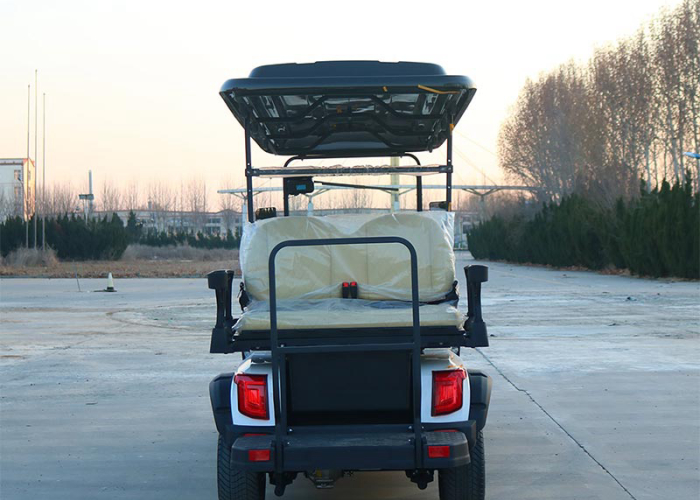
Ce guide est destiné aux acheteurs comparant Chariot de golf électrique de type D, Voiturettes de golf VY-D6+2 8 places, Voiturette de golf VY-D4+2 6 places, et la structure plus large des produits chez Produits pour voiturettes de golf électriques. It focuses on how D type platforms support premium routes without losing practical discipline around charging, cleaning, spare parts, and operator confidence. The goal is to decide whether the D type route is a true fit or whether another family would solve the same job with fewer compromises.
Commencez par l'itinéraire où le chariot sera le plus souvent vu
A D type purchase should begin at the most visible stop. That may be a clubhouse entrance, a resort arrival loop, a villa transfer point, or a community amenity center. The buyer should watch how the cart approaches that space, how long it waits there, where passengers board, and whether the vehicle would block any other movement if it paused for even a short time. A polished cart that creates staging friction will not feel premium in real use.
The route review should also separate premium passenger movement from back-of-house errands. Many sites assume one cart can cover both, but the service standard may not agree. A D type cart that looks excellent in front of guests may become inconvenient if it is constantly repurposed for rougher support work or parked in a cluttered service corner. Buyers should decide early whether the cart is mainly guest-facing, community-facing, or genuinely mixed use.
If the route touches public-road edges, club parking crossings, or shared community lanes, low-speed safety details must be defined before the order is finalized. Mirrors, lighting, braking feel, and operator sight lines become more important when the vehicle is both visible and close to mixed traffic. Background from Guidage des véhicules à basse vitesse de la NHTSA, 49 CFR 571.500, et Voiturette de golf CPSC et guide de sécurité LSV aide à formuler ces questions avant qu’elles ne deviennent des rénovations.
| Itinéraire de villégiature haut de gamme | Approche silencieuse, présence raffinée, embarquement confortable, retour de chargeur fiable. |
| Transport des clubs et des membres | Mise en scène propre, arrêts répétables, confort paré aux intempéries, contrôle fluide à basse vitesse. |
| Itinéraire d'agrément communautaire | Aide à la mobilité prévisible, entrée facile, miroirs clairs, professionnalisme visible. |
| Itinéraire de vente ou de visite de propriété | Impression visuelle forte, démarrages calmes, confiance des invités, mise en scène disciplinée. |
Visible-route planning also protects appearance. A premium cart should never seem lost or out of place in the very environment it is meant to support. When the route, waiting area, and boarding pattern are clear, the same vehicle looks more deliberate, more useful, and more valuable to the property team every day.
La discipline de charge prend en charge la présentation autant que la disponibilité
Premium routes expose weak charging habits quickly. A D type cart that arrives late, looks dusty, or sits awkwardly in a cable-cluttered bay loses the advantage the buyer expected from a higher-presentation platform. That is why the charging layout should be planned around the busiest credible service window rather than around a calm moment when the cart happens to be parked.
Lithium systems are often selected because they support daily readiness with less maintenance friction, but the benefit still depends on a clean charger area, clear staff ownership, and a route schedule that respects recharge windows. Public background from Présentation de la charge de Battery University, Bases de recharge du DOE américain, et Conseils de chargement de la batterie OSHA est utile car cela aide l'équipe à traiter la baie de chargement comme faisant partie de la norme d'exploitation haut de gamme plutôt que comme un coin technique caché.
Charging discipline also supports consistency. If the same cart returns to different places, is plugged in differently by each operator, or is left dirty after a visible route, the property will feel that disorder quickly. A D type cart should return to a controlled location where staff can inspect it, clean it if needed, and send it back out without improvisation.
The same logic applies to parking and staging. If a premium cart spends too much of the day sitting where it blocks a walkway, waits beside equipment, or forces staff to move other vehicles before charging, the property has a systems problem. Solving that before purchase or rollout usually does more for long-term satisfaction than adding another visible feature.
Le confort et la qualité des détails sont importants car les passagers les remarquent immédiatement
Passengers judge a premium cart in seconds. Step height, seat support, handholds, roof coverage, side visibility, and how quietly the cart starts all shape the impression. Buyers should decide whether the route includes older passengers, repeated boarding with golf or leisure bags, or damp-weather movement where the cart must still feel secure and easy to enter. Those details affect confidence far more than decorative trim alone.
Accessories should therefore be selected for service logic, not just appearance. Windshields, weather protection, mirrors, storage details, and trim upgrades are useful only when they support the daily route. The resources at Golf Cart Accessories and À propos de Longshengtai peut aider à cadrer la conversation, mais le facteur décisif devrait toujours être de savoir si les détails choisis améliorent le confort, la visibilité, le nettoyage et le service après-vente.
La sécurité fait également partie de l’expérience premium. Des miroirs clairs, un arrêt contrôlé et de bonnes lignes de vue aident le chariot à se sentir calme plutôt qu'improvisé devant les invités ou les membres. Des ressources telles que Conseils pour les appareils de mobilité ADA, Ressources du CDC sur la sécurité des véhicules automobiles, et Directives de l'OSHA sur les équipements de protection individuelle rappelez aux acheteurs que la sensibilisation à l'accessibilité et le comportement des opérateurs font partie de la qualité du service, et pas seulement du langage de la conformité.
A strong D type choice also stays easy to clean and stage after a full shift. If the finish looks elegant in the morning but becomes hard to reset by evening, the property will feel that cost every day. That is why service access and cleaning rhythm belong in the same conversation as visual presentation.
Les questions d’assistance et de réapprovisionnement sont plus importantes pour les flottes premium
A buyer should ask how the cart is packed, which parts wear fastest, how charger replacement is handled, what finish-care guidance is included, and how future orders can remain consistent. Those questions reveal whether the supplier understands the practical side of premium route management or is only describing a polished product surface. A route-focused conversation through Contacter Longshengtai ou Demander un devis est bien plus utile qu’une vague demande d’une voiturette de golf haut de gamme.
C'est également là que des références extérieures de qualité telles que Aperçu des normes ANSI, Normes et engagement UL, et Ressources de la NFPA sur la sécurité des véhicules électriques are useful background. They keep the discussion centered on documentation, component discipline, charging quality, and repeatable support instead of broad premium claims. A D type cart should be easier to support because its role is visible, not harder to own because more trim was added.
If the property expects fleet growth, reorder consistency matters too. A premium lineup should not drift in charger practice, accessory choices, or visible finish after the first unit. That is why the buyer should document the route, visual standard, and charging routine before moving from one order to a broader plan. Standardizing those details early protects both service quality and procurement confidence.
It is also wise to define what the property considers unacceptable drift in service quality. If a cart arrives dusty at the clubhouse, if a charger cable is visible across a guest path, or if boarding takes too long because the waiting zone is unclear, the team should know who corrects that issue and how quickly. Premium transport standards hold up better when those operational thresholds are written down before the fleet expands.
Définir par écrit la norme opérationnelle premium avant le déploiement
Premium presentation is hard to sustain if nobody has written down what premium means on the route. The property should define where the cart waits, how clean it should look before each visible trip, what accessories must always be in place, and how staff report small cosmetic or charger issues before they become visible problems. This does not need to be a long manual. A one-page route standard is often enough, provided it is specific and actually used.
That written standard also helps protect consistency when shifts change or when more than one driver uses the cart. New staff can see where the vehicle belongs, how it should be parked, and which details matter most on the visible route. The result is a cart that feels intentionally managed instead of a premium product left to drift into ordinary handling habits.
A D type purchase becomes much easier to defend once that standard exists. The buyer can show why the platform was chosen, how it will be maintained, and which route expectations justify the investment. That clarity helps everyone involved, from procurement to operations to the supplier’s after-sales team.
Un itinéraire pilote montrera si la promesse premium est réelle
A pilot route is especially useful for premium carts because it tests both function and perception. Drive the intended loop during a real service window, watch how the cart approaches the key stop, and ask whether passengers feel comfortable boarding and riding. Note whether the cart still looks well staged after several trips and whether the charging routine remains orderly when the team is under pressure.
The pilot should include the people who will operate, charge, and clean the cart. Drivers may notice turning friction, supervisors may notice staging problems, and service staff may notice whether the finish is realistic to maintain. Those observations help the buyer decide whether the D type platform truly fits the route or whether the property would be better served by a simpler alternative.
Once those notes are written down, the property can move to a quote discussion with a much better brief. The supplier can respond to a visible route standard instead of a vague request for a premium cart, and the buyer can make a stronger decision about whether the D type family is the right long-term fit.

Référence vidéo
La vidéo ci-dessous montre une voiturette de golf de type Longshengtai D en fonctionnement. Il s'agit d'un compagnon visuel utile lors de l'examen de la présence d'un itinéraire, du comportement d'embarquement et des exigences d'étape premium.
Questions que les acheteurs posent souvent
Qu'est-ce qui différencie un chariot de type D d'un chariot de passagers plus basique ?
The difference is usually the combination of presentation, comfort, and route role. A D type cart is often chosen where the vehicle is highly visible and expected to feel polished while still remaining practical to charge, clean, and support.
Un chariot premium devrait-il également gérer les tâches difficiles en arrière-plan ?
It can, but only if the property accepts the effect on staging, cleanliness, and presentation. Many sites are better served by keeping the premium cart on visible routes and using a different vehicle for messier support work.
Que faut-il préparer avant de demander un devis ?
Préparez la carte d'itinéraire visible, la fenêtre de service la plus fréquentée, le lieu de recharge, la norme de présentation et toutes les exigences en matière de climat ou de confort des passagers. Cela rend la discussion de la citation à travers Demander un devis bien plus utile.
Vue de la décision finale
The right D type electric golf cart feels polished because the route, charging habit, and presentation standard all support one another. When that system is clear, the cart improves the property experience instead of merely looking premium in a still image.
Si l'acheteur peut décrire clairement l'itinéraire visible, les attentes des passagers et la routine après-vente, le choix d'une plate-forme de type D devient beaucoup plus simple et bien plus défendable.