
Un utile test di autonomia dovrebbe copiare il percorso reale, non una dichiarazione su una brochure
A golf cart range test is only valuable when it reflects the route the cart will actually run. Buyers often compare published range figures without asking how much passenger weight, slope, stopping frequency, weather, or charger reserve was built into that number. The result is a misleading comparison between carts that may behave very differently once they start serving a resort loop, campus stop pattern, or private-community route.
The better method is to design a route-loop test that mirrors real use. Define the passengers or cargo, the route length, the stop count, the turning points, the surface changes, and the minimum reserve the operator wants to keep at the end of the shift. That approach is more useful for a Carrello da golf a 4 posti VY-A4 carrello degli ospiti, una navetta per carrello da golf per quattro passeggeri VY-C4 o una più grande Carrello da golf VY-D4+2 a 6 posti persone in movimento rispetto a qualsiasi singolo numero di titolo perché trasforma l'intervallo in una domanda operativa anziché in un numero di marketing.
A structured test also improves the buying conversation. When a supplier sees the route map, loop count, charging window, and reserve target, it can explain whether the buyer should stay with one configuration or compare a different seating layout, battery size, or route plan. General background from Panoramica dei veicoli elettrici del Data Center sui combustibili alternativi E Panoramica dei veicoli elettrici e del caricabatterie del Dipartimento dell'Energia degli Stati Uniti aiuta a inquadrare il pensiero sui veicoli elettrici, ma il giudizio finale deve ancora arrivare da un test su un percorso costruito attorno alla proprietà dell’acquirente.
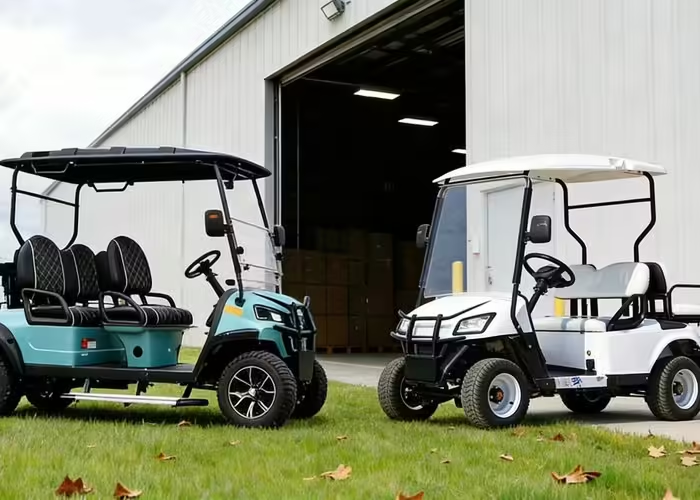
Definisci il percorso circolare prima che la prima ruota giri
A proper range test begins with the loop definition. Record the total loop distance, where the cart stops, where it climbs, where it idles with passengers, and where it returns to charge. If the property has several route types, create separate loops rather than blending them into one average run that means little in practice. A tight village shuttle, a scenic-tour loop, and a maintenance route will stress the cart in different ways.
Anche il carico dei passeggeri dovrebbe essere fissato prima del test. Un carrello che esegue un giro con un solo conducente e il giro successivo con quattro adulti più bagagli non produce dati comparabili. Acquirenti che esaminano il Soluzione per carrello da golf pages should decide whether their real concern is maximum capacity, typical capacity, or an operational mix. Then the range test can be structured around that duty cycle instead of a best-case load that the site rarely sees.
It is also smart to define the finish condition. Some buyers are comfortable ending a route day with a small reserve. Others want a larger buffer for late guest requests, route detours, or weather changes. That reserve target should be part of the test rule from the beginning. Safety references like Carrello da golf CPSC e guida alla sicurezza LSV E Guida dei veicoli a bassa velocità NHTSA sostengono lo stesso principio: il margine operativo prevedibile è più prezioso di un allungamento massimo una tantum.
| Ingresso per test di portata | Perché deve essere risolto |
| Distanza del ciclo e fermate | Crea un test ripetibile invece di una guida casuale. |
| Carico passeggeri o merci | Impedisce che buoni risultati siano basati su un funzionamento irrealisticamente leggero. |
| Superficie e pendenza | Spiega perché due carri simili possono produrre risultati pratici diversi. |
| Obiettivo di riserva finale | Mantiene il test allineato con la reale confidenza operativa. |
Controlla le variabili che modificano più velocemente l'utilizzo della batteria
Speed discipline matters more than many buyers expect. Fast starts, hard acceleration after each stop, and aggressive hill climbing can shorten useful range even when the route distance stays the same. Drivers used for the range test should be briefed to operate consistently so that the result reflects the cart and route, not one operator’s habits.
Tire condition and route surface also deserve attention. Underinflated tires, mixed tread patterns, loose gravel, brick pavers, wet paths, or repeated curb crossings all add resistance or cause drivers to use power differently. Sites that operate across guest paths and outdoor attractions can use the Park and Outdoor Transport Solution context to think about how pavement quality and comfort expectations affect practical range, not only mechanical efficiency.
Anche i cambiamenti meteorologici possono distorcere i risultati dei test. Calore, pioggia, vento forte e superfici bagnate alterano il consumo di energia o il margine di confidenza necessario al conducente. Guida alla sicurezza meteorologica NOAA come Guida alla sicurezza contro le inondazioni del Servizio meteorologico nazionale E Guida alla sicurezza contro i fulmini del Servizio meteorologico nazionale è rilevante perché un percorso che sembra accettabile alla luce del giorno asciutta potrebbe richiedere una riserva maggiore o una decisione di fermarsi anticipata in condizioni sfavorevoli.
Charging habits before the test should be written down as well. Start state, charger used, and the time since the last full charge all affect the meaning of the result. A range number without a clean starting condition is only a story, not evidence.
Testalo con lo stesso comportamento di caricamento e imbarco utilizzato quotidianamente dal sito
Passenger movement changes range because it changes stop duration, restart frequency, and how often the cart waits with accessories running. A hospitality route that pauses for boarding, luggage handling, and guest questions will behave differently from a maintenance route with quick in-and-out stops. Buyers should therefore build the real boarding pattern into the range test instead of driving continuous loops that ignore site behavior.
Ciò è particolarmente importante quando si confrontano disposizioni di posti a sedere più grandi come a Carrello da golf VY-A6 a 6 posti O Carrello da golf VY-D4+2 a 6 posti against smaller carts. More seats can reduce the number of trips, but they also change weight, turning behavior, and the reserve buyers expect at the end of a shift. The route test should capture both the benefit and the cost rather than assuming more seats automatically means better productivity.
Accessibility and passenger comfort deserve a place in the test notes too. If a route includes older passengers, children, or riders carrying bags, the driver may use slower starts and longer stops. General mobility guidance from Guida ai dispositivi di mobilità ADA non è un documento di batteria, ma ricorda agli operatori che un profilo realistico dei passeggeri fa parte di una buona pianificazione del percorso.
| Comportamento operativo | Implicazioni del test di portata |
| Soste d'imbarco lunghe | Riduce il valore di un risultato semplice di sola distanza. |
| Mix pesante di passeggeri | Mostra se l'obiettivo di riserva è ancora sicuro a carico reale. |
| Riavvio frequente dopo brevi attese | Evidenzia le abitudini del controller e dell'accelerazione che influiscono sull'autonomia pratica. |
| Richieste degli ospiti in ritardo | Conferma se la riserva di finitura è sufficientemente grande per le operazioni reali. |
Leggi il risultato tenendo presente la riserva e il turnaround dell'addebito
A range test should end with an operational decision, not only a number. Ask whether the cart can finish the intended loop schedule with the required reserve, whether the driver still feels comfortable near the end of the run, and whether the charging window that follows is realistic. A cart that reaches the target distance but arrives with no useful margin may still be the wrong choice for a busy property.
This is where route testing connects directly to fleet planning. The buyer may discover that the cart is adequate, that the charger schedule needs revision, or that a different configuration should be compared. A property using mixed passenger routes can use Richiedi un preventivo and Prodotti per carrelli da golf elettrici to discuss those findings with the supplier in a practical way. The most useful question is not what is your maximum range. The useful question is can this cart complete my real loop schedule with reserve and a manageable recharge window.
La riserva di carica dovrebbe tenere conto anche delle interruzioni. Se un evento tardivo, una deviazione in salita o una carica mancata possono mettere a rischio il percorso, l’obiettivo di riserva è probabilmente troppo stretto. Riferimenti di tariffazione pubblica come Nozioni di base sulla ricarica del DOE statunitense e la guida della batteria da Panoramica sulla ricarica di Battery University sostenere l’idea che il margine operativo sia parte della salute del sistema, non della capacità sprecata.
Confronta i modelli con lo stesso test, non con lo stesso titolo
Quando gli acquirenti confrontano due o tre carrelli, dovrebbero utilizzare la stessa definizione di circuito, carico passeggeri e riserva di finitura per ciascun modello. Questo è l'unico modo giusto per confrontare una compatta Golf cart elettrico classico opzione con un carrello da golf elettrico di tipo C più grande o Carrello da golf elettrico tipo D configurazione. Se il test cambia tra i modelli, il risultato potrebbe riflettere il comportamento del conducente o i tempi del percorso piuttosto che i carrelli stessi.
The comparison should include notes beyond distance. Record turning confidence, braking feel on the loaded route, ride quality over the worst surface, driver visibility, boarding convenience, and charging closeout. A model that produces slightly less distance may still be the better operational choice if it loads passengers more smoothly or finishes with a more predictable charging routine.
Route approvals and internal policy also matter. If a site manager is more comfortable with a larger reserve, lower top speed, or a shorter assigned loop, that preference should be treated as part of the specification. Safety resources like 49 CFR 571.500 E sfondo del veicolo a bassa velocità sono un contesto utile quando le proprietà fondono corsie private e movimento stradale adiacente, ma la questione chiave rimane se il risultato del test si adatta alle regole del sito.
Il confronto tra modelli più efficace è quello che un altro manager potrebbe ripetere il mese prossimo e ottenere più o meno la stessa risposta. Questa ripetibilità è ciò che trasforma un promettente giro dimostrativo in una decisione di acquisto difendibile.
Trasforma una giornata di test in un benchmark di percorso continuo
A useful range test should not disappear after the purchase. Keep the loop map, passenger assumptions, finish reserve rule, and charger notes so the same benchmark can be repeated after seasonal changes, battery aging, or route redesign. This helps buyers understand whether lower range later is normal aging, a route change, or a maintenance issue.
Benchmark repeats are especially useful after new accessories, tire changes, or different shift schedules are introduced. The operator can compare the new result against the original loop rather than relying on memory. If the route becomes less efficient over time, the team can decide whether to improve charger spacing, reduce idle time, or reassign a different cart to the route.
This benchmark also improves future procurement. When the site eventually adds more carts, the buyer will already know the real loop demand, the comfort reserve, and the charger turnaround needed at the property. That makes the next discussion with the supplier shorter, more factual, and easier to verify on delivery.
It is also worth saving one short field note after each benchmark run. Record whether the driver felt rushed near the end, whether passengers changed normal boarding behavior, and whether the cart returned to charge at the expected time. Those details help separate battery aging from simple operating drift when the same route feels tighter a few months later.
Riferimento video
The video below provides a practical visual reference for discussing route behavior, passenger load, and cart performance. Use it alongside your own loop record so the final decision stays tied to measured operation rather than a generic claim.
Domande che spesso fanno gli acquirenti
Quanti cicli sono sufficienti per un test di portata utile?
Anelli sufficienti per rappresentare il vero percorso giornaliero. Il test dovrebbe continuare fino a quando non saranno dimostrati sia la finestra operativa pianificata che l'obiettivo di riserva, anziché interrompersi dopo un unico ciclo confortevole.
Gli acquirenti dovrebbero testare ogni volta con il pieno carico di passeggeri?
Testa il carico che conta di più per la decisione di acquisto. Molti acquirenti eseguono sia un test di carico tipico che un test di carico di picco più intenso in modo da poter confrontare l'efficienza normale con il margine operativo.
Perché la riserva è più importante della distanza massima?
Reserve protects the route from detours, weather, extra stops, and end-of-shift uncertainty. A cart that barely reaches a long headline distance may still be weak for daily service if it finishes with no practical buffer.
Un vero e proprio test di percorso produce una decisione di acquisto migliore
The best range result is the one that predicts tomorrow’s route, not the one that wins a brochure comparison. When buyers fix the loop, load, reserve, and charging follow-up, they turn range into an operating fact instead of a vague promise.
Ciò rende la scelta finale del carrello più facile da difendere, più facile da ripetere e molto più utile una volta che la flotta inizia a lavorare nelle condizioni reali del sito.