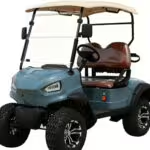
Eine 72-V-Entscheidung sollte auf der Grundlage der Streckennachfrage und nicht aus Spannungsstolz getroffen werden
A 72V electric golf cart attracts attention because buyers often associate higher voltage with stronger torque, quicker response, and better performance under load. Those expectations can be valid, but voltage alone does not guarantee the result. Motor tuning, controller behavior, gearing, tire diameter, payload, route slope, and charging discipline still decide whether the cart feels confident in service. Buyers exploring Elektrischer Golfwagen vom Typ D sollten die 72-V-Optionen für elektrische Golfwagen als Teil eines vollständigen Routenplans und nicht als Abkürzung zur Leistung betrachten.
This matters most when the cart carries passengers on hills, runs repeated shuttle loops, or works on routes where reserve power affects driver confidence. A higher-voltage system may offer useful operating headroom, but only when the rest of the specification supports it. If the site never leaves flat ground and the duty cycle is modest, a 72V setup may add complexity without creating much practical benefit. That is why the route, not the voltage label, should lead the conversation.
This guide explains how to assess a 72V electric golf cart for buyer use. It focuses on torque expectations, passenger load, braking confidence, charging implications, and the support questions that should be answered before a purchase is finalized. The aim is to make voltage planning practical rather than promotional.
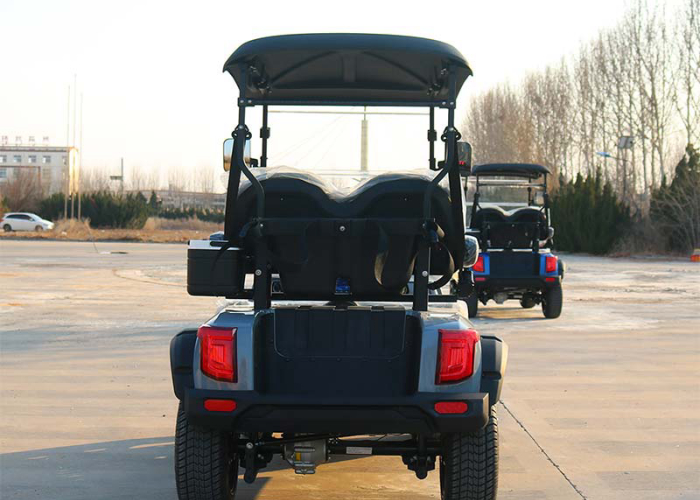
Entscheiden Sie anhand des Routenschweregrads, ob 72 V in die Diskussion gehört
The first question is not whether 72V is better in the abstract. It is whether the route asks enough from the cart to justify it. Long inclines, repeated starts on ramps, heavy passenger loads, high accessory use, and limited recovery time between trips can all push buyers toward a stronger performance reserve. If a site mainly uses VY-D2 Golfwagen mit Lithiumbatterie Bei leichter Bewegung auf flachem Grundstück kann der Gewinn bescheiden ausfallen. Wenn es verwendet wird VY-D4+2 Golfwagen 6 Sitzer oder VY-D6+2 8-Sitzer-Golfwagen Bei größeren Gruppen und häufigen Höhenunterschieden wird das Gespräch relevanter.
A route file should include slope points, stop density, passenger count, expected luggage or equipment, and the speed discipline the property actually allows. That record helps the supplier explain whether a 72V system supports the job or simply sounds impressive. The important outcome is controlled service over the whole shift, not one short burst of performance.
Buyers should also decide how much reserve matters. A cart that technically completes the route with little margin may feel acceptable in a demo but frustrating in daily service. Reserve becomes especially important when the route includes wet surfaces, late returns, or peak periods where a backup unit is not always free. That is where a stronger specification can protect operations rather than just inflate expectations.
| Flache, kurze Strecken | Eine höhere Spannung bietet möglicherweise nur einen geringen praktischen Nutzen, wenn die Nutzlast und der Umkehrdruck niedrig sind. |
| Gemischte Pisten und volle Personenbeladung | Bewerten Sie gemeinsam die Drehmomentreserve, das Reglerverhalten, das Bremsgefühl und die Laderückgewinnung. |
| Langer Shuttle-Einsatz mit geringen Ausfallzeiten | Prüfen Sie, ob die Wahl der Spannung die Routensicherheit verbessert, ohne dass es zu Ladeengpässen kommt. |
Drehmoment und Belastung sollten gemeinsam besprochen werden
A higher-voltage setup is often chosen because buyers want stronger pull under passenger load, but torque is a system outcome, not a single battery fact. Motor selection, controller calibration, tire size, and final drive all influence how the cart behaves when it starts on a slope or leaves a crowded pickup point. That is why the buyer should ask what the cart feels like at the expected load, not only what voltage it carries.
Batterieressourcen wie z Ladeübersicht der Battery University sind nützlich, um zu verstehen, warum sich das Batterieverhalten bei Bedarf ändert, während breitere Referenzen zu Elektrofahrzeugen dies tun Übersicht über Elektrofahrzeuge und Ladegeräte des US-Energieministeriums Und Übersicht über Elektrofahrzeuge des Alternative Fuels Data Center Helfen Sie dabei, das Zusammenspiel von Stromversorgungssystemen und Lade-Kompromissen zu bestimmen. Bei diesen Quellen handelt es sich nicht um Handbücher für Golfwagen, aber sie unterstützen die richtige Einstellung: Nutzbare Leistung entsteht dadurch, dass das gesamte System im Gleichgewicht bleibt.
Passenger comfort should stay in the same conversation. A cart that delivers sharp response without smooth control may feel less professional than a slightly calmer platform. Drivers need predictable acceleration, easy hill starts, and braking that matches the route. The best specification is the one that feels composed when fully loaded, not merely powerful in an empty test run.
Bei einem 72-V-Plan sind Aufladung und elektrische Unterstützung immer noch wichtig
A 72V electric golf cart should never be evaluated without discussing charger compatibility, parking layout, and service habits. If the route asks more from the system, the charging plan must be able to restore that readiness reliably. The site should decide whether the cart charges overnight only or whether it also depends on partial daytime recovery. If the charging area is weak, the promised performance advantage can disappear into a messy handoff process.
Normenkontext von UL-Standards und Engagement, Übersicht über ANSI-Standards, Und NFPA-Ressourcen zur Sicherheit von Elektrofahrzeugen is useful because higher-performance electrical systems deserve disciplined handling and clear support documentation. Buyers should ask which charger is supplied, what fault indicators operators should watch, how cable condition is monitored, and what the expected recovery behavior looks like after a heavy route.
Elektrische Sicherheit ist kein abstraktes Anliegen. Anleitung von OSHA-Leitfaden zur elektrischen Sicherheit reminds managers to treat the charging area as a controlled work zone. Even if the cart is easy to operate, the site still needs a clear process for connection, inspection, and escalation when a charger or battery behavior looks unusual.
Leistung ersetzt nicht Bremsen, Streckengestaltung oder Rechtsbewusstsein
A stronger cart should make the route calmer, not tempt the property into weak route design. Hill starts, passenger pickup zones, drainage crossings, and downhill braking areas must still be reviewed carefully. A cart with more response needs a driver policy that matches it. Public references such as NHTSA-Fahrzeugführung bei niedriger Geschwindigkeit, 49 CFR 571.500, CPSC-Golfwagen und LSV-Sicherheitsleitfaden, Und Hintergrund eines Fahrzeugs mit niedriger Geschwindigkeit sind hilfreiche Hintergrundinformationen, wenn Manager den Betrieb von Privatgrundstücken von Plänen trennen, die Straßen oder Bereiche mit gemischtem Verkehr berühren.
Braking confidence deserves special attention on steep routes. Buyers should test the cart at the heaviest approved passenger load on the real downhill section, not on a flat demonstration loop. The question is whether the vehicle feels controlled at repeated stops and whether the driver still has confidence after several cycles, not whether one isolated run looked impressive.
Weather should also be included in the evaluation. Wet surfaces can change traction, stopping feel, and how confidently a driver uses the cart’s available power. A route that seems comfortable in dry weather may need a different operating rule once rain starts. That is why voltage planning belongs inside a full risk discussion rather than in a narrow performance comparison.
Stellen Sie Support-Fragen, die Spannung in eine funktionierende Entscheidung verwandeln
A serious supplier should be able to explain which duty cycles justify a 72V setup, what charging arrangement is expected, how the system is supported after delivery, and what driver guidance should accompany the vehicle. Buyers can review the relevant model family through Motorisierter Golfwagen VY-D4 und dann weitermachen Fordern Sie ein Angebot an mit einer Routenübersicht, die Steigung, Passagiermix, Haltestellendichte, Parkplatzanordnung und die am Ende der längsten Schleife erwartete Reserve enthält. So wird aus einer Spannungsdiskussion eine Arbeitsspezifikation.
Gewerbliche Käufer sollten auch den Ersatzteilsupport, die Fehlerbehebung und die Informationen klären, die der Lieferant benötigt, wenn sich die Leistung nach der Installation anders anfühlt. Die öffentliche Gewährleistungsperspektive von Anleitung zur FTC-Garantie ist eine nützliche Erinnerung daran, dass Versprechen und Supportbedingungen klar getrennt werden sollten. Wenn der Wagen für eine Route gekauft wird, auf die Gäste oder Mitarbeiter angewiesen sind, sind Ausfallzeiten wichtiger als die Marketingsprache.
The strongest 72V purchase decision is therefore the one backed by route evidence. If the route does not demand it, buyers should be honest. If the route does demand it, then charger planning, braking checks, driver training, and after-sales support must be part of the same approval package. When those pieces are aligned, the final operating conversation usually moves more efficiently through Kontaktieren Sie Longshengtai.
Legen Sie vor dem ersten Streckenversuch klare Akzeptanzkriterien fest
A 72V decision should be validated with a structured trial instead of a short impression drive. Before the cart arrives, the buyer should define what success looks like on the actual route: acceptable hill-start feel, target reserve after the longest loop, braking confidence on the steepest controlled descent, and charger recovery that fits the site’s timetable. Without those criteria, the review can become emotional and inconsistent because one person remembers acceleration while another remembers seating comfort or cosmetic finish.
The first route trial should use the real passenger weight or a realistic simulated load, not an empty cart. It should also include the stop pattern that will happen in daily service. A cart that feels powerful on one long run can behave differently when it must start repeatedly from slow corners, pickup points, or damp inclines. Repeated stops show whether the response remains smooth and whether the driver can control the cart confidently under the same conditions that will exist after delivery.
Charging behavior should be reviewed immediately after the route trial instead of later in isolation. If a stronger specification uses more of the available window than expected, the site may need to change charger placement, return procedure, or backup-cart strategy. Testing the full cycle on the same day keeps the conversation honest because operations, charging, and support are being judged together rather than as separate promises.
The buyer should finish by documenting not only performance numbers but also driver confidence and passenger experience. A higher-voltage cart that meets the route target but feels abrupt or difficult to manage in wet conditions may still need a different setup or a stricter operating rule. Those notes help the supplier recommend refinements and help the site decide whether the voltage choice truly improves daily service rather than simply producing a more impressive test drive.
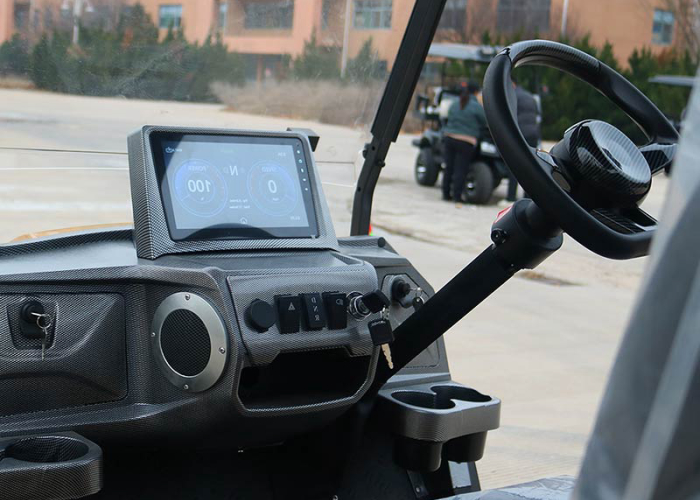
Videoreferenz
Das folgende Video bietet einen allgemeinen visuellen Kontext für den Betrieb eines elektrischen Golfwagens. Die endgültige Spannungsauswahl sollte weiterhin auf der tatsächlichen Route, der Nutzlast, dem Ladeplan und den Supportbedingungen des Lieferanten basieren.
Fragen, die Käufer oft stellen
Wann ist ein elektrischer 72-V-Golfwagen eine Überlegung wert?
It is worth considering when the site has meaningful slopes, repeated full-load starts, tight turnaround windows, or a duty cycle that needs stronger performance reserve than a lighter route does. The decision becomes easier to defend when the site can point to specific route pain points such as slow uphill departures, weak reserve at the end of a shift, or driver complaints under full passenger load.
Bedeutet 72V automatisch einen schnelleren oder besseren Wagen?
Nein. Das tatsächliche Ergebnis hängt von der Steuerung, dem Motor, der Übersetzung, der Reifengröße, der Zuladung, der Route und der Ladedisziplin ab. Spannung ist nur ein Teil des Leistungssystems.
Was sollten Käufer testen, bevor sie eine 72-V-Flottenbestellung genehmigen?
Test loaded hill starts, repeated stops on the steepest section, realistic charger recovery, and the driver’s ability to manage the cart smoothly through the full route cycle. It is also useful to record how much reserve remains after the longest shift and whether the driver still feels confident during the last downhill stops rather than only at the beginning of the test.
Wählen Sie die Spannung für die Route, die Sie haben
A 72V electric golf cart can be a smart choice when the route, load, and timetable genuinely demand more operating headroom. It is less useful when buyers choose it mainly for the label and then ignore charger planning, driver policy, or braking checks.
The strongest decision pairs voltage with evidence: real slope data, passenger demand, recovery expectations, and a supplier who can support the system after delivery. That is what turns a voltage option into dependable daily service.
If the test route shows that the site can meet its schedule with better control and less strain on the driver, the voltage choice is doing useful work. If it only changes the sales conversation, the buyer should revisit the specification before committing to a larger order. Clear acceptance notes make that decision much easier later.