
Une voiturette de golf électrique au lithium doit être choisie en fonction du cycle de service et non du mode batterie
A lithium electric golf cart is often described as the obvious modern choice, but buyers still need to test whether the battery system fits the route, the charging area, and the operating habits on site. Lithium can offer lighter weight, stable power delivery, and a simpler daily routine, yet those advantages only matter when the fleet is specified and supported correctly. Teams reviewing Produits pour voiturettes de golf électriques devrait considérer la chimie de la batterie comme faisant partie du plan d’exploitation plutôt que comme un raccourci vers un bon achat.
This matters because the real decision is not just lithium versus something older. It is whether the cart can finish the route calmly, charge in a way the team can repeat, and deliver a cost profile the site can live with over time. A buyer comparing Voiturette de golf 4 places VY-A4, Voiturette de golf 6 places VY-A6, et Chariot de golf à batterie au lithium VY-D2 devrait donc se demander comment la batterie, le chargeur, la charge utile et l'itinéraire interagissent avant de décider qu'une étiquette au lithium résout à elle seule le problème. Conseils généraux de recharge de Présentation de la charge de Battery University et le contexte EV plus large de Aperçu des véhicules électriques et des chargeurs du Département américain de l'énergie sont des informations utiles car elles renforcent la manière dont le comportement de la batterie et la routine de fonctionnement restent liés.
This guide explains how to choose a lithium electric golf cart for real fleet use. It covers route fit, charging routine, range realism, support expectations, and the difference between a battery that looks advanced on paper and one that works cleanly every day. The objective is to help buyers choose a lithium setup that stays practical after delivery rather than simply sounding current during the quote stage.
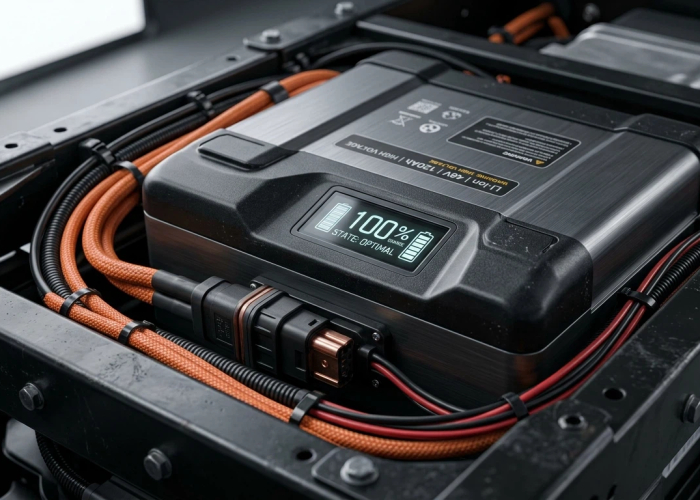
Commencez par l'itinéraire et la charge quotidienne avant de débattre de la chimie
A lithium electric golf cart should earn its place by matching the duty cycle. Buyers should write down route length, slope, stop frequency, passenger load, accessory use, and the amount of reserve they expect at the end of the longest shift. Those details reveal whether lithium is being chosen for a real operational reason, such as stable daily use and easier charging management, or whether it is being chosen simply because it sounds newer.
Different routes ask different things from the same battery system. A resort guest shuttle, a community mobility route, and a maintenance-support loop may all use electric golf carts, but they create very different charging windows and stress patterns. The site may rely on Solution de voiturette de golf pour le mouvement des invités et Solution de transport de parc et de plein air pour une circulation plus large des propriétés, mais chaque cas d'utilisation change les avantages réels qu'un système au lithium apportera.
It is also worth deciding what margin is acceptable. A cart that can technically finish the route with little reserve may still be a poor fit for a property that values calm operation and predictable shift handoff. Public resources like Aperçu des véhicules électriques du centre de données sur les carburants alternatifs contribuer à renforcer le principe plus large des véhicules électriques selon lequel les performances utilisables sont plus importantes qu’une seule autonomie optimiste ou un seul numéro de charge.
| Itinéraires courts et plats | Le lithium peut encore être utile, mais la valeur doit être testée par rapport à la simplicité de recharge et à la politique de flotte. |
| Droit de propriété mixte plus long | Vérifiez si une alimentation électrique stable et une discipline de charge plus facile améliorent le service quotidien. |
| Flotte commerciale à forte utilisation | Examinez ensemble la planification du chargeur, les attentes en matière de réserve, le support en matière de pièces de rechange et la stratégie de remplacement. |
Jugez la routine de charge aussi sérieusement que la batterie
A lithium system only performs well when the charging habit is clear and repeatable. Buyers should ask where the cart will be parked, who plugs it in, what charger is specified, and whether the site expects only overnight charging or also partial daytime recovery. A battery that looks efficient on paper can still create frustration if the charger row is badly organized or if operators improvise the charging sequence under pressure.
Références générales de recharge de Présentation de la charge de Battery University, Conseils de chargement de la batterie OSHA, et Normes et engagement UL are useful here because they remind buyers that battery performance and charging discipline cannot be separated. The practical question is not just how fast the pack can charge in ideal conditions. It is whether the site’s actual people and spaces can support that routine every day without rushed connections or vague accountability.
If the site uses several carts, managers should also think about charger labeling, cable condition, and the policy for exception cases. A lithium fleet tends to feel easier to own when the return process is simple and visible. When the process is unclear, the chemistry advantage can be diluted by operational confusion.
Examinez la gamme et réservez en service réel, pas dans le langage de la brochure
Range questions should be translated into route questions. How far does the cart travel before it returns? How many stops happen along the way? How much passenger or cargo weight is normal? What weather conditions change the battery load? Once those answers are written down, the buyer can judge whether the claimed lithium benefit matches the route instead of assuming one chemistry always delivers the same result in every property.
Références de carburants alternatifs et de véhicules électriques telles que Aperçu des véhicules électriques du centre de données sur les carburants alternatifs, Bases de recharge du DOE américain, et Aperçu des véhicules électriques et des chargeurs du Département américain de l'énergie are useful because they frame range and charging as part of a whole operating system. That is exactly how buyers should think about golf carts as well. A strong lithium setup is one that leaves comfortable reserve after the real route and still fits the available charging window before the next demand peak.
The site should therefore test reserve, not only total distance. A cart that reaches the parking area nearly empty may still be technically acceptable, but it offers less room for detours, weather changes, or late returns. For guest-facing or staff-critical work, reserve often matters more than the headline number.
Comparez l'assistance, la garantie et la planification du remplacement avant de considérer le lithium comme une décision d'économie
The cost case for a lithium electric golf cart should include more than electricity and runtime. Buyers should ask about spare-parts availability, battery support path, charger replacement, documentation quality, and what happens if performance questions appear after delivery. The public perspective from Conseils de garantie FTC est utile car il encourage les acheteurs à examiner la promesse d’assistance réelle au lieu de supposer que la technologie moderne signifie automatiquement une propriété plus simple.
A well-supported lithium system can make planning easier over time, but only when the supplier explains how the battery package is serviced and what replacement logic exists in the market where the cart will operate. Buyers should expect clarity on diagnostics, expected charging behavior, and what information the supplier needs if the cart starts returning with lower-than-expected reserve.
Support also affects planning confidence. If procurement and operations know exactly who to contact, which records to keep, and what routine checks matter, the lithium decision becomes easier to defend internally. If those answers are vague, the site may be buying a battery label rather than a usable support system.
Vérifiez ensemble la zone du chargeur, les habitudes de l'opérateur et l'exposition aux intempéries.
A lithium system can still be undermined by a poor charging environment. Buyers should look at aisle width, weather exposure, cable routing, staff access, and how clearly the parking spaces are assigned. If operators need to fight for access to the charger or work around wet surfaces and clutter, the ownership experience will feel worse no matter how good the battery technology is.
La discipline électrique est importante car la zone de recharge reste une zone de travail. Conseils publics de Directives de sécurité électrique de l'OSHA, Ressources de la NFPA sur la sécurité des véhicules électriques, et Directives de sécurité contre la foudre du National Weather Service is useful background when the charging row is outdoors or semi-exposed. Even if the cart is simple to operate, the site still needs a clean rule for connection, inspection, and stopping work when conditions become unsafe.
The buyer should therefore evaluate the cart and the parking process at the same time. A lithium electric golf cart that fits the route but not the return environment may still create friction. The best result is a system where drivers can park, inspect, connect, and leave without improvising.
Exécutez un test d'acceptation basé sur l'itinéraire avant de faire évoluer la flotte
Before approving multiple units, the site should run the lithium cart on the real route, with the real passenger or cargo load, and then measure how it returns to charge. The point is to observe the full operating cycle: dispatch, route completion, reserve at return, charging behavior, and readiness for the next use window. That test is far more valuable than a short demonstration loop or a sales claim about battery efficiency.
A useful acceptance note includes route length, weather conditions, accessory use, return battery state, charger used, and how calmly the cart fits back into the timetable. It should also record whether drivers followed the charging routine correctly or needed extra guidance. That information turns the purchase decision into evidence instead of preference.
Une fois que le site dispose de ces preuves, il peut être déplacé vers Demander un devis ou Contacter Longshengtai with much cleaner requirements. The supplier can then respond to a real operating pattern rather than to a vague request for a lithium cart. That usually produces a better final specification and a more defensible fleet decision.
Planifiez les habitudes des opérateurs et les enregistrements de batterie avant que la flotte ne s'agrandisse
Lithium ownership tends to feel easiest when operators are trained to notice the same few things every day: how the cart returned, whether the charger behaved normally, whether the connector area looks clean, and whether the expected reserve still matches the route. Those checks do not need to become complicated. They need to become consistent enough that small changes are noticed early instead of being discovered only after a busy day goes wrong.
A simple record can also improve buying decisions later. If the site notes route type, reserve at return, unusual charging events, and any driver comments about power or timing, it gradually builds evidence for future fleet planning. That record helps managers decide whether the battery system is well matched, whether the charger area needs revision, and whether the next order should copy the same configuration or request a different balance of range and turnaround behavior.
This is another reason lithium should be evaluated as a system rather than as a slogan. When the route note, the charging habit, the operator record, and the supplier support path all reinforce each other, the battery choice becomes easier to manage over several years instead of only during the first delivery cycle.
Référence vidéo
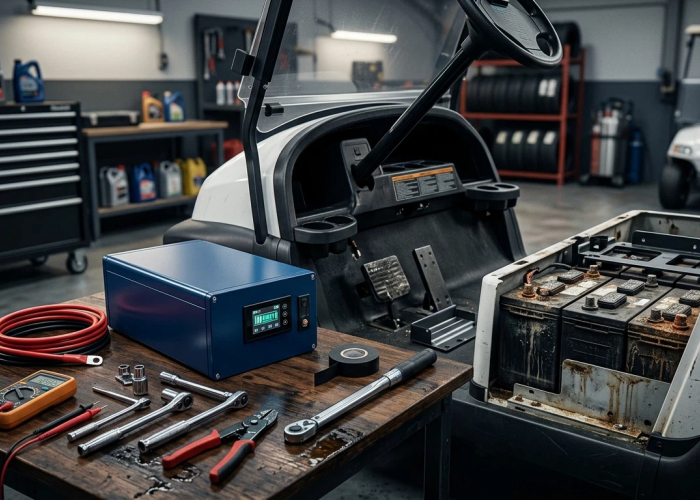
La vidéo ci-dessous offre un contexte visuel général pour l’utilisation d’une voiturette de golf électrique au lithium. La sélection finale de la batterie doit toujours être vérifiée par rapport à votre itinéraire, à la configuration du chargeur et au plan d'assistance.
Questions que les acheteurs posent souvent
Une voiturette de golf électrique au lithium est-elle toujours le meilleur choix ?
Non. Le lithium est souvent une option intéressante, mais le bon choix dépend toujours de la demande d'itinéraire, de la discipline du chargeur, de la qualité du support et de la valeur que le site tire d'une exploitation quotidienne plus facile.
Que devraient demander les acheteurs à propos du chargeur lorsqu’ils choisissent le lithium ?
Demandez quel chargeur est adapté au système de batterie, où le chariot doit être chargé, à quoi ressemble un comportement quotidien normal et quels signes doivent déclencher un contrôle de service.
Comment une flotte doit-elle tester le lithium avant de commander plusieurs chariots ?
Parcourez l'itinéraire réel avec une charge réaliste, enregistrez la réserve au retour, confirmez que la routine de chargement fonctionne proprement et notez si le chariot est à nouveau prêt au début de la prochaine fenêtre de service.
Choisissez le lithium car il s'adapte au système
A lithium electric golf cart becomes a good purchase when the route, reserve target, charger plan, and support path all work together. That is what turns the battery choice into calmer daily operation instead of a marketing headline.
Lorsque les acheteurs valident ensemble l’itinéraire, les habitudes de recharge et la promesse après-vente, ils prennent généralement une décision plus claire et obtiennent une flotte plus facile à vivre au fil du temps.
That same discipline also makes future expansion easier because the site already knows which routes suit the battery system, which charging habits are realistic, and which support questions must be answered before the next order is approved.