Il funzionamento notturno richiede qualcosa di più che luci più luminose
Electric golf cart night operation is common at resorts, hotels, campuses, factories, communities, parks, and event venues. Guests may need shuttle service after dinner, maintenance teams may cross a property before sunrise, and security teams may patrol after the main traffic has gone quiet. The cart may move slowly, but low speed does not remove the need for visibility, route discipline, driver rules, and a clear response plan.
A practical night plan starts with the vehicle, then checks the route, then trains the driver. Headlights, tail lights, brake lights, turn signals, reflectors, mirrors, and horn function are only the first layer. Managers also need to know whether signs are visible, whether pedestrians cross unexpectedly, whether charging areas are lit, and whether drivers can see curbs, ramps, drainage edges, and parked vehicles. General road safety material from Guida dei veicoli a bassa velocità NHTSA e note sulla sicurezza del prodotto da Carrello da golf CPSC e guida alla sicurezza LSV sono utili per ricordare che la visibilità deve essere gestita da più direzioni.
Carrelli diversi richiedono routine notturne diverse. Una compatta Carrello da golf di tipo B il carrello utilizzato intorno alle ville potrebbe richiedere una forte disciplina di imbarco degli ospiti, mentre uno più grande Carrini da golf VY-D6+2 da 8 posti la navetta potrebbe richiedere maggiore attenzione al raggio di sterzata, all'avviso di retromarcia e alle posizioni delle fermate. L'acquirente dovrebbe scegliere il carrello e il pacchetto di illuminazione in base al percorso effettivo, non semplicemente in base all'apparenza.
Ispezionare luci e riflettori prima di ogni turno notturno
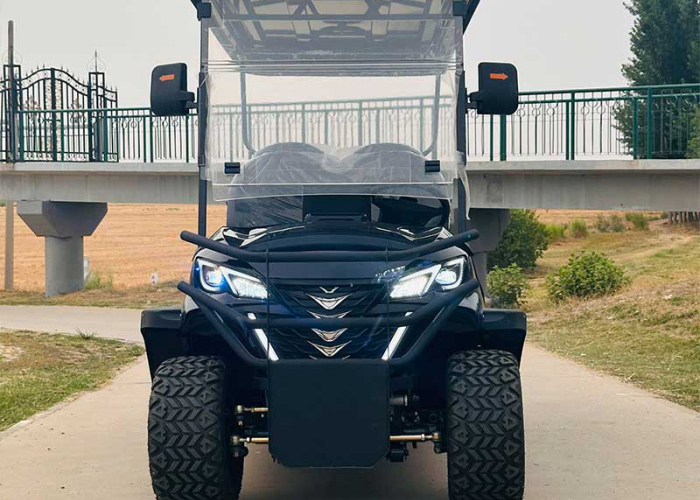
The pre-shift check should confirm headlights, brake lights, tail lights, turn signals, reflectors, reverse alarm if equipped, horn, mirrors, and dashboard indicators. The driver should walk around the cart, then ask another person to confirm brake lights and signals from behind. This takes little time and prevents the common problem of discovering a failed light only after the route has started.
Lighting should be judged from the outside, not only from the driver seat. A headlight that feels bright to the driver may still be aimed poorly, blocked by accessories, or too weak for a curved service road. Reflectors should be clean and positioned so other drivers and pedestrians can identify the cart from the side and rear. If the fleet uses custom roofs, windshields, enclosures, or branded panels, check that those additions do not hide required visibility points. The Accessori per carrelli da golf La categoria è utile per pianificare aggiornamenti che supportino il funzionamento reale piuttosto che componenti aggiuntivi decorativi.
Se un veicolo viene utilizzato laddove si applicano le regole della strada o quelle relative ai veicoli a bassa velocità, i gestori dovrebbero esaminare attentamente i requisiti locali. Riferimenti federali come 49 CFR 571.500 can help buyers understand the type of equipment often associated with low-speed vehicles, but the final rule depends on the location and use case. A private resort route, public street crossing, and factory yard may require different documentation.
| Articolo | Controllo del turno di notte |
| Fari | Entrambi i lati funzionano, il raggio è utile, l'obiettivo è pulito, la mira non distrae. |
| Luci dei freni | Si accende immediatamente quando si preme il pedale e rimane visibile da dietro. |
| Riflettori | Pulito, non coperto da marchio, visibile dagli angoli laterali e posteriori. |
| Clacson e specchi | Il conducente può avvisare gli altri e confermare i punti ciechi prima di spostarsi. |
Progetta un percorso facile da seguire al buio
Night routes should be simpler than daytime routes. Use fewer turns, fewer crossing points, and clearer stopping areas. Avoid narrow passages, poorly lit slopes, temporary construction zones, and places where guests gather without looking for vehicles. Weather and lighting can change a familiar path quickly, so the route should be rechecked after storms, landscaping changes, event setups, or parking changes. Lightning and severe weather guidance from Guida alla sicurezza contro i fulmini del Servizio meteorologico nazionale e informazioni sulle inondazioni da Guida alla sicurezza contro le inondazioni del Servizio meteorologico nazionale sostenere l’abitudine di sospendere le rotte quando le condizioni non sono sicure.
A manager should ride the route at night, not only approve it during the day. Look for glare from building lights, dark corners behind parked cars, reflective surfaces that confuse drivers, and signs that disappear in shadows. Mark pickup zones with lighting and predictable stopping positions. For parks or visitor areas, the Soluzione per parchi e trasporti all'aperto Il contesto del prodotto può aiutare gli acquirenti a considerare il movimento dei passeggeri, i percorsi panoramici e il funzionamento silenzioso come parte di un unico sistema.
Accessibility also matters. Guest shuttle routes may serve older passengers, children, people carrying bags, or passengers with limited mobility. The boarding area should be flat, stable, well lit, and away from moving traffic. General accessibility resources from Guida ai dispositivi di mobilità ADA non sostituiscono la revisione della progettazione locale, ma ricordano agli operatori di valutare le superfici di imbarco e di calpestio dal punto di vista del passeggero.
Formare i macchinisti affinché prendano decisioni più lente e chiare
Night driving should feel calmer than daytime driving. Drivers should reduce speed before corners, avoid sudden starts, announce boarding and unloading clearly, and stop fully before guests step off. They should also know when to refuse a trip, such as during heavy rain, poor visibility, overcrowding, or when a passenger tries to stand or carry an unsafe object. A simple rule is better than a complicated handbook that no one remembers under pressure.
Training should include fatigue and distraction. Late shifts can create slower reactions, and quiet routes can make drivers less alert. Managers should rotate drivers when possible, discourage phone use, and ask drivers to report near misses without fear. Workplace safety habits from Guida OSHA sui dispositivi di protezione individuale può sostenere questa cultura perché molti incidenti del carrello non sono causati da una parte rotta; sono causati da piccole scorciatoie operative ripetute nel tempo.
For guest service, the driver should be trained to communicate politely but firmly. Passengers should sit fully before the cart moves, keep arms and bags inside, and wait for the driver's signal before stepping down. If the cart is a Carrini da golf VY-D6+2 da 8 posti o un'altra disposizione per più passeggeri, l'ordine di imbarco e la distribuzione del peso devono essere gestiti in modo che il conducente mantenga una buona visibilità e controllo.
| Regola del conducente | Motivo |
| Lento prima degli angoli bui | Evita frenate impreviste in prossimità di ospiti o veicoli parcheggiati. |
| Sosta prima del movimento dei passeggeri | Riduce le cadute durante l'imbarco e lo scarico. |
| Segnalare immediatamente le luci deboli | Impedisce che un piccolo difetto diventi un guasto del percorso. |
| Sospendere il percorso in caso di maltempo | Protegge gli ospiti, gli autisti e le attrezzature. |
Connetti l'uso notturno con la ricarica e il parcheggio
Night routes often finish when staff are tired and charging areas are less supervised. That is when carts may be parked carelessly, left unplugged, plugged into the wrong charger, or stored where another vehicle can hit them. A closeout routine should include damage check, light check, battery state, charger connection, parking brake, key control, and next-shift notes. Battery charging guidance from Nozioni di base sulla ricarica del DOE statunitense e informazioni più ampie sui veicoli elettrici da Risorse NFPA per la sicurezza dei veicoli elettrici può aiutare i manager a considerare la ricarica come un compito di sicurezza e prontezza, non solo come un compito energetico.
Charging zones need lighting too. Staff should see cable condition, plug position, water on the floor, ventilation, and trip hazards. If carts return late from a banquet, conference, or residential patrol, the last driver should not be guessing which cart needs charge first. A visible board, numbered bays, or simple digital record can prevent morning delays.
The fleet should also separate damaged carts from ready carts. If a light fails during the night shift, the cart should be parked in a hold area with a visible tag, not simply left in the regular lineup. Certification and equipment references from Panoramica degli standard ANSI E Standard e impegno UL sono utili per comprendere la documentazione del prodotto, ma il controllo quotidiano dipende ancora dalle abitudini locali.
Specificare il funzionamento notturno al momento dell'acquisto dei carrelli
Buyers should tell the supplier if night service is part of the normal job. Include route length, lighting conditions, passenger count, slopes, weather exposure, charging return time, and whether the cart will cross roads or parking lots. That information helps decide whether to choose a Carrello da golf elettrico di tipo A, una navetta più grande, specchi aggiuntivi, una migliore illuminazione, opzioni di recinzione o una diversa disposizione dei posti a sedere.
Non considerare l'illuminazione come un ripensamento dopo l'arrivo dei carrelli. Se è previsto il servizio notturno, inserirlo nella richiesta d'ordine e confrontare per iscritto le configurazioni. Una richiesta chiara attraverso l' Richiedi un preventivo La pagina dovrebbe includere i requisiti di visibilità e l'ambiente del servizio, non solo il colore e il numero dei posti a sedere. Ciò rende la raccomandazione più precisa ed evita successivi interventi accessori a sorpresa.
Managers should review the first two weeks of night operation closely. Ask drivers where they feel blind, where passengers step into the route, where lights are too weak, and where charging closeout fails. Use those notes to update signs, pickup points, route maps, and driver training. Then keep the topic alive in weekly fleet review instead of assuming the first plan is permanent.
Stabilisci in anticipo le regole di imbarco e le limitazioni meteorologiche
Night operation becomes safer when boarding behavior is predictable. Mark where passengers should wait, where the cart will stop, and which side people should use for entry if the route passes traffic or landscaping hazards. Drivers should avoid loading in unlit improvised areas just because a guest waves from the side of the path. A predictable stop pattern reduces confusion for both regular staff and first-time visitors.
Weather cutoffs should also be written before the shift starts. Light rain may be manageable on some paved routes, while standing water, lightning, strong wind, fog, or poor drainage may require the route to pause immediately. References from Risorse CDC per la sicurezza dei veicoli a motore E Guida alla sicurezza contro le inondazioni del Servizio meteorologico nazionale rafforzare l’idea che la visibilità e le condizioni della superficie possono cambiare più velocemente di quanto un conducente possa adattarsi in movimento. La regola più sicura è fermarsi presto piuttosto che discutere se sia accettabile un altro viaggio.
Sites that host guests at night should also decide how the service recovers after a pause. That may include a sheltered waiting point, radio or phone escalation, an alternate walking path, or a staff escort for vulnerable passengers. When the route restart plan is clear, drivers are less likely to keep operating a cart in poor conditions just because they do not know what management expects.
Night supervisors should also review incident timing. If close calls happen during shift handover, after an event ends, or when drivers return carts to charge, the risk may be operational rather than mechanical. That kind of pattern is easy to miss unless the route log records time, location, passenger activity, and weather together.
Properties with regular evening traffic should keep a short end-of-shift note as well. That note can capture lamp failures, guest complaints, blocked paths, or temporary lighting gaps before the next crew repeats the same exposure.

Riferimento video
The video below can be used as a visual prompt for lighting, route, and driver conversations. Treat it as a starting reference, then match the final checklist to your own cart model, passenger load, and operating environment.
Domande che spesso fanno gli acquirenti
È possibile utilizzare un carrello da golf elettrico standard di notte?
It depends on the cart equipment, route, local rules, and site policy. At minimum, managers should confirm lights, reflectors, mirrors, horn, braking, route lighting, driver training, and passenger rules before assigning night service.
Qual è l'errore più comune durante il funzionamento notturno?
L'errore comune è concentrarsi solo sui fari ignorando la progettazione del percorso. Cordoli, ospiti, veicoli parcheggiati, cavi di ricarica, pendenze e zone di ritiro difficili possono creare rischi anche quando il carrello stesso è dotato di luci funzionanti.
Le tratte notturne dovrebbero essere più lente di quelle diurne?
SÌ. Una velocità inferiore offre al conducente più tempo per reagire alle ombre, ai pedoni, alle superfici bagnate e agli ostacoli imprevisti. Un percorso notturno dovrebbe essere progettato tenendo conto della visibilità e del comfort dei passeggeri, non solo del tempo di viaggio.
Un programma di carrello notturno dovrebbe sembrare prevedibile
Good electric golf cart night operation is not complicated, but it must be deliberate. Inspect the vehicle, simplify the route, train the driver, manage passengers, and close out charging in a controlled way. Those habits make the route easier to supervise and easier to improve.
For buyers, the key is to mention night service before the cart is ordered. A supplier can recommend a better configuration when it understands route lighting, guest movement, weather exposure, and charging timing from the beginning.