
Un carrello da golf elettrico al litio dovrebbe essere scelto in base al ciclo di lavoro, non alla batteria
A lithium electric golf cart is often described as the obvious modern choice, but buyers still need to test whether the battery system fits the route, the charging area, and the operating habits on site. Lithium can offer lighter weight, stable power delivery, and a simpler daily routine, yet those advantages only matter when the fleet is specified and supported correctly. Teams reviewing Prodotti per carrelli da golf elettrici dovrebbero considerare la chimica della batteria come parte del piano operativo invece che come una scorciatoia per un buon acquisto.
This matters because the real decision is not just lithium versus something older. It is whether the cart can finish the route calmly, charge in a way the team can repeat, and deliver a cost profile the site can live with over time. A buyer comparing Carrello da golf a 4 posti VY-A4, Carrello da golf VY-A6 a 6 posti, E Carrello da golf con batteria al litio VY-D2 dovrebbe quindi chiedersi come interagiscono la batteria, il caricabatterie, il carico utile e il percorso prima di decidere che un’etichetta al litio da sola risolva il problema. Guida generale alla ricarica da Panoramica sulla ricarica di Battery University e un contesto più ampio di veicoli elettrici da Panoramica dei veicoli elettrici e del caricabatterie del Dipartimento dell'Energia degli Stati Uniti sono informazioni utili perché rafforzano il modo in cui il comportamento della batteria e la routine operativa rimangono collegati.
This guide explains how to choose a lithium electric golf cart for real fleet use. It covers route fit, charging routine, range realism, support expectations, and the difference between a battery that looks advanced on paper and one that works cleanly every day. The objective is to help buyers choose a lithium setup that stays practical after delivery rather than simply sounding current during the quote stage.
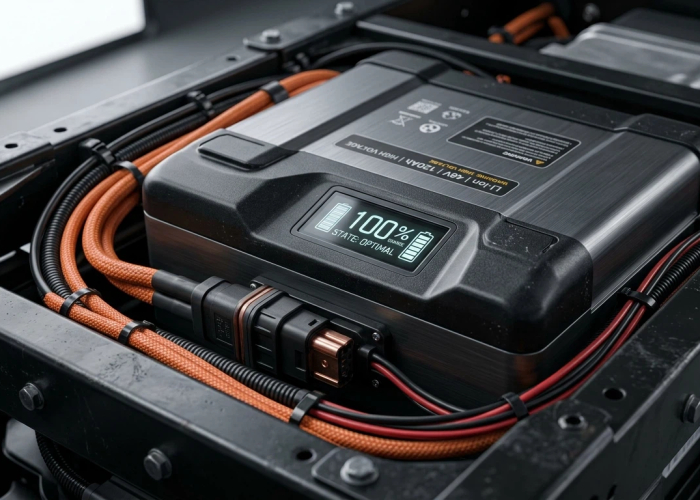
Inizia con il percorso e il carico giornaliero prima di discutere di chimica
A lithium electric golf cart should earn its place by matching the duty cycle. Buyers should write down route length, slope, stop frequency, passenger load, accessory use, and the amount of reserve they expect at the end of the longest shift. Those details reveal whether lithium is being chosen for a real operational reason, such as stable daily use and easier charging management, or whether it is being chosen simply because it sounds newer.
Different routes ask different things from the same battery system. A resort guest shuttle, a community mobility route, and a maintenance-support loop may all use electric golf carts, but they create very different charging windows and stress patterns. The site may rely on Soluzione per carrello da golf per il movimento degli ospiti e Soluzione per parchi e trasporti all'aperto per una più ampia circolazione delle proprietà, ma ogni caso d’uso cambia i vantaggi effettivamente offerti da un sistema al litio.
It is also worth deciding what margin is acceptable. A cart that can technically finish the route with little reserve may still be a poor fit for a property that values calm operation and predictable shift handoff. Public resources like Panoramica dei veicoli elettrici del Data Center sui combustibili alternativi contribuire a rafforzare il principio più ampio dei veicoli elettrici secondo cui le prestazioni utilizzabili sono più importanti di un singolo intervallo ottimistico o di un numero di addebito.
| Brevi percorsi pianeggianti | Il litio può ancora aiutare, ma il valore dovrebbe essere testato rispetto alla semplicità di ricarica e alla politica della flotta. |
| Dovere più lungo per proprietà miste | Controlla se l'erogazione di potenza stabile e la disciplina di ricarica più semplice migliorano il servizio quotidiano. |
| Flotta commerciale ad alto utilizzo | Esamina insieme la pianificazione del caricabatterie, le aspettative di riserva, il supporto dei pezzi di ricambio e la strategia di sostituzione. |
Giudica la routine di ricarica tanto seriamente quanto la batteria
A lithium system only performs well when the charging habit is clear and repeatable. Buyers should ask where the cart will be parked, who plugs it in, what charger is specified, and whether the site expects only overnight charging or also partial daytime recovery. A battery that looks efficient on paper can still create frustration if the charger row is badly organized or if operators improvise the charging sequence under pressure.
Riferimenti generali di ricarica da Panoramica sulla ricarica di Battery University, Guida OSHA alla ricarica della batteria, E Standard e impegno UL are useful here because they remind buyers that battery performance and charging discipline cannot be separated. The practical question is not just how fast the pack can charge in ideal conditions. It is whether the site’s actual people and spaces can support that routine every day without rushed connections or vague accountability.
If the site uses several carts, managers should also think about charger labeling, cable condition, and the policy for exception cases. A lithium fleet tends to feel easier to own when the return process is simple and visible. When the process is unclear, the chemistry advantage can be diluted by operational confusion.
Controlla la gamma e prenota in un servizio reale, non nel linguaggio delle brochure
Range questions should be translated into route questions. How far does the cart travel before it returns? How many stops happen along the way? How much passenger or cargo weight is normal? What weather conditions change the battery load? Once those answers are written down, the buyer can judge whether the claimed lithium benefit matches the route instead of assuming one chemistry always delivers the same result in every property.
Riferimenti a carburanti alternativi ed EV come Panoramica dei veicoli elettrici del Data Center sui combustibili alternativi, Nozioni di base sulla ricarica del DOE statunitense, E Panoramica dei veicoli elettrici e del caricabatterie del Dipartimento dell'Energia degli Stati Uniti are useful because they frame range and charging as part of a whole operating system. That is exactly how buyers should think about golf carts as well. A strong lithium setup is one that leaves comfortable reserve after the real route and still fits the available charging window before the next demand peak.
The site should therefore test reserve, not only total distance. A cart that reaches the parking area nearly empty may still be technically acceptable, but it offers less room for detours, weather changes, or late returns. For guest-facing or staff-critical work, reserve often matters more than the headline number.
Confronta supporto, garanzia e pianificazione della sostituzione prima di considerare il litio una decisione di risparmio
The cost case for a lithium electric golf cart should include more than electricity and runtime. Buyers should ask about spare-parts availability, battery support path, charger replacement, documentation quality, and what happens if performance questions appear after delivery. The public perspective from Guida alla garanzia FTC è utile perché incoraggia gli acquirenti a esaminare l’effettiva promessa di supporto invece di dare per scontato che la tecnologia moderna significhi automaticamente una proprietà più semplice.
A well-supported lithium system can make planning easier over time, but only when the supplier explains how the battery package is serviced and what replacement logic exists in the market where the cart will operate. Buyers should expect clarity on diagnostics, expected charging behavior, and what information the supplier needs if the cart starts returning with lower-than-expected reserve.
Support also affects planning confidence. If procurement and operations know exactly who to contact, which records to keep, and what routine checks matter, the lithium decision becomes easier to defend internally. If those answers are vague, the site may be buying a battery label rather than a usable support system.
Controllare insieme l'area del caricabatterie, le abitudini dell'operatore e l'esposizione agli agenti atmosferici
A lithium system can still be undermined by a poor charging environment. Buyers should look at aisle width, weather exposure, cable routing, staff access, and how clearly the parking spaces are assigned. If operators need to fight for access to the charger or work around wet surfaces and clutter, the ownership experience will feel worse no matter how good the battery technology is.
La disciplina elettrica è importante perché l'area di ricarica è ancora una zona di lavoro. Guida pubblica da Guida alla sicurezza elettrica dell'OSHA, Risorse NFPA per la sicurezza dei veicoli elettrici, E Guida alla sicurezza contro i fulmini del Servizio meteorologico nazionale is useful background when the charging row is outdoors or semi-exposed. Even if the cart is simple to operate, the site still needs a clean rule for connection, inspection, and stopping work when conditions become unsafe.
The buyer should therefore evaluate the cart and the parking process at the same time. A lithium electric golf cart that fits the route but not the return environment may still create friction. The best result is a system where drivers can park, inspect, connect, and leave without improvising.
Esegui un test di accettazione basato sul percorso prima di ridimensionare la flotta
Before approving multiple units, the site should run the lithium cart on the real route, with the real passenger or cargo load, and then measure how it returns to charge. The point is to observe the full operating cycle: dispatch, route completion, reserve at return, charging behavior, and readiness for the next use window. That test is far more valuable than a short demonstration loop or a sales claim about battery efficiency.
A useful acceptance note includes route length, weather conditions, accessory use, return battery state, charger used, and how calmly the cart fits back into the timetable. It should also record whether drivers followed the charging routine correctly or needed extra guidance. That information turns the purchase decision into evidence instead of preference.
Una volta che il sito ha queste prove, può spostarsi su Richiedi un preventivo O Contatta Longshengtai with much cleaner requirements. The supplier can then respond to a real operating pattern rather than to a vague request for a lithium cart. That usually produces a better final specification and a more defensible fleet decision.
Pianifica le abitudini degli operatori e i registri delle batterie prima che la flotta cresca
Lithium ownership tends to feel easiest when operators are trained to notice the same few things every day: how the cart returned, whether the charger behaved normally, whether the connector area looks clean, and whether the expected reserve still matches the route. Those checks do not need to become complicated. They need to become consistent enough that small changes are noticed early instead of being discovered only after a busy day goes wrong.
A simple record can also improve buying decisions later. If the site notes route type, reserve at return, unusual charging events, and any driver comments about power or timing, it gradually builds evidence for future fleet planning. That record helps managers decide whether the battery system is well matched, whether the charger area needs revision, and whether the next order should copy the same configuration or request a different balance of range and turnaround behavior.
This is another reason lithium should be evaluated as a system rather than as a slogan. When the route note, the charging habit, the operator record, and the supplier support path all reinforce each other, the battery choice becomes easier to manage over several years instead of only during the first delivery cycle.
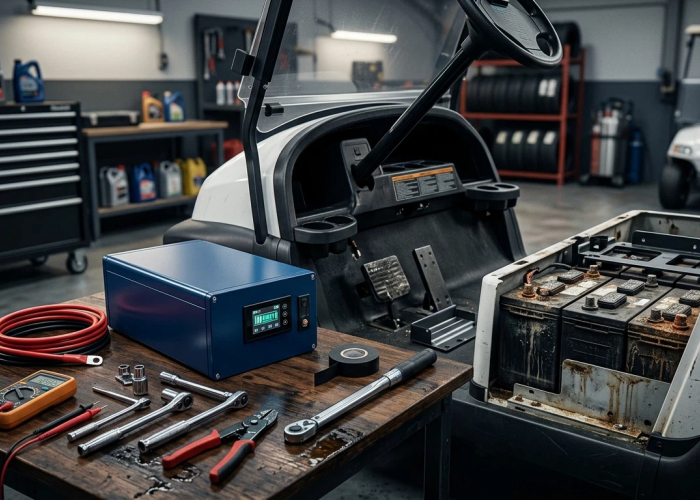
Riferimento video
Il video qui sotto offre un contesto visivo generale per l'uso del carrello da golf elettrico al litio. La selezione finale della batteria dovrebbe comunque essere verificata rispetto al percorso, alla configurazione del caricabatterie e al piano di supporto.
Domande che spesso fanno gli acquirenti
Un carrello da golf elettrico al litio è sempre la scelta migliore?
No. Il litio è spesso un'opzione valida, ma la scelta giusta dipende comunque dalla domanda di percorso, dalla disciplina del caricabatterie, dalla qualità del supporto e dal valore che il sito ottiene da un funzionamento quotidiano più semplice.
Cosa dovrebbero chiedere gli acquirenti riguardo al caricabatterie quando scelgono il litio?
Chiedi quale caricabatterie è adatto al sistema di batterie, dove deve essere caricato il carrello, qual è il normale comportamento quotidiano e quali segnali dovrebbero attivare un controllo di servizio.
In che modo una flotta dovrebbe testare il litio prima di ordinare diversi carrelli?
Percorri il percorso effettivo con un carico realistico, registra la riserva al ritorno, conferma che la routine di ricarica funziona correttamente e nota se il carrello è di nuovo pronto quando inizia la finestra di servizio successiva.
Scegli il litio perché si adatta al sistema
A lithium electric golf cart becomes a good purchase when the route, reserve target, charger plan, and support path all work together. That is what turns the battery choice into calmer daily operation instead of a marketing headline.
Quando gli acquirenti convalidano insieme il percorso, l’abitudine di ricarica e la promessa post-vendita, di solito prendono una decisione più chiara e ottengono una flotta con cui è più facile convivere nel tempo.
That same discipline also makes future expansion easier because the site already knows which routes suit the battery system, which charging habits are realistic, and which support questions must be answered before the next order is approved.