Una SOP di risposta al guasto mantiene sotto controllo i piccoli guasti
A golf cart breakdown response plan is different from a troubleshooting checklist. Troubleshooting asks what failed. Response asks what the driver, supervisor, passengers, and service team should do in the first few minutes. On guest routes, security patrols, campuses, resorts, factories, and communities, those first minutes decide whether a minor vehicle issue becomes a safety problem or an angry service experience.
The SOP should be simple enough for seasonal staff and temporary drivers. Stop safely, protect passengers, notify the supervisor, tag the cart, record symptoms, transfer service if needed, and keep the route moving. Public guidance from Guida dei veicoli a bassa velocità NHTSA E Carrello da golf CPSC e guida alla sicurezza LSV può aiutare i manager a definire la sicurezza dei veicoli a bassa velocità, ma la proprietà ha bisogno di adottare misure chiare.
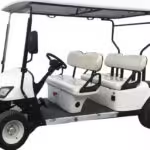
Carrelli diversi necessitano della stessa logica di risposta ma di piani di backup diversi. UN Carrello da golf elettrico di tipo A il carrello di servizio potrebbe richiedere il trasferimento degli strumenti, a Carrello da golf di tipo B il carrello degli ospiti potrebbe aver bisogno del ritiro dei passeggeri e di uno più grande Carrello da golf elettrico tipo D la navetta potrebbe aver bisogno di un secondo veicolo e di un membro del personale. La POS dovrebbe nominare queste differenze prima che si verifichi il guasto.
Definire cosa conta come condizione stop-now
Drivers should know which symptoms require immediate removal from service. Stop-now conditions include weak brakes, steering problems, burning smell, smoke, battery warning, charger damage, loose wheel feeling, repeated power loss, flat tire, unsafe passenger behavior, or any collision. If the driver is unsure, the SOP should favor stopping in a safe place and calling a supervisor.
The driver should move out of traffic if possible, set the parking brake, turn on lights or warning signals if equipped, keep passengers seated until it is safe, and avoid pushing the cart unless trained. Tire safety guidance from Guida alla sicurezza NHTSA TireWise e risorse di sicurezza elettrica da Guida alla sicurezza elettrica dell'OSHA sostenere un approccio conservativo quando i sintomi coinvolgono ruote, cavi, batteria o calore insolito.
A stop-now card can be placed in every cart. It should list the hotline or supervisor number, cart ID location, basic passenger instruction, and the rule that questionable carts are held rather than argued back into service.
Stop-now rules should be trained with examples. Drivers should hear what a grinding sound may be described as, what a weak brake feels like, and what kind of dashboard warning should be reported. Examples reduce hesitation because staff do not have to decide alone whether a symptom is serious enough.
The rule should also cover near misses. If a cart almost fails to stop, almost rolls after parking, or briefly loses power in a risky location, it should be reported even if the trip finishes. Near misses are often the cheapest warning a fleet receives.
| Sintomo | Prima risposta |
| Freno debole o rotolamento | Fermarsi, inserire il freno di stazionamento se è sicuro, scaricare con attenzione e tenere il carrello. |
| Perdita di potenza | Se possibile, spostarsi fuori dal percorso, chiamare il supervisore e registrare i segnali sul cruscotto. |
| Odore di fumo o di bruciato | Mantieni le distanze, non caricare, chiama il personale addestrato e isola l'area. |
| Gomma a terra o oscillazione | Fermati lentamente, evita di sterzare bruscamente e richiedi il ritiro del servizio. |
Proteggi i passeggeri e mantieni la calma nella comunicazione
For guest routes, the driver's first job is calm communication. Tell passengers the cart is being paused for safety, ask them to remain seated until a safe exit is arranged, and give a realistic next step. If the cart is near traffic, a slope, rain, or poor lighting, passengers should not be rushed into standing beside the route.
I supervisori dovrebbero definire come funziona il trasferimento dei passeggeri. Chi invia il carrello sostitutivo? Dove si ferma? Chi aiuta i passeggeri anziani, i bambini o le persone che trasportano bagagli? Guida ai dispositivi per la mobilità da Guida ai dispositivi di mobilità ADA è uno sfondo utile quando i ciclisti hanno bisogno di supporto extra. IL Soluzione per parchi e trasporti all'aperto e il contesto dei trasporti esterni ricorda inoltre agli acquirenti che il movimento dei passeggeri negli spazi aperti necessita di una pianificazione a livello di percorso.
A simple communication script prevents blame and confusion. Drivers do not need to diagnose the cart in front of guests. They only need to explain that the vehicle is being held, support is on the way, and passengers will be moved safely.
Passenger comfort matters even when nobody is hurt. Offer a clear waiting place, keep people away from traffic, and avoid making guests repeat the story to several staff members. A breakdown response that feels organized can preserve trust even when the original ride is interrupted.
If the route serves residents or patients, the supervisor should know whether extra assistance is needed. Some passengers may need a closer replacement stop, a slower transfer, or a staff member who knows the site. The SOP should make that communication routine rather than exceptional.
Etichettare il carrello e registrare i sintomi prima della riparazione
A broken cart should be visibly tagged before anyone else uses it. The tag should show date, cart number, route, driver, symptom, whether passengers were aboard, and whether the cart can be moved. Without a tag, another driver may assume the cart is ready and put it back into service before inspection.
The symptom record should be plain language. Write soft brake pedal, pulls left, no reverse, charger warning light, vibration at low speed, power cuts on hill, or grinding noise near rear wheel. These notes help technicians reproduce the problem. Workplace safety resources from Guida OSHA sui dispositivi di protezione individuale sostenere l’abitudine più ampia di segnalare i pericoli prima che diventino esposizioni ripetute.
Le foto aiutano quando il problema è visibile. Scatta foto delle condizioni degli pneumatici, delle spie, del cavo danneggiato, dei segni di impatto, degli accessori allentati o della superficie del percorso. IL Blog sul carrello da golf elettrico può supportare la formazione continua sulla manutenzione, ma la registrazione degli incidenti deve rimanere specifica per il carrello e il percorso.
The record should avoid blame language. Write what was seen and what was done. A clear note such as power dropped on north hill with four passengers is more useful than driver says cart is bad. Neutral records help maintenance teams, suppliers, and managers solve the issue faster.
Se un carrello viene rimesso in servizio dopo l'ispezione, registrare chi lo ha rilasciato e perché. Quella nota di rilascio è importante quanto il tag di sospensione perché dimostra che il carrello non è semplicemente tornato in uso senza una decisione.
| Campo di registrazione | Dettaglio utile |
| ID del carrello | Numero della flotta, modello e percorso attuale. |
| Sintomo | Esatta osservazione del conducente senza indovinare la causa tecnica. |
| Stato del passeggero | Vuoto, passeggeri trasferiti o servizio ritardato. |
| Azione successiva | Trattenuto per il tecnico, restituito dopo il controllo o contattato il fornitore. |
Crea un servizio di backup per percorsi importanti
Critical routes need backup plans. A hotel lobby shuttle, medical campus route, security patrol, or event transport loop should not depend on one cart with no replacement. Keep at least one ready unit, define who can dispatch it, and decide how drivers report that the route is back in service.
La riserva di carica fa parte del servizio di backup. Un carrello sostitutivo che non viene addebitato non è un backup. Nozioni di base sulla ricarica da Nozioni di base sulla ricarica del DOE statunitense e risorse per la sicurezza dei veicoli elettrici da Risorse NFPA per la sicurezza dei veicoli elettrici aiutare i manager a considerare la ricarica come una questione di disponibilità, non solo come consumo di energia. IL Accessori per carrelli da golf La pagina può anche aiutare gli acquirenti a pianificare specchi, luci o contenitori che supportino il lavoro di risposta.
If breakdowns repeat on the same route, do not blame the vehicle first. Check slope, load, tire wear, driver behavior, speed bumps, charging return time, and dispatch pressure. A route that repeatedly creates failures may need a different cart, changed schedule, or revised operating rule.
Backup service should be tested during normal operations. A plan that works only on paper may fail when the replacement cart is blocked, uncharged, or assigned to another department. Run a short drill so supervisors know how long passenger transfer actually takes.
For security patrols, backup response should preserve coverage. If a patrol cart is held, the team should know whether to send another cart, shift a walking patrol, or pause a low-priority round. The SOP should protect both vehicle safety and site coverage.
Utilizza i dati di suddivisione per gli acquisti e la formazione
Breakdown records are buying records. If carts repeatedly fail because they are overloaded with tools, a utility layout may be needed. If guest shuttles see frequent complaints at night, lighting and route design may matter more than model size. If power loss appears near the same hill, the next order should mention grade, passenger load, and daily duty cycle through the Richiedi un preventivo pagina.
I manager dovrebbero rivedere settimanalmente i registri dei guasti. Cerca sintomi ripetuti, guidatori ripetuti, percorsi ripetuti e finestre temporali ripetute. Standard e risorse di documentazione del prodotto da Panoramica degli standard ANSI E Standard e impegno UL può supportare una revisione strutturata, ma il miglioramento pratico della flotta deriva dal confronto delle prove locali con decisioni operative reali.
The SOP should be updated after real incidents. If drivers did not know whom to call, change the card. If passenger transfer was slow, revise the backup rule. If technicians needed better notes, update the form. A response plan earns its value when it changes after use.
Training records should show who has practiced the SOP. New drivers, night-shift staff, event workers, and supervisors should all know the same response sequence. A good response plan loses value if only one senior employee understands it.
Purchasing teams should ask suppliers about spare parts, service support, and documentation before the fleet grows. Response quality depends partly on how quickly the buyer can identify parts, describe symptoms, and get clear guidance. That makes after-sales support part of the buying decision, not a separate topic discovered later.
The review should also look at service timing. If carts usually fail near the end of a shift, the fleet may need better charging handover. If breakdowns appear after events, the route may be overloaded. If failures happen after rain, storage and inspection routines may need work. Timing gives managers clues that a single symptom note cannot show.
A mature SOP includes a restart rule. After a cart is repaired or cleared, the first return-to-service trip should be controlled, documented, and assigned to an experienced driver. That prevents a repaired cart from going straight back into a crowded guest loop without anyone confirming how it behaves under normal conditions.
Managers should keep the response form short enough for real use. A one-page record with clear checkboxes and a comment field will usually outperform a long incident report that drivers avoid. The form should capture what happened, where it happened, who was affected, what action was taken, and whether the cart is released or held.
When the fleet grows, the same response language should be used across departments. Guest services, security, housekeeping, and maintenance may have different routes, but they should use the same cart ID, hold tag, and escalation terms. Shared language prevents confusion during busy days when one team has to help another.

Riferimento video
Il video seguente è incluso come suggerimento visivo generale per l'ispezione del carrello e la formazione sulla risposta. Usalo per avviare una conversazione con il personale, quindi adatta la tua SOP alla tua flotta, rotta e struttura di autorità.
Domande che spesso fanno gli acquirenti
Gli autisti dovrebbero provare a diagnosticare un guasto sul percorso?
No. Gli autisti devono rendere la scena sicura, proteggere i passeggeri, segnalare sintomi evidenti e attendere il supporto del servizio autorizzato. La diagnosi deve essere gestita da personale addestrato.
Qual è l'elemento più importante in una SOP di ripartizione?
La regola più chiara è quando fermarsi e trattenere un carrello. Freni deboli, problemi allo sterzo, fumo, perdita di potenza, guasti agli pneumatici o segnali di pericolo elettrici dovrebbero rimuovere il carrello dal servizio fino al controllo.
Come può una flotta ridurre i guasti ripetuti?
Esamina i record per carrello, percorso, conducente, carico, modello di ricarica e sintomo. Guasti ripetuti spesso rivelano stress sul percorso, sottocaricamento, sovraccarico o lacune nell'allenamento piuttosto che un problema isolato di un componente.
La disciplina della risposta protegge la qualità del servizio
Una SOP in caso di guasto dà fiducia agli autisti e fornisce ai manager informazioni più chiare. Mantiene la calma dei passeggeri, previene il riutilizzo non sicuro e aiuta i tecnici a individuare più rapidamente il vero problema.
Per gli acquirenti commerciali, la lezione è semplice: pianificare la risposta prima del primo fallimento. La flotta avrà ancora problemi occasionali, ma il team saprà come tenerli sotto controllo.