A useful range test should copy the real route, not a brochure claim
A golf cart range test is only valuable when it reflects the route the cart will actually run. Buyers often compare published range figures without asking how much passenger weight, slope, stopping frequency, weather, or charger reserve was built into that number. The result is a misleading comparison between carts that may behave very differently once they start serving a resort loop, campus stop pattern, or private-community route.
The better method is to design a route-loop test that mirrors real use. Define the passengers or cargo, the route length, the stop count, the turning points, the surface changes, and the minimum reserve the operator wants to keep at the end of the shift. That approach is more useful for a VY-A4 4 Seater Golf Cart guest cart, a VY-C4 Four Passenger Golf Cart shuttle, or a larger VY-D4+2 Golf Cart 6 Seater people mover than any single headline number because it turns range into an operating question instead of a marketing number.
A structured test also improves the buying conversation. When a supplier sees the route map, loop count, charging window, and reserve target, it can explain whether the buyer should stay with one configuration or compare a different seating layout, battery size, or route plan. General background from Alternative Fuels Data Center electric-vehicle overview and U.S. Department of Energy EV and charger overview helps frame electric-vehicle thinking, but the final judgment still has to come from a route test built around the buyer’s own property.
Define the route loop before the first wheel turns
A proper range test begins with the loop definition. Record the total loop distance, where the cart stops, where it climbs, where it idles with passengers, and where it returns to charge. If the property has several route types, create separate loops rather than blending them into one average run that means little in practice. A tight village shuttle, a scenic-tour loop, and a maintenance route will stress the cart in different ways.
Passenger load should also be fixed before testing. A cart that runs one loop with a single driver and the next loop with four adults plus bags is not producing comparable data. Buyers reviewing the Golf Cart Solution pages should decide whether their real concern is maximum capacity, typical capacity, or an operational mix. Then the range test can be structured around that duty cycle instead of a best-case load that the site rarely sees.
It is also smart to define the finish condition. Some buyers are comfortable ending a route day with a small reserve. Others want a larger buffer for late guest requests, route detours, or weather changes. That reserve target should be part of the test rule from the beginning. Safety references like CPSC golf cart and LSV safety guide and NHTSA low-speed vehicle guidance support the same principle: predictable operating margin is more valuable than a one-time maximum stretch.
| Range-test input | Why it must be fixed |
| Loop distance and stops | Creates a repeatable test instead of a casual drive. |
| Passenger or cargo load | Prevents good results from being based on unrealistically light operation. |
| Surface and slope | Explains why two similar carts can produce different practical outcomes. |
| Finish reserve target | Keeps the test aligned with real operating confidence. |
Control the variables that change battery use fastest
Speed discipline matters more than many buyers expect. Fast starts, hard acceleration after each stop, and aggressive hill climbing can shorten useful range even when the route distance stays the same. Drivers used for the range test should be briefed to operate consistently so that the result reflects the cart and route, not one operator’s habits.
Tire condition and route surface also deserve attention. Underinflated tires, mixed tread patterns, loose gravel, brick pavers, wet paths, or repeated curb crossings all add resistance or cause drivers to use power differently. Sites that operate across guest paths and outdoor attractions can use the Park and Outdoor Transport Solution context to think about how pavement quality and comfort expectations affect practical range, not only mechanical efficiency.
Weather changes can distort test results too. Heat, rain, heavy wind, and wet surfaces all alter energy use or the confidence margin needed by the driver. NOAA weather safety guidance such as National Weather Service flood safety guidance and National Weather Service lightning safety guidance is relevant because a route that looks acceptable in dry daylight may need a larger reserve or an earlier stop decision in poor conditions.
Charging habits before the test should be written down as well. Start state, charger used, and the time since the last full charge all affect the meaning of the result. A range number without a clean starting condition is only a story, not evidence.
Test with the same loading and boarding behavior the site uses daily
Passenger movement changes range because it changes stop duration, restart frequency, and how often the cart waits with accessories running. A hospitality route that pauses for boarding, luggage handling, and guest questions will behave differently from a maintenance route with quick in-and-out stops. Buyers should therefore build the real boarding pattern into the range test instead of driving continuous loops that ignore site behavior.
This is especially important when comparing larger seating layouts such as a VY-A6 6 Seater Golf Cart or VY-D4+2 Golf Cart 6 Seater against smaller carts. More seats can reduce the number of trips, but they also change weight, turning behavior, and the reserve buyers expect at the end of a shift. The route test should capture both the benefit and the cost rather than assuming more seats automatically means better productivity.
Accessibility and passenger comfort deserve a place in the test notes too. If a route includes older passengers, children, or riders carrying bags, the driver may use slower starts and longer stops. General mobility guidance from ADA mobility device guidance is not a battery document, but it reminds operators that a realistic passenger profile is part of good route planning.
| Operating behavior | Range-test implication |
| Long boarding stops | Reduces the value of a simple distance-only result. |
| Heavy passenger mix | Shows whether the reserve target still feels safe at real load. |
| Frequent restart after short waits | Highlights controller and acceleration habits that affect practical range. |
| Late-route guest requests | Confirms whether the finish reserve is large enough for real operations. |
Read the result with reserve and charging turnaround in mind
A range test should end with an operational decision, not only a number. Ask whether the cart can finish the intended loop schedule with the required reserve, whether the driver still feels comfortable near the end of the run, and whether the charging window that follows is realistic. A cart that reaches the target distance but arrives with no useful margin may still be the wrong choice for a busy property.
This is where route testing connects directly to fleet planning. The buyer may discover that the cart is adequate, that the charger schedule needs revision, or that a different configuration should be compared. A property using mixed passenger routes can use Request a Quote and Electric Golf Cart Products to discuss those findings with the supplier in a practical way. The most useful question is not what is your maximum range. The useful question is can this cart complete my real loop schedule with reserve and a manageable recharge window.
Charging reserve should also account for disruption. If one late event, one hill detour, or one missed charge can put the route at risk, the reserve target is probably too tight. Public charging references such as U.S. DOE charging basics and battery guidance from Battery University charging overview support the idea that operating margin is part of system health, not wasted capacity.
Compare models with the same test, not the same headline
When buyers compare two or three carts, they should run the same loop definition, passenger load, and finish reserve for each model. That is the only fair way to compare a compact Classic Electric Golf Cart option with a larger B Type Golf Cart or D Type Electric Golf Cart configuration. If the test changes between models, the result may reflect driver behavior or route timing rather than the carts themselves.
The comparison should include notes beyond distance. Record turning confidence, braking feel on the loaded route, ride quality over the worst surface, driver visibility, boarding convenience, and charging closeout. A model that produces slightly less distance may still be the better operational choice if it loads passengers more smoothly or finishes with a more predictable charging routine.
Route approvals and internal policy also matter. If a site manager is more comfortable with a larger reserve, lower top speed, or a shorter assigned loop, that preference should be treated as part of the specification. Safety resources like 49 CFR 571.500 and low-speed vehicle background are helpful context when properties blend private lanes and road-adjacent movement, but the key issue remains whether the test result fits the rules of the site.
The strongest model comparison is the one that another manager could repeat next month and get roughly the same answer. That repeatability is what turns a promising demo drive into a defendable purchase decision.
Turn one test day into an ongoing route benchmark
A useful range test should not disappear after the purchase. Keep the loop map, passenger assumptions, finish reserve rule, and charger notes so the same benchmark can be repeated after seasonal changes, battery aging, or route redesign. This helps buyers understand whether lower range later is normal aging, a route change, or a maintenance issue.
Benchmark repeats are especially useful after new accessories, tire changes, or different shift schedules are introduced. The operator can compare the new result against the original loop rather than relying on memory. If the route becomes less efficient over time, the team can decide whether to improve charger spacing, reduce idle time, or reassign a different cart to the route.
This benchmark also improves future procurement. When the site eventually adds more carts, the buyer will already know the real loop demand, the comfort reserve, and the charger turnaround needed at the property. That makes the next discussion with the supplier shorter, more factual, and easier to verify on delivery.
It is also worth saving one short field note after each benchmark run. Record whether the driver felt rushed near the end, whether passengers changed normal boarding behavior, and whether the cart returned to charge at the expected time. Those details help separate battery aging from simple operating drift when the same route feels tighter a few months later.
Video reference
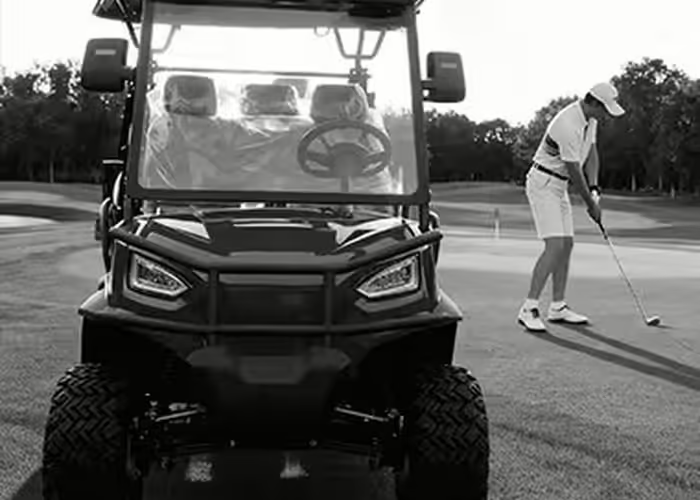
The video below provides a practical visual reference for discussing route behavior, passenger load, and cart performance. Use it alongside your own loop record so the final decision stays tied to measured operation rather than a generic claim.
Questions buyers often ask
How many loops are enough for a useful range test?
Enough loops to represent the real route day. The test should continue until the planned operating window and reserve target are both proven, rather than stopping after a single comfortable loop.
Should buyers test with full passenger load every time?
Test the load that matters most for the purchase decision. Many buyers run both a typical load test and a heavier peak-load test so they can compare normal efficiency with operational margin.
Why is reserve more important than maximum distance?
Reserve protects the route from detours, weather, extra stops, and end-of-shift uncertainty. A cart that barely reaches a long headline distance may still be weak for daily service if it finishes with no practical buffer.
A real route test produces a better purchase decision
The best range result is the one that predicts tomorrow’s route, not the one that wins a brochure comparison. When buyers fix the loop, load, reserve, and charging follow-up, they turn range into an operating fact instead of a vague promise.
That makes the final cart choice easier to defend, easier to repeat, and far more useful once the fleet starts working under real site conditions.