Night operation needs more than brighter lights
Electric golf cart night operation is common at resorts, hotels, campuses, factories, communities, parks, and event venues. Guests may need shuttle service after dinner, maintenance teams may cross a property before sunrise, and security teams may patrol after the main traffic has gone quiet. The cart may move slowly, but low speed does not remove the need for visibility, route discipline, driver rules, and a clear response plan.
A practical night plan starts with the vehicle, then checks the route, then trains the driver. Headlights, tail lights, brake lights, turn signals, reflectors, mirrors, and horn function are only the first layer. Managers also need to know whether signs are visible, whether pedestrians cross unexpectedly, whether charging areas are lit, and whether drivers can see curbs, ramps, drainage edges, and parked vehicles. General road safety material from NHTSA low-speed vehicle guidance and product safety notes from CPSC golf cart and LSV safety guide are useful reminders that visibility must be managed from several directions.
Different carts need different night routines. A compact Carrinho de golfe tipo B cart used around villas may need strong guest boarding discipline, while a larger VY-D6+2 8 Seater Golf Carts shuttle may need more attention to turning radius, reverse warning, and stop locations. The buyer should choose the cart and lighting package around the actual route, not simply around appearance.
Inspect lights and reflectors before every night shift
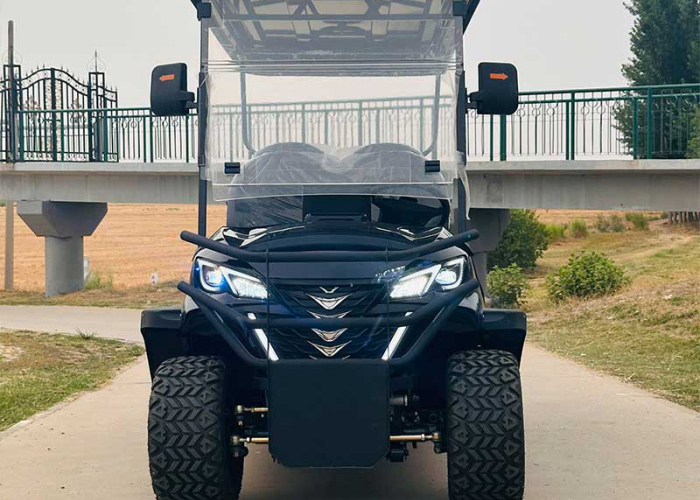
The pre-shift check should confirm headlights, brake lights, tail lights, turn signals, reflectors, reverse alarm if equipped, horn, mirrors, and dashboard indicators. The driver should walk around the cart, then ask another person to confirm brake lights and signals from behind. This takes little time and prevents the common problem of discovering a failed light only after the route has started.
Lighting should be judged from the outside, not only from the driver seat. A headlight that feels bright to the driver may still be aimed poorly, blocked by accessories, or too weak for a curved service road. Reflectors should be clean and positioned so other drivers and pedestrians can identify the cart from the side and rear. If the fleet uses custom roofs, windshields, enclosures, or branded panels, check that those additions do not hide required visibility points. The Golf Cart Accessories category is useful for planning upgrades that support real operation rather than decorative add-ons.
If a vehicle is used where road rules or low-speed vehicle rules apply, managers should review local requirements carefully. Federal references such as 49 CFR 571.500 can help buyers understand the type of equipment often associated with low-speed vehicles, but the final rule depends on the location and use case. A private resort route, public street crossing, and factory yard may require different documentation.
| Item | Night-shift check |
| Headlights | Both sides work, beam is useful, lens is clean, aim is not distracting. |
| Brake lights | Light immediately when pedal is pressed and remains visible from behind. |
| Reflectors | Clean, not covered by branding, visible from side and rear angles. |
| Horn and mirrors | Driver can warn others and confirm blind spots before moving. |
Design a route that is easy to follow in the dark
Night routes should be simpler than daytime routes. Use fewer turns, fewer crossing points, and clearer stopping areas. Avoid narrow passages, poorly lit slopes, temporary construction zones, and places where guests gather without looking for vehicles. Weather and lighting can change a familiar path quickly, so the route should be rechecked after storms, landscaping changes, event setups, or parking changes. Lightning and severe weather guidance from National Weather Service lightning safety guidance and flood information from National Weather Service flood safety guidance support the habit of suspending routes when conditions are unsafe.
A manager should ride the route at night, not only approve it during the day. Look for glare from building lights, dark corners behind parked cars, reflective surfaces that confuse drivers, and signs that disappear in shadows. Mark pickup zones with lighting and predictable stopping positions. For parks or visitor areas, the Park and Outdoor Transport Solution product context can help buyers think about passenger movement, scenic routes, and quiet operation as part of one system.
Accessibility also matters. Guest shuttle routes may serve older passengers, children, people carrying bags, or passengers with limited mobility. The boarding area should be flat, stable, well lit, and away from moving traffic. General accessibility resources from ADA mobility device guidance do not replace local design review, but they remind operators to evaluate boarding and walking surfaces from the passenger's point of view.
Train drivers for slower, clearer decisions
Night driving should feel calmer than daytime driving. Drivers should reduce speed before corners, avoid sudden starts, announce boarding and unloading clearly, and stop fully before guests step off. They should also know when to refuse a trip, such as during heavy rain, poor visibility, overcrowding, or when a passenger tries to stand or carry an unsafe object. A simple rule is better than a complicated handbook that no one remembers under pressure.
Training should include fatigue and distraction. Late shifts can create slower reactions, and quiet routes can make drivers less alert. Managers should rotate drivers when possible, discourage phone use, and ask drivers to report near misses without fear. Workplace safety habits from OSHA personal protective equipment guidance can support this culture because many cart incidents are not caused by one broken part; they are caused by small operational shortcuts repeated over time.
For guest service, the driver should be trained to communicate politely but firmly. Passengers should sit fully before the cart moves, keep arms and bags inside, and wait for the driver's signal before stepping down. If the cart is a VY-D6+2 8 Seater Golf Carts or another multi-passenger layout, boarding order and weight distribution should be managed so the driver retains good visibility and control.
| Driver rule | Reason |
| Slow before dark corners | Prevents surprise braking near guests or parked vehicles. |
| Stop before passenger movement | Reduces falls during boarding and unloading. |
| Report weak lights immediately | Keeps a small defect from becoming a route failure. |
| Suspend route in severe weather | Protects guests, drivers, and equipment. |
Connect night use with charging and parking
Night routes often finish when staff are tired and charging areas are less supervised. That is when carts may be parked carelessly, left unplugged, plugged into the wrong charger, or stored where another vehicle can hit them. A closeout routine should include damage check, light check, battery state, charger connection, parking brake, key control, and next-shift notes. Battery charging guidance from U.S. DOE charging basics and broader electric vehicle information from NFPA electric vehicle safety resources can help managers frame charging as a safety and readiness task, not only an energy task.
Charging zones need lighting too. Staff should see cable condition, plug position, water on the floor, ventilation, and trip hazards. If carts return late from a banquet, conference, or residential patrol, the last driver should not be guessing which cart needs charge first. A visible board, numbered bays, or simple digital record can prevent morning delays.
The fleet should also separate damaged carts from ready carts. If a light fails during the night shift, the cart should be parked in a hold area with a visible tag, not simply left in the regular lineup. Certification and equipment references from ANSI standards overview and UL Standards and Engagement are helpful for understanding product documentation, but daily control still depends on local habits.
Specify night operation when buying carts
Buyers should tell the supplier if night service is part of the normal job. Include route length, lighting conditions, passenger count, slopes, weather exposure, charging return time, and whether the cart will cross roads or parking lots. That information helps decide whether to choose a Carrinho de golfe elétrico tipo A, a larger shuttle, extra mirrors, better lighting, enclosure options, or a different seating layout.
Do not treat lighting as an afterthought after the carts arrive. If night service is planned, build it into the order request and compare configurations in writing. A clear request through the Request a Quote page should include visibility requirements and service environment, not only color and seating count. This makes the recommendation more accurate and avoids surprise accessory work later.
Managers should review the first two weeks of night operation closely. Ask drivers where they feel blind, where passengers step into the route, where lights are too weak, and where charging closeout fails. Use those notes to update signs, pickup points, route maps, and driver training. Then keep the topic alive in weekly fleet review instead of assuming the first plan is permanent.
Set boarding rules and weather cutoffs in advance
Night operation becomes safer when boarding behavior is predictable. Mark where passengers should wait, where the cart will stop, and which side people should use for entry if the route passes traffic or landscaping hazards. Drivers should avoid loading in unlit improvised areas just because a guest waves from the side of the path. A predictable stop pattern reduces confusion for both regular staff and first-time visitors.
Weather cutoffs should also be written before the shift starts. Light rain may be manageable on some paved routes, while standing water, lightning, strong wind, fog, or poor drainage may require the route to pause immediately. References from CDC motor vehicle safety resources and National Weather Service flood safety guidance reinforce the idea that visibility and surface condition can change faster than a driver can adapt on the move. The safest rule is to stop early rather than argue about whether one more trip is acceptable.
Sites that host guests at night should also decide how the service recovers after a pause. That may include a sheltered waiting point, radio or phone escalation, an alternate walking path, or a staff escort for vulnerable passengers. When the route restart plan is clear, drivers are less likely to keep operating a cart in poor conditions just because they do not know what management expects.
Night supervisors should also review incident timing. If close calls happen during shift handover, after an event ends, or when drivers return carts to charge, the risk may be operational rather than mechanical. That kind of pattern is easy to miss unless the route log records time, location, passenger activity, and weather together.
Properties with regular evening traffic should keep a short end-of-shift note as well. That note can capture lamp failures, guest complaints, blocked paths, or temporary lighting gaps before the next crew repeats the same exposure.
Video reference
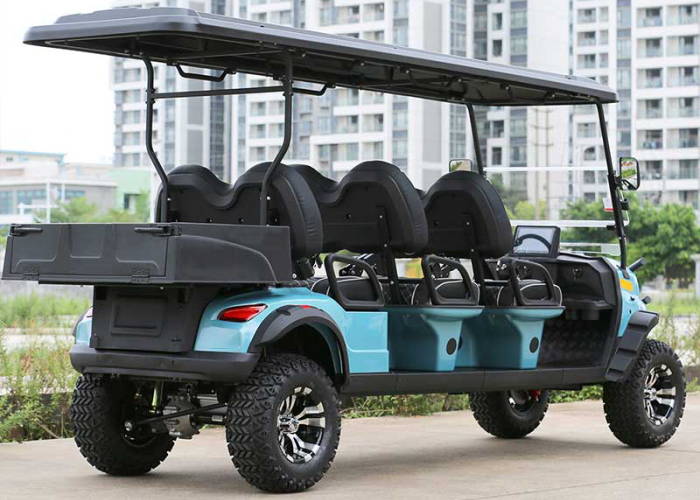
The video below can be used as a visual prompt for lighting, route, and driver conversations. Treat it as a starting reference, then match the final checklist to your own cart model, passenger load, and operating environment.
Questions buyers often ask
Can a standard electric golf cart be used at night?
It depends on the cart equipment, route, local rules, and site policy. At minimum, managers should confirm lights, reflectors, mirrors, horn, braking, route lighting, driver training, and passenger rules before assigning night service.
What is the most common night-operation mistake?
The common mistake is focusing only on headlights while ignoring route design. Curbs, guests, parked vehicles, charging cables, slopes, and poor pickup zones can create risk even when the cart itself has working lights.
Should night routes be slower than daytime routes?
Yes. Lower speed gives the driver more time to react to shadows, pedestrians, wet surfaces, and unexpected obstacles. A night route should be designed around visibility and passenger comfort, not only travel time.
A night cart program should feel predictable
Good electric golf cart night operation is not complicated, but it must be deliberate. Inspect the vehicle, simplify the route, train the driver, manage passengers, and close out charging in a controlled way. Those habits make the route easier to supervise and easier to improve.
For buyers, the key is to mention night service before the cart is ordered. A supplier can recommend a better configuration when it understands route lighting, guest movement, weather exposure, and charging timing from the beginning.