Turning radius should be planned from the route, not guessed from the photo gallery
Electric golf cart turning radius becomes critical the moment a property includes villa lanes, loading bays, charger aisles, basement parking, or service paths lined with landscaping. Buyers often begin with battery type and seat count, yet the cart that feels impressive on an open driveway can still slow the whole operation down if it needs repeated correction at every tight corner. Teams reviewing Electric Golf Cart Products should therefore treat turning radius as an operating requirement before they compare styling or optional features.
This matters for mixed-use fleets as much as for luxury shuttles. A layout that works well on an open hotel boulevard may feel awkward in a housekeeping lane or a maintenance loop behind kitchens and storage rooms. Buyers comparing Carrito de golf eléctrico tipo A and Carrito de golf tipo B options should ask how wheelbase, rear overhang, mirror placement, and passenger step area affect the real path, especially when boarding comfort and accessibility are part of the route. Mobility context from ADA mobility device guidance reinforces why path clearance and passenger behavior should be reviewed together.
A practical turning-radius guide should therefore map the tight points, test the route under realistic load, and turn those findings into a stronger buying brief. The goal is not to chase the smallest circle on paper. The goal is to choose a cart that can enter, stop, reverse when needed, and clear the route calmly around passengers and obstacles. Public safety material from CPSC golf cart and LSV safety guide supports the same mindset by focusing on predictable low-speed movement instead of on aggressive maneuvering.
Map the route bottlenecks before choosing the body
Start with the physical route, not the spec sheet. Walk every turn that matters: front gate loops, lobby drop-offs, parking aisles, charger lanes, storage doors, loading ramps, and narrow service paths. Measure curb-to-curb clearance, note where the driver must see both corners at once, and mark the places where the cart may need to reverse. Low-speed vehicle guidance from NHTSA low-speed vehicle guidance is broad, but it supports the same habit of defining where the vehicle can and cannot be used before the model is approved.
The route sketch should also identify where the cart turns under pressure. A smooth corner on an empty afternoon may feel very different when guests are waiting with baggage or when staff have parked service trolleys close to the wall. If the route blends private property with road-adjacent movement, background from low-speed vehicle background helps managers remember that turning space, visibility, and operating boundary all belong in the same review rather than in separate discussions.
Once those bottlenecks are mapped, write them down in the buying file. A supplier cannot respond intelligently to a vague comment such as we have some tight corners. It can respond to a route note that says the cart must turn into a charging aisle, back into storage, and clear a decorative planter near the lobby. This is where a use-case page such as Solução de carrinho de golfe helps the conversation stay rooted in site movement instead of drifting into generic model promotion.
| Route checkpoint | Why it changes turning planning |
| Gate or lobby loop | Shows whether the cart can approach and exit in one calm movement. |
| Charging aisle | Reveals whether shift-close parking and plug-in will stay efficient. |
| Storage door or trailer ramp | Tests whether overhang and reverse space are acceptable. |
| Service lane | Highlights where mirrors, body width, and passenger clearance matter most. |
Translate measurements into usable model fit
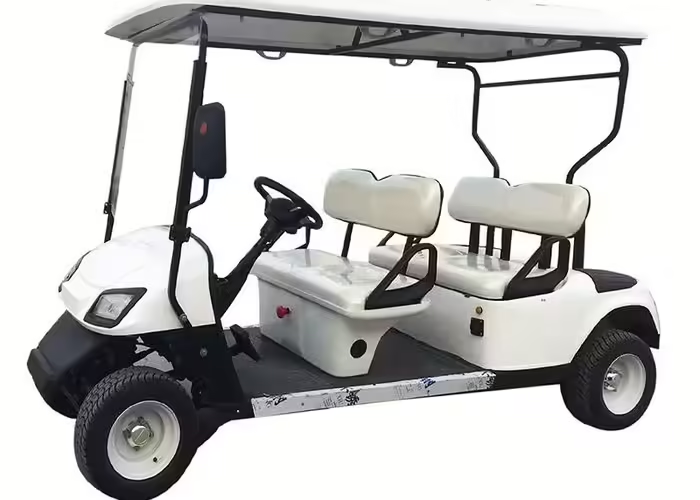
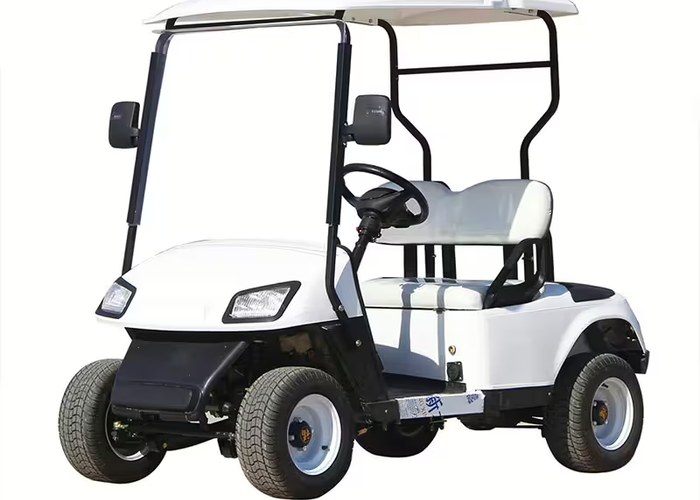
A cart does not turn as a simple number. It turns as a body with seats, roof corners, rear swing, and passenger space that all move differently through the same corner. Buyers should therefore compare route measurements against the full body layout instead of treating turning radius as a stand-alone figure. A practical unit such as Carrinho de golfe VY-B4 para quatro pessoas may be more efficient on narrow inner-property routes than a longer shuttle body, even when both look acceptable in a catalog comparison.
Surface condition affects usable maneuverability as well. Smooth paving allows more predictable tire behavior than loose gravel, worn pavers, or wet concrete with leaves and dust. Tire-safety references from NHTSA TireWise safety guidance are helpful because they remind buyers that steering confidence depends on grip and inflation as much as on geometry. A cart that should fit mathematically may still feel clumsy if the route surface reduces confidence at the exact point where the driver must turn tightly.
The buying discussion should therefore ask what assumptions sit behind the supplier’s recommendation. If a longer body is suggested, what correction space is expected and where will that space come from on the real route? Standards context from ANSI standards overview is useful here because it encourages buyers to ask for a coherent technical explanation instead of accepting vague claims that the cart is easy to handle.
Review overswing, sight lines, and passenger behavior together
Many turning problems appear after the front wheels have already cleared the corner. Rear overswing can move into planters, parked scooters, or waiting passengers, and roof or mirror placement can make the driver hesitate even when the path is technically wide enough. A comfort-focused route should therefore observe how the entire body moves through the turn rather than only how sharply the steering wheel can be turned.
Sight lines matter just as much as clearance. A driver who cannot read the curb edge, wall corner, or child-height obstacle will automatically use more correction space. Resources from CDC motor vehicle safety resources are not golf-cart geometry manuals, but they support the operational principle that predictable movement depends on what the driver can see as much as on what the chassis can do.
Operators also need a simple rule for the difficult corners. Some turns may require a wider approach, some may need a one-way traffic pattern during busy periods, and some may simply be unsuitable for a longer body. Inspection habits reflected in OSHA personal protective equipment guidance are useful in spirit here because they reinforce the value of consistent pre-use awareness rather than casual improvisation at the tightest point of the route.
| Turning concern | What to observe on site |
| Rear swing | Whether the tail moves into landscaping, bollards, or waiting space. |
| Mirror and roof clearance | Whether upper body parts create hesitation or contact risk. |
| Passenger step area | Whether riders reduce usable clearance while boarding or seated. |
| Driver visibility | Whether the inside line and exit line are clear through the whole turn. |
Test the route with cones and realistic loading
If the choice is between two body sizes, run a controlled route test with temporary markers on the narrowest points. Include the load that actually matters: passengers, bags, or service items. A turn that seems acceptable with only the driver on board may become slow and awkward once the rear seat is occupied or the cart needs to stop precisely at a pickup point. That practical test is more valuable than a general statement that the steering feels light.
The test should record whether the turn was made in one movement, whether the driver had to reverse, how close the body came to route edges, and whether passengers felt the cart crowding the space. These details matter because an efficient route is not only about avoiding contact. It is also about avoiding hesitation, awkward boarding, and repeated micro-corrections that accumulate across the day.
Those findings belong in the final request through Request a Quote. When the supplier receives the tightest width, the expected passenger load, and the rule that the cart must clear storage or chargers without repeated repositioning, it can recommend a configuration with much less guesswork. That makes the quotation more defensible and the delivered cart more likely to fit daily reality.
Account for weather, lighting, and seasonal crowding
A route that feels comfortable in dry daylight may become much less forgiving during storms, irrigation overspray, or muddy shoulder conditions. Weather guidance from National Weather Service flood safety guidance is broad, but it reinforces the same operational truth: usable turning space shrinks when traction and visibility deteriorate. Buyers should therefore leave turning reserve in the route instead of specifying a body that only works in ideal conditions.
Night operation changes the turning requirement again because shadows make curbs, walls, and planted edges harder to read. Even cautious drivers use more space when they cannot see the inside line clearly. Safety reminders from National Weather Service lightning safety guidance support the habit of writing weather and visibility cutoffs before the route begins rather than debating them after the cart is already in service.
Seasonal crowding matters too. Event days, hotel arrivals, or maintenance peaks may reduce the usable space around the route even when the paving itself never changes. That is why many buyers connect the turning discussion to Park and Outdoor Transport Solution and other use-case planning rather than relying only on one quiet site visit. The cart must fit the busiest version of the route, not only the emptiest one.
Turn the route review into a stronger procurement brief
A turning-radius review is only useful when it changes the specification or the route rule. If the route clearly needs a shorter body, say so. If a larger cart still works but only on selected loops, write those limits into the operating file. Consumer-oriented guidance from FTC warranty guidance is useful background because written expectations reduce later disagreement about whether the delivered cart actually fits the intended job.
The final brief should include the narrowest measured point, photos of the difficult corners, expected passenger load, whether baggage is carried, whether the cart must reverse into chargers, and whether enclosed storage is part of normal operation. When those facts are clear, a follow-up through Contact Longshengtai becomes much more productive because the conversation is about fit and support rather than about vague maneuverability claims.
This discipline also improves future buying. Once a property knows how much turning reserve it truly needs, the next order can be judged against the same standard even if the fleet expands into another model family or another site. Supply-chain planning guidance from NIST supply chain management guidance is relevant because stable specifications reduce rework, training drift, and surprise incompatibilities across repeat purchases.
Video reference
The video below gives visual context for body size and low-speed passenger movement. Use it to support the route conversation, then rely on your own measurements and site test before approving the final layout.
Questions buyers often ask
Is turning radius only a concern on small properties?
No. Large resorts and campuses often have the most demanding corners because they combine open passenger boulevards with narrow charging aisles, storage entries, and service lanes. Turning radius becomes more important as route variety increases.
Can a larger cart still work on a tight route?
Sometimes, but only if the property has the correction space, loading discipline, and driver visibility to support it. Buyers should confirm that the cart can clear the real route under load without repeated reversing or uncomfortable body swing near passengers.
What should be sent to the supplier before asking for a recommendation?
Send the tightest route measurements, photos of the narrowest points, passenger and baggage assumptions, and whether the cart must enter chargers, trailers, or enclosed storage as part of normal daily use.
A cleaner turn usually means a better fleet decision
The right electric golf cart for a property is the one that can move through the real route calmly, not the one that only looks capable in an open yard. Turning-radius planning protects driver confidence, guest comfort, storage efficiency, and the quality of the buying decision.
It also protects daily labor. When drivers do not need repeated correction turns, routes become easier to teach, charger closeout is faster, and guests are less likely to experience awkward stops while the cart is repositioned. Those small operational gains usually matter more over a full season than a headline specification that never gets tested in the narrowest part of the property.
When buyers map the route first and write those limits into the quotation brief, they avoid buying excess size for open space or insufficient maneuverability for the corners that matter every day.