Top speed should be approved from route risk, not from curiosity
Electric golf cart top speed is one of the easiest specifications to misunderstand because buyers often read the number before they study the route. A higher speed figure can look attractive, yet the useful question is whether that speed belongs on the property where the cart will actually operate. Passenger load, braking distance, surface condition, sight lines, and route-sharing rules all matter more than a headline number when the cart is moving people or staff around a live site.
This matters on resorts, campuses, communities, and mixed commercial properties where the cart may move through blind corners, pickup areas, wet pavement, or pedestrian-heavy paths. A route that feels safe at one speed on paper can feel rushed once drivers are handling passengers and repeated stops. Buyers comparing Carro de golf VY-B4 para cuatro personas, VY-C4 Four Passenger Golf Cart, and VY-D4 Motorized Golf Cart should therefore treat electric golf cart top speed as an approval decision tied to the route, not as an isolated performance feature.
This guide explains how to plan speed sensibly. It covers how route design affects the acceptable speed limit, why braking and tire condition matter as much as motor response, when higher performance settings are useful, and what supplier questions should be answered before a faster setup is approved. Public safety context from CPSC golf cart and LSV safety guide and NHTSA low-speed vehicle guidance is useful because it reinforces the same principle: a low-speed vehicle is safe only when the operating environment matches the way it is used.
Decide speed from the route, the passengers, and the stopping points
The first speed decision is not technical. It is operational. Buyers should list where the cart accelerates, where it stops, where pedestrians cross, where visibility is limited, and where the surface changes from smooth pavement to mixed conditions. A top speed that feels harmless on a straight service lane may be completely wrong for a guest pickup loop with children, luggage, and frequent crossings.
Passenger load also changes what feels appropriate. A cart carrying two maintenance staff on an open route can tolerate a different pace than a cart carrying guests, residents, or older passengers who value stable boarding and smooth braking. If a property uses Carro de golf VY-A6 de 6 plazas or Carro de Golf VY-D4+2 6 Plazas for repeated group movement, speed should be judged by how calm the full route feels, not by how quickly the cart can reach a number on an open stretch.
The written route plan should therefore include stopping distance expectations, slope, weather exposure, and how often the driver enters shared areas. That information gives the supplier and the site team a much better basis for discussing what speed is useful instead of assuming that faster automatically means more capable.
| Guest or resident routes | Prioritize smooth starts, calm braking, and visibility over headline speed. |
| Mixed staff routes | Match speed to stop frequency, cargo or tool load, and surface consistency. |
| Open transfer lanes | Allow only the speed that still leaves comfortable control for the full loaded route. |
Speed only helps when braking, tires, and control stay composed
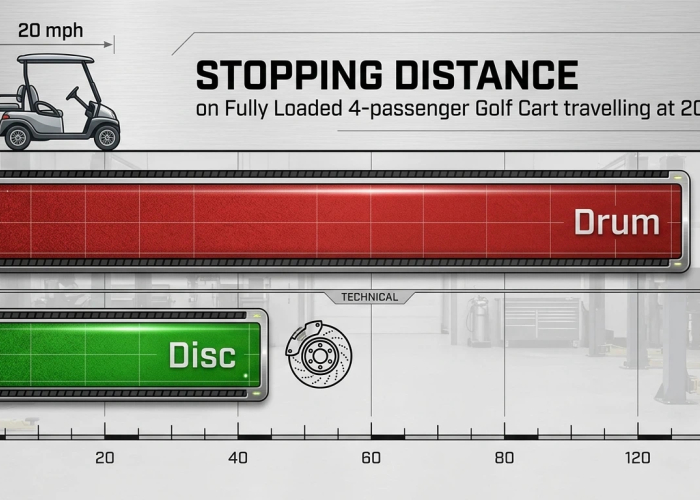
Electric golf cart top speed is meaningful only when the cart can slow down predictably from that speed on the actual surface it will use. That makes brake condition, tire choice, tire pressure, and route condition central parts of the speed conversation. Safety resources such as NHTSA TireWise safety guidance and CPSC golf cart and LSV safety guide are useful reminders that control is a system outcome, not just a motor outcome.
A cart that reaches a higher speed but feels nervous over bumps, drains, or damp pavement may be a worse operational fit than a slightly slower cart with stronger composure. Drivers should feel that the cart obeys the route instead of chasing the fastest possible response. That is especially important when passengers are boarding often or when the property expects quiet, professional movement instead of sporty behavior.
Testing should therefore include repeated stops, downhill approaches, and full-load turns at the exact points where the property expects the cart to operate. If the cart feels unsettled at the approved load, the answer may be a different speed setting, a different tire choice, or a different route rule rather than a simple push for more performance.
Match speed with motor response, voltage, and duty cycle instead of chasing a number
Higher top speed usually sits inside a wider performance package that includes controller behavior, battery output, gearing, and tire size. That means the useful question is not only how fast the cart can go, but how that setting affects response on starts, slopes, and repeated braking zones. Buyers looking at Carro de golf con batería de litio VY-D2 and VY-D4 Motorized Golf Cart should expect the supplier to explain how the speed setting relates to the route rather than simply repeating a maximum figure.
General EV references like U.S. Department of Energy EV and charger overview, Alternative Fuels Data Center electric-vehicle overview, and Battery University charging overview are useful because they reinforce how power delivery, energy use, and recovery all belong to one system. If a property wants more performance on hill routes or longer transfer lanes, it should also verify whether the charging plan and daily duty cycle still support that choice without creating a new bottleneck.
Passenger comfort still matters. A cart that feels abrupt or twitchy at higher speed can make guests less confident even if the route is technically manageable. The best speed setting is the one that the least-experienced approved driver can handle smoothly throughout the day, not the one that looks strongest during a single empty demonstration.
Keep private-property speed rules separate from road and LSV questions
Many speed conversations become confusing because private-property operation and public-road operation get mixed together. A property may allow a certain internal route speed while still having no intention of using the cart on public roads. That distinction should be documented clearly before anyone assumes that a higher speed setting makes the vehicle appropriate for broader road use.
Public references such as NHTSA low-speed vehicle guidance, 49 CFR 571.500, and low-speed vehicle background are useful background because they show why low-speed vehicle categories, road limits, and equipment expectations are formal issues instead of casual preferences. Buyers do not need to make legal promises in a blog article, but they should understand that route approval inside a property is different from vehicle status on public roads.
This is another reason to keep the top-speed decision narrow and practical. Approve the speed that fits the property, the passengers, and the internal route policy. If road use might enter the picture later, that should trigger a separate review instead of being treated as an automatic extension of private-property testing.
Set operator rules and acceptance tests before approving a faster setup
A higher speed setting should come with a route rule, not only with a technical setting. Buyers should define where the faster section begins, where drivers must slow, what passenger loads are permitted, and what weather conditions change the rule. Training matters because the cart is only as safe as the least careful approved operator on a busy day.
Acceptance testing should include the real load, the real route, repeated stops, and at least one wet-surface or reduced-grip scenario when that condition is likely on site. Guidance from CDC motor vehicle safety resources and National Weather Service flood safety guidance is helpful background because it keeps the operating discussion centered on real risk rather than on best-case performance. If weather regularly changes traction, that fact belongs inside the speed decision.
The site should also document what makes the test successful. For example: smooth boarding departure, predictable braking, no uncomfortable passenger movement, and no route points where the driver feels rushed. Those notes turn speed approval into something the supplier and the site can discuss clearly later if the setup changes.
Ask the supplier for a speed plan, not only a maximum figure
A useful supplier conversation asks how the vehicle should be configured for the approved route speed, what braking and tire assumptions are built into that recommendation, and whether the setting changes under different loads. Buyers can review route examples through Electric Golf Cart Blog and then move to Solicite una cotización with a specific request: our route is this long, these are the surface conditions, this is the passenger load, and this is the speed range we believe fits. What configuration do you recommend and why?
Support questions matter too. Ask what maintenance checks are most important if the cart is operated near the upper end of its approved property speed, how tire condition should be monitored, and what warning signs should trigger a route review. Public references like FTC warranty guidance and UL Standards and Engagement are useful reminders that a performance promise should still be backed by support terms and technical discipline.
When those questions are answered clearly, the site can approve electric golf cart top speed as part of a wider operating system instead of as a number that sits alone on a specification sheet. That usually produces a safer route, a calmer driver experience, and a more durable purchase decision through Contact Longshengtai.
Review dispatch behavior after the speed limit is approved
A property can approve the right speed and still get inconsistent results if dispatch habits are loose. Drivers may leave pickup points too quickly when the schedule feels compressed, or they may carry extra passengers because the route looks short and familiar. A follow-up review during normal operation should therefore check whether the approved speed rule is being used the same way in the morning rush, in quiet periods, and near the end of the shift when attention can fade.
This review should also include the route points that generate complaints. If passengers mention abrupt braking, if supervisors notice bunching at corners, or if drivers regularly slow more than expected near certain crossings, the speed rule may need refinement even when the cart itself performs well. The useful lesson is not that the vehicle is weak. It is that the property has found the real places where calm operation matters most.
That operational feedback makes future buying decisions stronger. When the site records which routes tolerate a little more pace and which routes need tighter limits, it can specify the next cart more accurately and avoid treating top speed as a one-time technical choice. Over time, that evidence turns speed approval into a repeatable management process rather than a guess made during a short demo.
Video reference
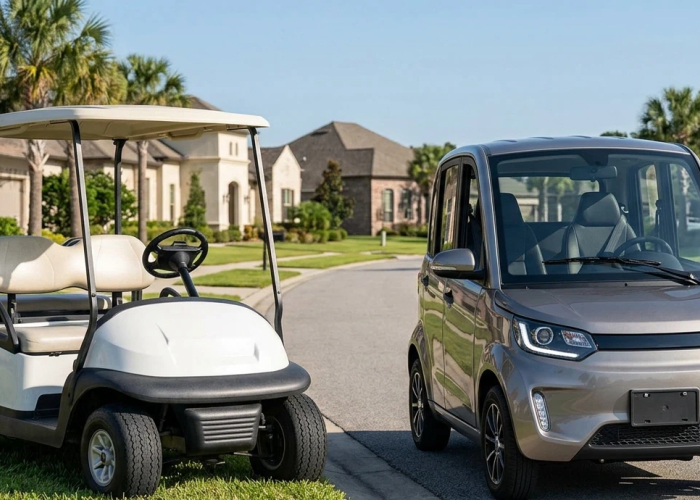
The video below offers general visual context for passenger golf cart operation. Final speed approval should still depend on your route test, braking confidence, and internal operating rules.
Questions buyers often ask
What is the best electric golf cart top speed for a property?
The best speed is the one that still feels calm under real passenger load, surface conditions, braking points, and route visibility. It should be chosen from the property, not from curiosity about the highest number.
Should a property raise speed to improve productivity?
Only if the route truly supports it. Many productivity issues are actually caused by poor dispatch, repeated stops, weak route design, or boarding delays rather than by insufficient top speed.
What should be tested before approving a faster setup?
Test the real route under full load, repeated braking zones, wet or reduced-grip conditions when relevant, and confirm that drivers and passengers still feel comfortable throughout the full cycle.
Approve speed only when the route stays calm
Electric golf cart top speed becomes useful only when it supports the route without making the operation feel hurried or unpredictable. That means the right speed is the one that still leaves room for safe braking, clear visibility, and comfortable passenger handling.
When buyers link speed to route detail, operator rules, and supplier support, they usually end up with a better cart and a safer property routine than if they start with the highest number on the sheet.