Temporary drivers still need a real training standard
A golf cart driver training checklist is especially important when seasonal staff, temporary event teams, interns, volunteers, or part-time workers operate carts. These drivers may be careful people, but they often do not know the property, the cart controls, passenger rules, route limits, or who to call when something changes. A short practical checklist prevents avoidable confusion during busy days.
Training should be specific to the route and the cart. A person who drives a car every day is not automatically ready to operate a multi-passenger cart around guests, curbs, service doors, charging cables, and pedestrians. Safety resources from NHTSA low-speed vehicle guidance and CPSC golf cart and LSV safety guide are useful reminders that low-speed vehicles still require disciplined operation around people.
The buyer should also connect training to fleet selection. A Carrinho de golfe elétrico tipo A service cart, a Carrinho de golfe tipo B passenger cart, and a larger Carrinhos de golfe VY-D6+2 de 8 lugares shuttle create different visibility, turning, boarding, and stopping demands. Training should match the layout actually assigned to the driver.
Start with authorization and role limits
Before a driver receives keys, the supervisor should confirm authorization, route assignment, cart type, shift time, passenger policy, and emergency contact method. If local rules require a license, age limit, permit, or written approval, that requirement should be checked before the event begins. Federal low-speed vehicle standards such as 49 CFR 571.500 are not a full local rulebook, but they remind managers that vehicle use has boundaries.
Role limits should be clear. A driver may be authorized for guest shuttle work but not maintenance towing, road crossings, hill routes, or night patrol. Temporary staff often get into trouble when someone asks them to do a favor outside the trained route. The answer should be simple: call the supervisor before changing use.
Authorization should be written down. A clipboard, badge note, or digital list is enough for many properties. The key point is that managers can tell who is trained for which cart and which route. That record matters when shifts change quickly or when an event contractor brings extra staff.
The training checklist should also state when a driver loses authorization for the day. Fatigue, unsafe behavior, phone use, passenger complaints, or ignoring route limits should pause driving privileges until a supervisor reviews the situation.
Supervisors should avoid informal key sharing. During events, one trained worker may hand keys to another worker because the route looks easy. That shortcut defeats the training program. Keys should be issued by role, shift, and route, with a clear return point at the end of duty.
Authorization should include language expectations when guests are involved. A driver may need to answer basic route questions, explain waiting times, or decline unsafe requests. Training should include those phrases so staff are not inventing answers while passengers are already seated.
| Training item | Signoff requirement |
| Driver authorization | Name, date, allowed cart type, and allowed route. |
| Route limit | Driver can identify where the cart may and may not go. |
| Passenger rule | Driver explains seating, standing, boarding, and unloading limits. |
| Escalation | Driver knows who to call for route, cart, guest, or weather issues. |
Teach the cart before teaching the route
The driver should identify key switch, forward and reverse, accelerator behavior, brake feel, parking brake, horn, lights, mirrors, charger connection, and any speed or mode setting. They should practice starting smoothly, stopping gently, reversing slowly, and parking with the brake set. A familiar control layout reduces panic when guests are waiting.
Drivers should learn what is not normal. Weak brakes, delayed acceleration, strange noise, burning smell, warning lights, loose steering, low tire pressure, or damaged charging cable should be reported before the cart is used. Tire safety guidance from NHTSA TireWise safety guidance and electrical safety guidance from OSHA electrical safety guidance support this habit of reporting symptoms early.
A short hands-on test is better than a verbal quiz alone. Let the trainee drive a closed loop with no passengers, then repeat with a supervisor acting as a passenger. Watch acceleration, braking, turning, mirror use, and communication. If the driver rushes the basics, they are not ready for a crowded route.
Use the Golf Cart Accessories page as a reminder that accessories change operation. Windshields, roofs, storage boxes, mirrors, curtains, and lighting can improve service, but they also change visibility, loading, and pre-shift inspection needs.
The trainer should show the charging return step before the driver works alone. Many temporary drivers can operate the cart but do not know how to park, plug in, tag a defect, or record low battery. Those end-of-shift habits decide whether tomorrow's route starts on time.
Practice should include reverse and low-speed turns. Carts often operate in loading areas, service corridors, and crowded paths where a slow mistake matters more than a fast one. A driver who cannot reverse calmly with a spotter should not be assigned to tight event areas.
Train passenger handling as a separate skill
Passenger handling is where many incidents begin. Drivers should stop fully before boarding, set the parking brake when appropriate, ask passengers to sit completely, keep hands and bags inside, and move only after everyone is ready. Children, older guests, people with luggage, or people with mobility limitations may need more time. Guidance from ADA mobility device guidance can help operators think about mobility support, while local policy defines exact assistance boundaries.
The driver should use consistent language. Short phrases such as please stay seated until I stop, please keep bags inside, and I will tell you when it is safe to step down are easier to remember than long instructions. The point is not to sound formal; it is to make every ride predictable.
Temporary event drivers should practice busy pickup behavior. Guests may approach from several directions, ask for route changes, or try to stand on the cart. The driver needs permission to say no politely and call a supervisor when the request is outside the route or unsafe.
Passenger counting should be explicit. Drivers should know the seating capacity of the assigned cart and should not accept standing riders, lap seating, or extra passengers because the destination is close. Short trips can still create falls if the cart starts, stops, or turns unexpectedly.
Drivers should also learn how to handle bags and tools. A loose cooler, folding chair, maintenance bag, or event sign can slide into passengers or block the driver's movement. If the item cannot be carried safely, the driver should request another cart or a different transport method.
| Passenger moment | Driver rule |
| Boarding | Cart fully stopped and passenger seated before movement. |
| Bags or equipment | No loose item blocks pedals, mirrors, aisles, or exits. |
| Drop-off | Driver stops close to a safe surface and gives a clear exit cue. |
| Unsafe request | Driver declines and contacts supervisor instead of improvising. |
Practice route hazards, weather, and night limits
Route training should happen on the actual route when possible. Show blind corners, pedestrian crossings, slopes, curbs, loading doors, wet areas, charging rooms, and places where carts must not enter. A printed map helps, but a ride-along shows details that a map cannot capture. The Park and Outdoor Transport Solution and Solução de carrinho de golfe pages are useful references when managers compare application routes and cart choices.
Weather rules should be direct. Heavy rain, lightning, flooding, strong wind, poor visibility, or extreme heat may change service. Drivers should know who can suspend a route and where carts should be moved. Weather guidance from National Weather Service lightning safety guidance and National Weather Service flood safety guidance supports the habit of stopping service before conditions become unreasonable.
Night operation deserves extra practice. Drivers should test lights, reduce speed, avoid glare, and be more cautious near pedestrians. If the route depends on reflectors or signs, trainees should see the route after dark before they are assigned a night shift.
Route changes should require supervisor approval. Temporary teams may see a shorter path and use it without realizing it crosses a pedestrian queue, loading dock, slope, or public edge. The checklist should say that convenience is not enough reason to change route.
Heat and long shifts should be treated as training topics too. Drivers who are tired, dehydrated, or under schedule pressure make poorer decisions. Supervisors should rotate assignments when possible and remind staff that safe service is more important than shaving a minute from a trip.
Use records to improve the next training session
Training records should include the driver's name, trainer, date, cart type, route, checklist result, and any restrictions. If a driver needs another supervised loop, write it down. This protects the manager and helps the next supervisor understand the driver's status.
Incident and near-miss records should feed back into training. If several drivers struggle with the same reverse turn, revise that part of the course. If guests keep boarding at the wrong place, update signs and driver language. Workplace safety resources from OSHA personal protective equipment guidance support the broader habit of learning from small hazards before they repeat.
Buyers should also use training feedback when ordering more carts through the Request a Quote page. If drivers report poor visibility, awkward boarding, limited storage, or difficult charging, those comments can guide the next configuration. Training is not only a staff process; it is a source of fleet design information.
The next training session should begin with the last event's lessons. If a pickup point confused guests, if a driver missed a charging step, or if a route became crowded near closing time, build those examples into the checklist. Real examples make training feel relevant to new staff, and basic golf cart background context can help temporary teams understand why small carts still need site-specific rules.
Keep the checklist short enough to repeat. A ten-minute refresher before a busy weekend can prevent more problems than a thick manual issued once. The best training system is one supervisors can actually repeat when schedules are tight.
Supervisors should review driver questions after each large event. If several drivers ask where to park, when to charge, or how to decline a passenger request, the training material is not yet clear enough. Those questions are useful because they show exactly where the next checklist update should focus.
A final signoff ride should feel routine. The trainee should drive the approved route, stop at normal pickup points, explain passenger rules, identify hold conditions, and return the cart to charging. When that loop is complete, the supervisor has evidence that the driver understands the full shift, not just the steering wheel.
If the event spans several days, repeat a short briefing each morning. Route barriers, crowd patterns, parking rules, and weather can change overnight, and temporary drivers need the current version before they start safely each shift.
Video reference
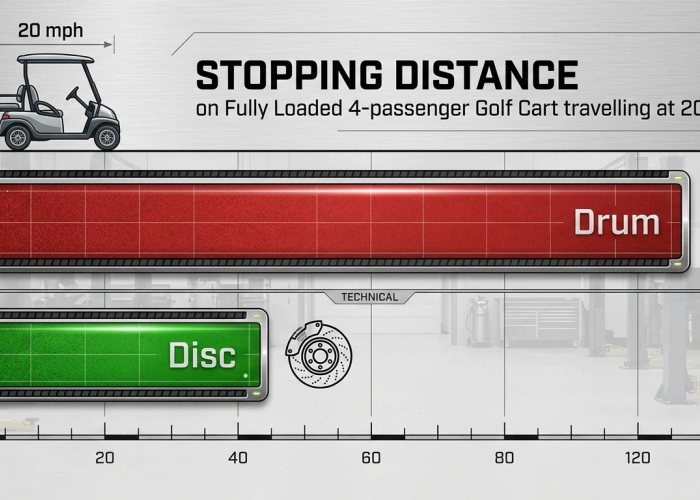
The video below is included as a visual reference for route and night-operation training. Use it as a prompt, then adapt the final checklist to your cart model, property layout, and local rules.
Questions buyers often ask
How long should temporary golf cart driver training take?
It depends on the route, but a practical session should include control review, supervised driving, passenger rules, route hazards, weather limits, and escalation steps before keys are issued.
Should experienced car drivers still be trained?
Yes. Golf carts operate around pedestrians, guests, charging areas, and tight private routes. Road driving experience does not replace property-specific cart training.
What should stop a seasonal driver from operating a cart?
Unsafe behavior, phone use, route changes without approval, weak understanding of passenger rules, fatigue, or failure to report defects should pause driving until a supervisor reviews the issue.
Good driver training is short, practical, and repeated
Seasonal teams can operate carts safely when the training is clear and specific. The checklist should show what to inspect, how to drive, how to help passengers, where to go, and when to stop.
The strongest programs treat training as a living tool. Every incident, near miss, route change, and driver question becomes a chance to make the next shift better.