
Accessibility starts before the cart is purchased
Golf cart accessibility is not created by a single seat, ramp, or friendly driver. It is created by matching the Electric Golf Cart Products fleet, route, boarding area, staff training, and passenger-assistance routine to the people who actually use the service. Senior living communities, campuses, resorts, hospitals, and visitor attractions often use electric carts because they are quiet and easy to stage near buildings, but the service still needs written rules.
A good accessibility plan begins with the passenger journey. Where does the passenger wait, how do they step into the cart, what support does the driver provide, where are bags or mobility aids placed, and what happens if the rider needs extra time? Public guidance about mobility devices from ADA mobility device guidance is useful background for U.S. operators, while local policy and site risk review decide the final procedure. The practical goal is predictable support, not a complicated document nobody uses.
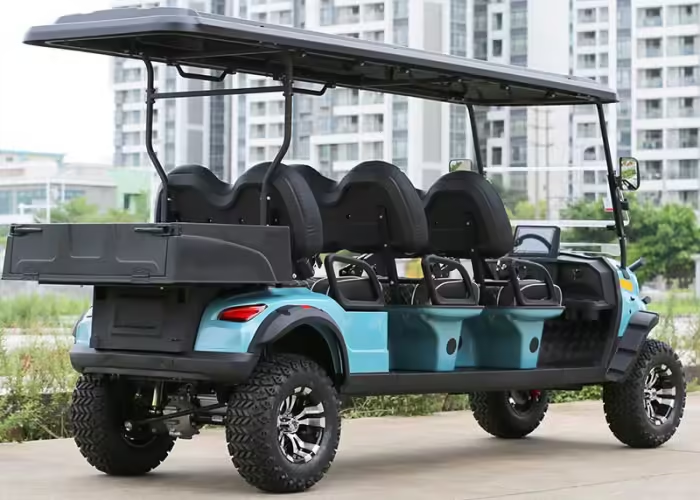
Different vehicles fit different routes. A compact Carrinho de golfe elétrico clássico cart may work for short private paths, a multi-passenger Carrinho de golfe tipo B cart may fit campus movement, and a larger D Type Electric Golf Cart shuttle may be better for scheduled guest transport. The buyer should compare boarding height, handhold position, seat layout, aisle space, roof coverage, suspension comfort, and turning room before choosing a cart only by passenger count.
Map the passenger route from waiting area to destination
The route map should show pickup points, drop-off points, slopes, curbs, tight turns, pedestrian crossings, doorways, ramps, and weather-exposed waiting areas. A route that feels simple to a driver may feel difficult to an older passenger or a guest using a cane. Walk the route at the slowest expected passenger pace and note where the person may need a handhold, bench, shade, lighting, or a clearer sign.
Operators should separate convenience routes from support routes. A convenience route moves people faster across a large property. A support route may carry passengers who need extra boarding time, calmer stops, more direct access to entrances, and a driver who understands assistance rules. Safety material from NHTSA low-speed vehicle guidance and low-speed vehicle background from low-speed vehicle background can help teams remember that slow vehicles still need clear traffic separation.
For campuses and senior communities, route planning should also include who can request a ride and how rides are prioritized. If carts serve visitors, residents, staff, and maintenance teams at the same time, the fleet can become inconsistent quickly. A written dispatch rule helps drivers avoid arguments and keeps the accessible service available for the people who rely on it most.
The route review should be repeated at different times of day. Morning glare, evening darkness, delivery traffic, school dismissal, landscaping work, and event crowds can all change the same path. A route that is accessible at noon may be uncomfortable at 7 a.m. or unsafe during a busy arrival window. Take notes from those different periods before finalizing pickup points.
Managers should also identify quiet waiting areas. Some passengers may need a slower boarding pace or may feel uncomfortable waiting in a crowded driveway. A marked waiting point with a bench, shade, and predictable cart stop can reduce stress for passengers and drivers at the same time.
| Route element | Accessibility question |
| Pickup point | Can passengers wait safely with shade, lighting, and clear signs? |
| Boarding surface | Is it flat, dry, and away from moving traffic? |
| Drop-off point | Does the cart stop near a usable entrance without blocking others? |
| Return trip | Can passengers request pickup without walking back to a remote location? |
Choose carts around boarding comfort and control
The cart should be judged from the passenger seat as much as the driver seat. Check step height, seat firmness, handhold placement, foot space, roof protection, windshield choice, and whether passengers can sit before the cart moves. A cart that looks premium may still be awkward if passengers must twist, climb, or step onto uneven ground. The VY-A4 4 Seater Golf Cart and VY-C4 Four Passenger Golf Cart examples are useful references when comparing four-passenger layouts for private routes and guest movement.
Boarding comfort also depends on suspension, tire choice, and route surface. Rough paving, drainage grates, speed bumps, gravel, and wet leaves can make a short trip uncomfortable. General product safety notes from CPSC golf cart and LSV safety guide and tire safety information from NHTSA TireWise safety guidance support a simple point: accessibility is not only about getting into the cart; it is also about a stable ride from start to finish.
When buyers request pricing, they should describe passenger needs instead of only asking for a model. Include route length, passenger age group, expected luggage or mobility aids, weather exposure, charging routine, and whether the cart will be used for scheduled shuttles or on-demand rides. A request through the Solicite una cotización page becomes more useful when the supplier can match cart layout to service behavior.
Storage and staging should be part of the vehicle choice. A cart used for mobility support may need room for folded walkers, small bags, first-aid items, radios, or rain covers. If those items are loose, they can become trip hazards during boarding. If they are stored in the wrong place, they can block passenger foot space or driver visibility.
Buyers should test the cart with the people who understand the service, not only with purchasing staff. A supervisor, driver, maintenance person, and passenger-services representative will each notice different issues. Their combined feedback is more useful than a single showroom impression.
Train drivers to assist without improvising
Drivers need a short assistance standard. They should know how to position the cart, set the parking brake, greet passengers, wait for full seating, manage bags, explain where to hold, and confirm that passengers are ready before moving. They should also know what they are not allowed to do, such as lifting a person without training or moving before a mobility aid is secured. Workplace safety resources from OSHA personal protective equipment guidance are a useful reminder that staff support should protect both passenger and driver.
The best training is practical. Let drivers practice slow approaches, curbside stops, reversing limits, guest communication, and emergency stop behavior. A driver who has only read a policy may still become uncertain when a guest needs extra time, when rain starts, or when a busy entrance is blocked. Training should include those common interruptions.
Supervisors should ride along periodically and check the service from a passenger perspective. Are stops smooth? Does the driver talk clearly? Are passengers rushed? Does the cart wait long enough after unloading? These observations often reveal issues that inspection forms miss.
Training should include respectful boundaries. Drivers can offer a steady hand, wait patiently, and position the cart carefully, but they should not promise medical support or perform tasks outside their role. Clear boundaries protect the passenger from unsafe assistance and protect the operator from inconsistent service expectations.
Temporary staff need the same rule set as experienced drivers. A seasonal event team may only operate carts for a few days, but they still need route limits, passenger rules, radio language, and stop-now conditions. Short onboarding is acceptable only when it is specific and practiced.
| Driver behavior | Why it matters |
| Stop fully before boarding | Reduces falls and gives passengers time to sit. |
| Use clear verbal cues | Helps passengers know when to board, hold, and exit. |
| Avoid sharp starts | Protects passengers with limited balance or grip strength. |
| Report route barriers | Keeps accessibility problems from becoming normal. |
Prepare signs, records, and escalation rules
Accessible cart service should not depend on one experienced driver remembering everything. Use simple signs at pickup points, a dispatch log, a held-cart tag for defects, and a daily route note. If a stop becomes unsafe because of construction, weather, parked cars, or crowding, drivers should have authority to move the stop or pause service. Weather safety guidance from National Weather Service lightning safety guidance and National Weather Service flood safety guidance supports written shutdown rules for outdoor routes.
Incident records should be short but specific. Record the cart number, location, passenger issue, driver action, weather, and follow-up. If passengers frequently struggle at the same curb or ask for help at the same entrance, that is a route design signal. The Solución de carrito de golf page can help buyers think about cart selection and site planning together rather than as separate purchases.
Managers should review accessibility performance monthly. Check complaints, near misses, delayed pickups, route closures, driver comments, and maintenance holds. This review turns accessibility from a one-time purchase decision into an operating habit.
The review should include positive feedback as well as problems. If passengers consistently praise one pickup point or one driver routine, document why it works and make that behavior standard. Good accessibility programs grow by copying successful small habits, not only by correcting failures.
Keep future fleet upgrades tied to real use
After a few weeks of operation, compare the original plan with actual demand. A senior community may need more short-hop trips than expected. A campus may need better night lighting at one pickup point. A resort may discover that luggage storage matters more than maximum passenger count. Those findings should shape the next order and the next route update.
Buyers should keep notes on seat layout, boarding ease, driver workload, charging turnaround, and passenger feedback. General standards resources from ANSI standards overview and equipment documentation references from UL Standards and Engagement can support structured purchasing, but local passenger evidence is what makes the final configuration practical.
A well-run accessible cart program feels calm. Passengers know where to wait, drivers know how to assist, managers know when to hold a cart, and buyers know which features matter for the next fleet decision. The Contact Longshengtai page is the right place to start a specific configuration discussion when those operating facts are ready.
Fleet upgrades should be judged by the passenger experience after launch. If a new model reduces boarding complaints, shortens waiting time, or helps drivers keep smoother stops, that value should be recorded. The next purchase decision will then be based on measured service improvement rather than only preferences.
Accessibility planning also needs a budget for small supporting items. Painted stop marks, reflective signs, bench placement, rain covers, radios, and driver log cards are not expensive compared with the carts, but they often decide whether the service works every day. If those items are left until after launch, managers may spend weeks correcting avoidable friction.
Finally, keep the plan easy to explain. A passenger should know where to wait, a driver should know how to stop, and a supervisor should know when to change the route. When the process can be explained in a few plain sentences, it is much more likely to survive staff turnover and busy operating days.
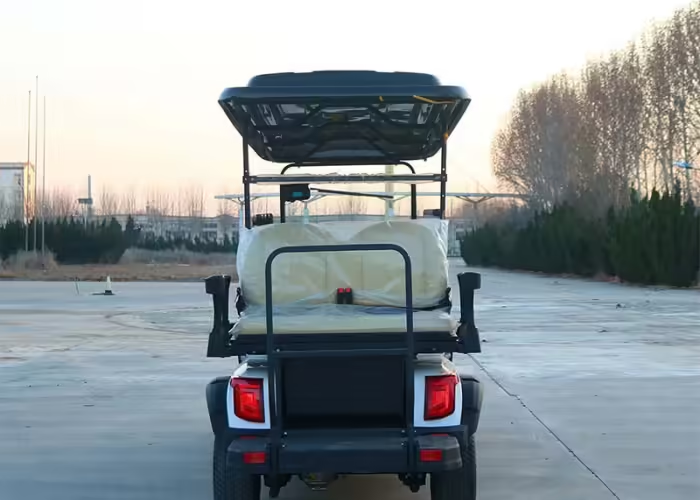
Video reference
The video below is included as a visual reference for thinking about electric cart movement, passenger routes, and safe operating habits. Use it as a training prompt, then adapt the final procedure to your property and local rules.
Questions buyers often ask
Is an electric golf cart automatically accessible?
No. Accessibility depends on route design, boarding surface, seat layout, driver training, communication, and passenger-assistance rules. The cart is only one part of the system.
What should buyers check first for senior-community cart service?
Start with boarding height, handholds, stop locations, route smoothness, shade, lighting, driver training, and how residents request rides. These details affect daily comfort more than brochure seating capacity alone.
How often should accessibility routes be reviewed?
Review them whenever construction, weather, traffic flow, resident needs, or service demand changes. A monthly supervisor ride-along is also useful for catching small problems early.
Accessibility is an operating system
A practical accessibility plan connects people, routes, carts, drivers, and records. It helps passengers board calmly, helps staff respond consistently, and helps buyers choose equipment based on real service needs.
The strongest programs begin before purchase and improve after launch. When managers keep listening to passengers and drivers, the fleet becomes easier to use, easier to supervise, and easier to upgrade over time.